Lahore High Court hears Junaid Hafeez death sentence appeal after six years
Judges seek prosecution arguments on admissibility of electronic evidence in blasphemy conviction of former lecturer.

The Lahore High Court on Tuesday took up the appeal of Junaid Hafeez, a former lecturer at Multan's Bahauddin Zakariya University sentenced to death in a blasphemy case, for its first substantive hearing in almost six years. A two-judge bench of Justice Sadiq Mahmood Khurram and Justice Jawad Zafar directed the prosecution to satisfy the court and defence lawyers about the legal status of electronic evidence used against Hafeez.
Hafeez filed his appeal on 9 January 2020 against the death sentence handed down by a sessions court in Multan on 21 December 2019. BBC Urdu reported that Tuesday was the first substantive hearing since then.
Hafeez's lawyer Asad Jamal told BBC Urdu that his client's laptop and phone were never sent for forensic examination, meaning content on those devices could not be verified. He described Tuesday's hearing as good progress. Saif-ul-Mulook, another lawyer on the team, said he was hopeful because the appeal was finally being heard after a long delay.
A family member, speaking anonymously to BBC Urdu, said the family was very hopeful and described the case as bogus. The relative added that Hafeez remains hopeful but very lonely, and that family visits continue with books and food.
Hafeez, who is from Rajanpur in south Punjab, taught English at Bahauddin Zakariya University and had studied in the United States on a Fulbright scholarship. He was charged in 2013 with uttering blasphemous words and posting blasphemous comments on social media. Because of security concerns, his trial was held inside Multan Central Jail. His first lawyer, Rashid Rehman, was shot dead in his office on 7 May 2014. A second lawyer later withdrew, and a third claimed he received threats.
Fifteen prosecution witnesses were recorded, while 11 were dropped as unnecessary. The trial saw more than half a dozen judges changed, prolonging the case. On 21 December 2019, the additional district and sessions judge convicted Hafeez and sentenced him to death for spreading religious hatred, along with life imprisonment and a separate ten-year term, plus a fine of Rs 500,000.
The appeal was first filed at the Multan bench of the Lahore High Court but was transferred to Lahore a year later. Lawyers said the six-year gap before Tuesday's hearing was due to procedural delays.

Punjab Safe Cities Authority rolls out QR panic buttons in government hospitals
Scanning the code at a government hospital connects patients to Helpline 15, a live chat or video call, and to the Safe City virtual blood bank.

Fakhar Zaman's 127 sets up Pakistan's tri-series final win
Pakistan chased 326 with nine balls to spare at Gaddafi Stadium after losing Babar Azam for a five-ball duck inside the first four overs.
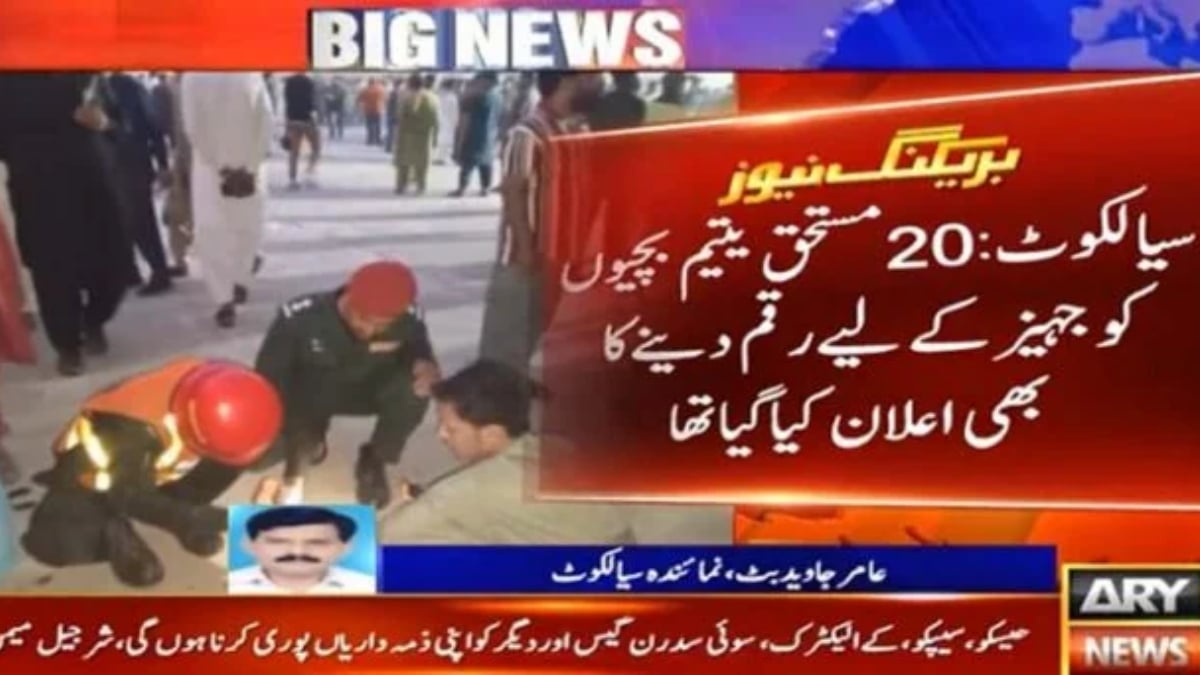
One dead, 14 injured in Sialkot mehndi ceremony stampede
Crowd surged when gates opened at Faraz Cricket Ground on Daska Road, where TikToker Muhammad Ansar Jatt was to give away 50 motorcycles, a car and cash.

Punjab Assembly speaker rejects unilateral suspension of Indus Waters Treaty
Malik Muhammad Ahmad Khan says the treaty's status must be decided under international law, as Dunya News reports the attorney general vowing to continue the legal fight with India.