Punjab sets up first orchards for trees moved by development
Three Faisalabad parks have taken in 352 of 795 identified trees, with the horticulture authority relocating the remaining 443 under 2026 transplantation rules.

The Punjab Horticulture Authority has set up the province's first dedicated orchards for trees removed during development projects, with the first three established in Faisalabad, Director General Ahmad Usman Javaid announced on Sunday.
The orchards are at Bagh-e-Jinnah, Kaleem Shaheed Park and Dhobi Ghat Park. According to Javaid, the district horticulture agency identified 795 trees for transplantation; 352 have been relocated so far and work is under way on the remaining 443. Bagh-e-Jinnah received 166 trees, Dhobi Ghat Park 127 and Kaleem Shaheed Park 59.
The authority said transplanted trees need deep watering twice a week and a layer of mulch around the base kept away from the trunk to prevent rot. It advised against applying fertiliser or pruning healthy branches in the first year, since both put extra stress on weakened roots, and cited a commonly used guideline allowing about one year of recovery for every inch of trunk diameter. Autumn is described as an ideal time in Punjab because cooler temperatures reduce stress on foliage and let a tree concentrate energy on root recovery before winter dormancy.
The approach follows regulations introduced in March, the Public Parks, Greenbelts and Green Areas Protection and Regulated Emergency Transplantation Regulations, 2026, which set uniform rules across the province.
Under them, transplantation must be considered before a tree is felled. Where felling cannot be avoided, at least 20 saplings must be planted for every tree removed, rising to 50 if a transplanted tree dies. Replacement trees must be native, climate-resilient species and maintained for at least three years. An Arboricultural Impact Assessment is mandatory for major projects that could affect standing trees, setting out likely damage and mitigation before construction begins. The rules also fix technical standards for transplantation, protection during construction and post-transplant care, and bind all 21 district horticulture agencies in Punjab.
Javaid said the aim was to make planting a sustained part of urban planning rather than a seasonal activity. "This requires not only planting saplings but also ensuring their survival through appropriate watering, maintenance and monitoring," he said.
He added that the district agencies had completed the annual monsoon plantation drive, giving preference to local, shade-giving varieties, and that monsoon rainfall helps young saplings establish deep roots quickly. The initiative, he said, reflected the government's commitment to protecting Punjab's green cover alongside development work.

Fakhar Zaman's 127 sets up Pakistan's tri-series final win
Pakistan chased 326 with nine balls to spare at Gaddafi Stadium after losing Babar Azam for a five-ball duck inside the first four overs.
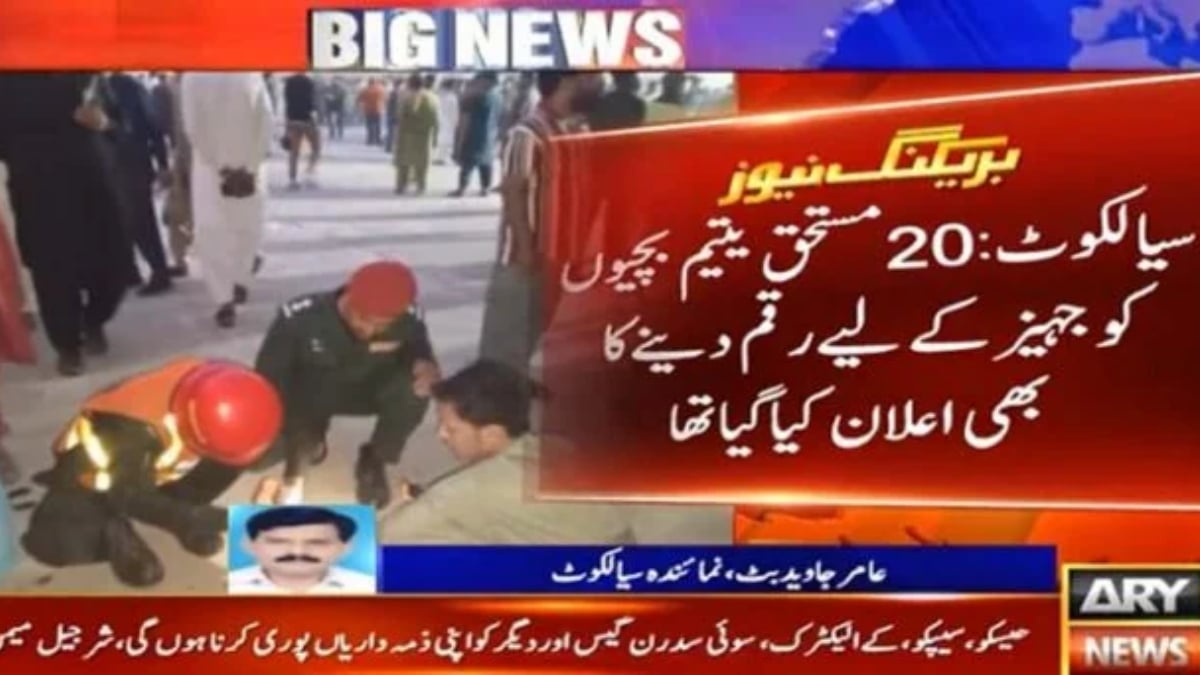
One dead, 14 injured in Sialkot mehndi ceremony stampede
Crowd surged when gates opened at Faraz Cricket Ground on Daska Road, where TikToker Muhammad Ansar Jatt was to give away 50 motorcycles, a car and cash.

Punjab Assembly speaker rejects unilateral suspension of Indus Waters Treaty
Malik Muhammad Ahmad Khan says the treaty's status must be decided under international law, as Dunya News reports the attorney general vowing to continue the legal fight with India.

Punjab healthcare commission makes uniforms mandatory for hospital staff
Doctors will wear blue, paramedical staff green and laboratory workers white coats under directives issued under Section 4(2)(o) of the PHC Act 2010