Punjab tests satellite-guided irrigation across 13.3 million kanals
The ADB-backed module advises canal managers on water releases using satellite crop-deficit estimates, and its third phase closed at a LUMS workshop.

Punjab has tested a satellite-guided system for deciding how irrigation water is shared across the Lower Bari Doab Canal (LBDC) network, which serves about 675,000 hectares, 13.3 million kanals, of farmland, with its developers saying it can steer releases closer to what crops actually need.
The third and final phase of the three-year project, supported by the Asian Development Bank, was marked at a workshop at the Lahore University of Management Sciences (LUMS), according to a report by ProPakistani. The pilot began on a group of canals in the Balloki–Okara division before the module was extended to all rotation channels of the LBDC system.
The module pairs satellite estimates of Relative Water Deficit with mathematical optimisation to recommend allocations based on crop water requirements, while accounting for existing rotation priorities and operational constraints.
Delivering the keynote address, Dr S. A. Prathapar, a water management consultant to the ADB, said modernising irrigation involved more than building canals. "When we think about modernizing the irrigation system, we only think about building a canal. But we have to modernize the software behind it. The rules behind it. And that's what this project is about," he said.
Dr Prathapar said conventional delivery indicators could establish whether irrigation authorities had supplied the planned quantity of water, but not whether crops had received enough to meet their requirements. Satellite-based deficit estimates, he said, could fill that gap by informing recommendations for upcoming rotations.
Dr Abubakr Muhammad of LUMS said the country's irrigation network remained central to food security and livelihoods but faced mounting pressure from climate change, uncertainty over water availability and rising production costs, particularly energy. Advances in remote sensing, near-real-time monitoring and decision-support systems, he said, offered a way to give managers practical advice based on field- and canal-level deficits.
"These tools also allow us to be equitable, to be just, to be fair," Dr Muhammad said, adding that technological interventions must also take account of social considerations, water governance and fairness in distribution.
Ryutaro Takaku-Bessho, an ADB principal water resource specialist, said the bank remained engaged in Pakistan's agriculture and water sectors, including work on climate vulnerability, food security and rural resilience. "In addition to physical infrastructure, ADB is proud to support the current project, which targets the critical software of the sector, the operational rules that govern the government's vast water networks," he said.
Technical sessions covered the system's components: Waqas Karim Awan of the Food and Agriculture Organization on estimating crop water requirements through satellite remote sensing; Dr Hassan Jaleel of LUMS on the near-real-time Rotation Advisory Module; and Dr Athar Ashraf on integrating that module with the Punjab Irrigation Department's Irrigation Decision Support System.
Senior officials from the Punjab Irrigation and Agriculture Departments, WAPDA, the Ministry of Water Resources, SUPARCO and the Pakistan Agricultural Research Council attended. Participants discussed wider adoption, including institutional arrangements, further validation, farmer engagement and the possible use of rainfall forecasts to make recommendations more responsive to field conditions.

Fakhar Zaman's 127 sets up Pakistan's tri-series final win
Pakistan chased 326 with nine balls to spare at Gaddafi Stadium after losing Babar Azam for a five-ball duck inside the first four overs.
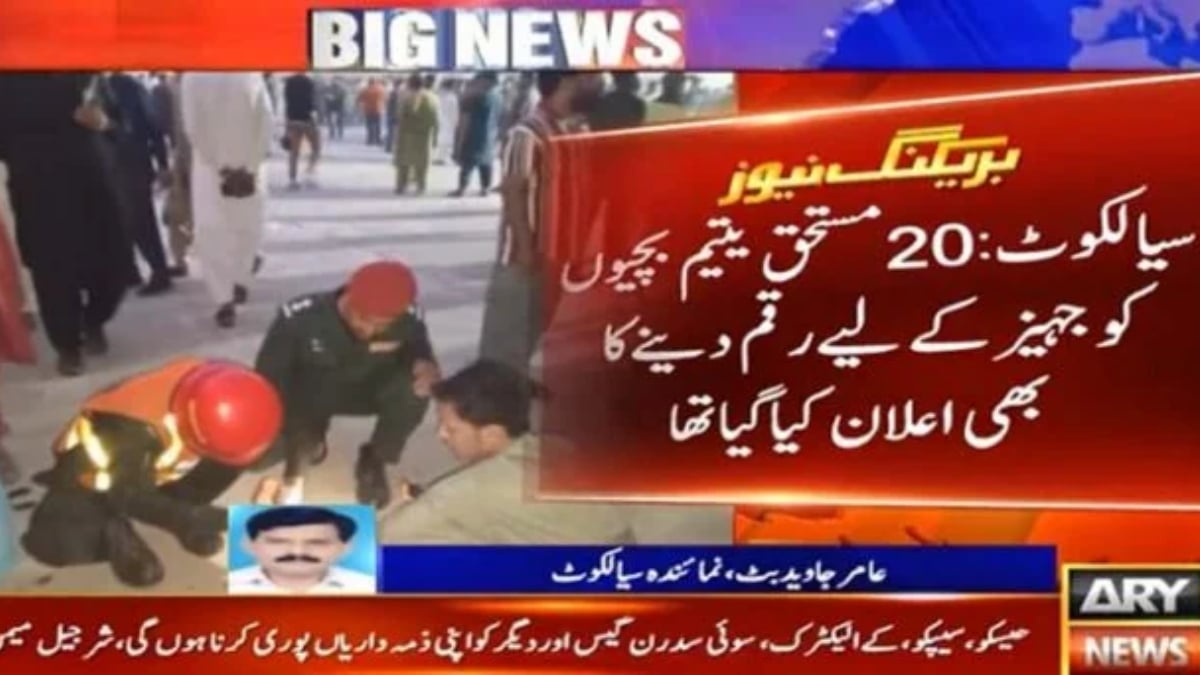
One dead, 14 injured in Sialkot mehndi ceremony stampede
Crowd surged when gates opened at Faraz Cricket Ground on Daska Road, where TikToker Muhammad Ansar Jatt was to give away 50 motorcycles, a car and cash.

Punjab Assembly speaker rejects unilateral suspension of Indus Waters Treaty
Malik Muhammad Ahmad Khan says the treaty's status must be decided under international law, as Dunya News reports the attorney general vowing to continue the legal fight with India.

Punjab healthcare commission makes uniforms mandatory for hospital staff
Doctors will wear blue, paramedical staff green and laboratory workers white coats under directives issued under Section 4(2)(o) of the PHC Act 2010