Rawalpindi lithium-ion battery plant awaits federal policy approval
The $2.25 billion facility at Heavy Industries Taxila, run by Margalla Heavy Industries, can start production six to eight months after the sector policy is cleared, the EDB chief says.

Pakistan is preparing a $2.25 billion lithium-ion battery manufacturing project at Heavy Industries Taxila in Rawalpindi district, to be run by the military-owned Margalla Heavy Industries Limited (MHIL), with production possible six to eight months after the government approves a policy for the sector.
Hamad Ali Mansoor, chief executive of the Engineering Development Board (EDB), told Arab News that construction and equipment installation at the site are already complete and the plant is waiting only for that approval. ProPakistani reported that the project was signed in July with a Chinese manufacturer Mansoor described as one of China's leading firms, together with a local private investor.
The factory will make lithium-ion cells, starting at a capacity of 200 to 300 megawatts before building up to a planned annual capacity of more than 1,000 megawatts. MHIL's Taxila operation already manufactures defence equipment, drones, electric buses and two-wheelers, and battery energy storage systems.
Mansoor said the EDB projects that demand for battery energy storage could reach 100,000 megawatts by June 2030 if the economy grows by 5 percent or more. Growth below 3 percent would hold demand to roughly 80,000 megawatts. The estimate covers households, commercial buildings, industrial facilities and electric vehicles from two-wheelers to buses and trucks. Grid stabilisation alone would need 3,000 to 5,000 megawatts of storage.
Meeting that demand would require four to five gigafactories, each costing about $1 billion to $1.25 billion, according to the board's estimates.
The lithium battery manufacturing policy was submitted to the Ministry of Industries in March and is still awaiting approval. It envisages four plants: three in Punjab's Lahore, Faisalabad and Rawalpindi divisions and one in Karachi. Manufacturers would be required to export a set share of their output, though Mansoor declined to give the target before the policy is cleared. He said the framework follows international safety and performance standards.
The plan follows Prime Minister Shehbaz Sharif's approval of the Automotive and Auto Parts Manufacturing Policy 2026-2031, which is itself awaiting International Monetary Fund approval because of the tax incentives it proposes and their effect on government revenue.
Pakistan currently assembles about 3,000 to 4,000 megawatts of batteries and related components, including motors, controllers and chargers, but remains dependent on imports. Mansoor said the government wants those components made entirely in Pakistan by next year, with the planned plants supplying both electric vehicles and grid storage and creating export opportunities for locally made cells.

Punjab Safe Cities Authority rolls out QR panic buttons in government hospitals
Scanning the code at a government hospital connects patients to Helpline 15, a live chat or video call, and to the Safe City virtual blood bank.
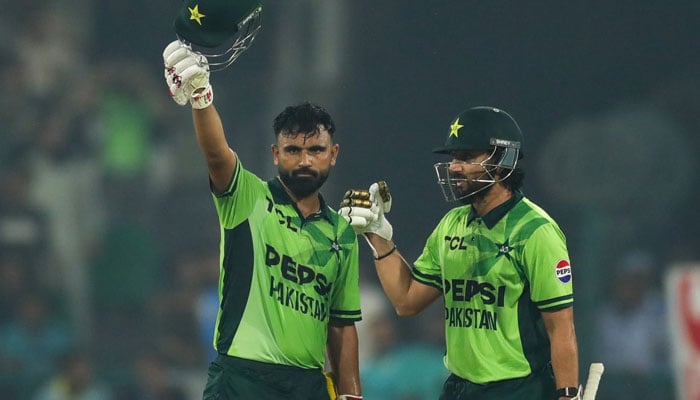
Fakhar Zaman's 127 sets up Pakistan's tri-series final win
Pakistan chased 326 with nine balls to spare at Gaddafi Stadium after losing Babar Azam for a five-ball duck inside the first four overs.
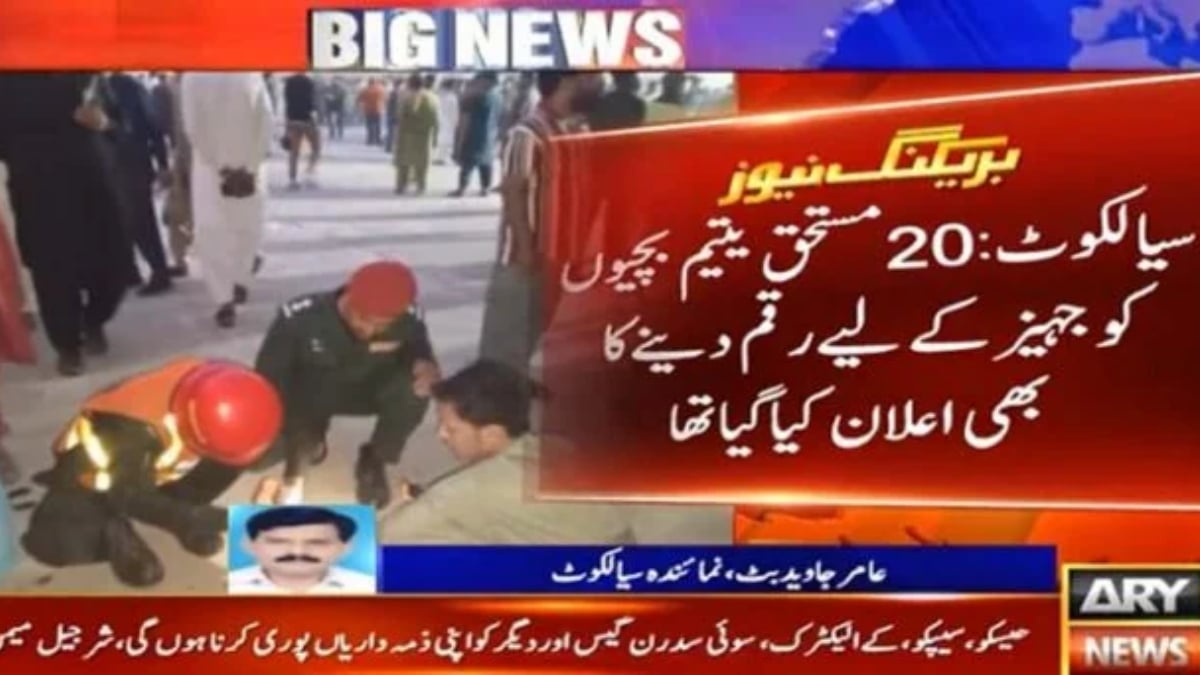
One dead, 14 injured in Sialkot mehndi ceremony stampede
Crowd surged when gates opened at Faraz Cricket Ground on Daska Road, where TikToker Muhammad Ansar Jatt was to give away 50 motorcycles, a car and cash.

Punjab Assembly speaker rejects unilateral suspension of Indus Waters Treaty
Malik Muhammad Ahmad Khan says the treaty's status must be decided under international law, as Dunya News reports the attorney general vowing to continue the legal fight with India.