Air pollution cuts Pakistani life expectancy by 3.9 years, report finds
PAQI's national emissions inventory puts the annual economic cost at 6.5pc of GDP and warns Lahore residents could lose up to seven years.
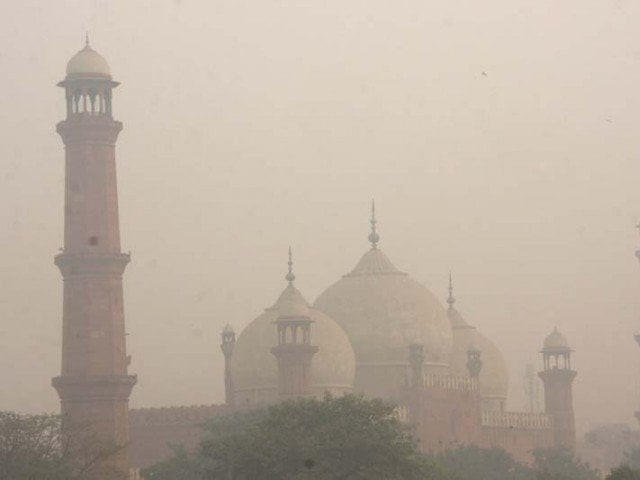
Air pollution cuts average life expectancy in Pakistan by an estimated 3.9 years and is linked to roughly 128,000 premature deaths every year, according to a report by the Pakistan Air Quality Initiative (PAQI).
The study, titled "Unveiling Pakistan's Air Pollution: A National Landscape Report on Health Risks, Sources, and Solutions", also estimates the economic burden of pollution at the equivalent of 6.5 per cent of the country's gross domestic product. PAQI describes it as Pakistan's first harmonised, multi-sector emissions inventory, published alongside a multi-city assessment of air quality.
The assessment covers four urban airsheds: Lahore, Karachi, Islamabad-Rawalpindi and Peshawar. PAQI's founder, who was part of the team that prepared the report, said the work drew on ground-based air quality measurements, satellite data and local activity datasets, including fuel consumption, vehicle fleet composition, industrial records and estimates of pollutants released by different sectors. The analysis covers fine particulate matter (PM2.5), carbon monoxide, nitrogen oxides and sulphur dioxide, with a sector-by-sector breakdown for each city.
Lahore carries the heaviest load. According to the report, the city's annual average PM2.5 concentration exceeds 110 micrograms per cubic metre, more than 22 times the World Health Organisation's annual guideline of five micrograms per cubic metre. Prolonged exposure at those levels could reduce life expectancy in the city by up to seven years, the report estimates. Winter temperature inversions make matters worse by restricting the vertical dispersion of pollutants, allowing dirty air to collect near the ground.
Transport is the largest source of primary PM2.5 emissions in Lahore, accounting for 35 per cent, followed by industry at 28 per cent and brick kilns at 17 per cent. Karachi's emissions profile is different, with industrial activity responsible for 49 per cent, according to the report.
The report sets out measures it says could cut emissions across the four airsheds by up to 50 per cent.
Daily Sun also carried the findings, describing the loss of life expectancy as nearly four years. Neither outlet named the PAQI founder who spoke about the methodology, and the report's full recommendations were not reproduced in the coverage.
Pakistan's largest cities have repeatedly recorded hazardous air quality in winter months, when low temperatures and still air hold pollutants close to the ground. The new figures place the health and economic cost of that seasonal smog in national terms, rather than as an urban nuisance confined to Lahore or Karachi.

Information ministry blames Kabul inaction for strained Pakistan-Afghanistan ties
The ministry rejected a Taliban spokesperson's account of the dispute, saying cross-border militancy remains the biggest obstacle to normal relations between the neighbours.

Tarar proposes national council on cyber security and digital literacy
The information minister used the PTA's Cyber Security Awareness Week to float a coordinating body and to call for digital literacy in school curricula.

Health minister says barcode scan will flag fake medicines from November
Mustafa Kamal told the National Assembly that hospitals will also have to buy all vaccines from Pakistan's own funds by 2030, at a cost of about $1.2 billion.

Fakhar Zaman hits century and passes 4,000 ODI runs
The Pakistan batter reached 4,000 one-day international runs in his 97th ODI and became the 16th from his country to pass the mark.