Army spokesman sees cautious hope in Iran-US mediation
Lt Gen Ahmed Sharif Chaudhry says Field Marshal Asim Munir's two Tehran visits this month point to positive movement but warns powerful elements are obstructing peace.
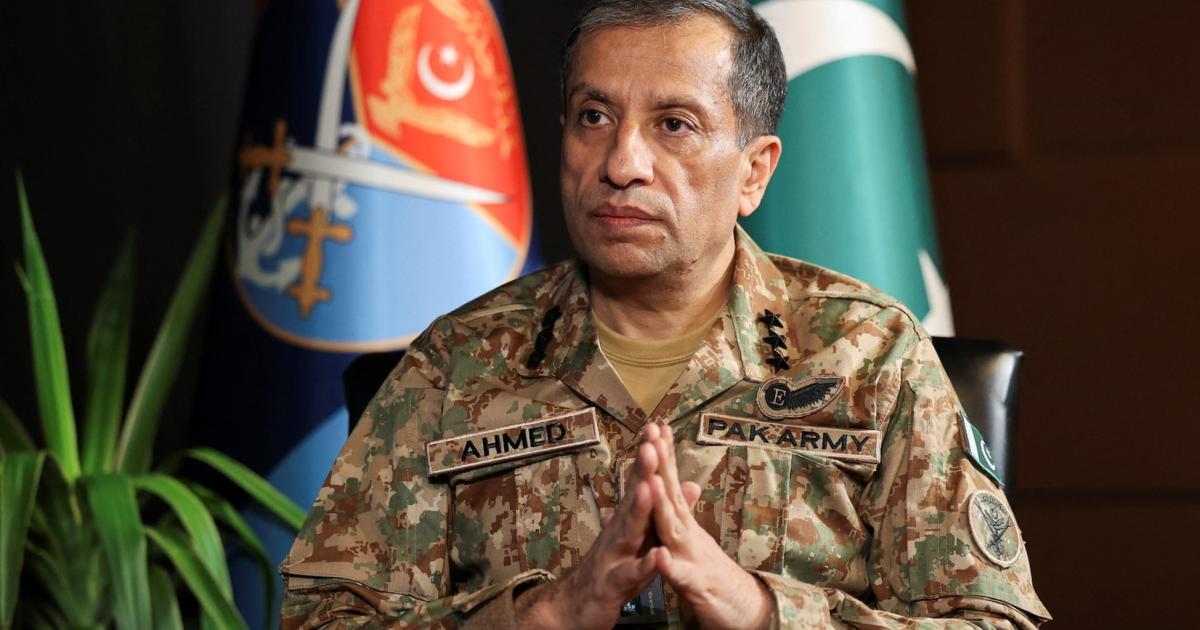
Pakistan's military spokesman, Lt Gen Ahmed Sharif Chaudhry, said on Friday he is cautiously optimistic about efforts to mediate between Iran and the United States, after Field Marshal Asim Munir made his second visit to Tehran this month. The director general of Inter-Services Public Relations spoke to Reuters in his first interview since a high-level delegation visited Tehran this week, according to Independent Urdu and Aaj News, which reported that Munir has acted as a central mediator in Pakistani efforts to calm the eight-month war.
Chaudhry said the army chief's repeated travel was itself a signal. 'Why would the field marshal go to Tehran twice if there were no positive development behind it?' he said, according to Independent Urdu. He said the military would keep using the phrase 'cautiously optimistic.'
Field Marshal Munir's latest visit was on Monday, accompanied by Saudi Defence Minister Prince Khalid bin Salman and Turkish intelligence chief Ibrahim Kalin. The trip was part of diplomatic efforts to reduce tension from the eight-month war between Iran and the United States. Chaudhry did not give details of the Tehran discussions and did not say whether Washington supported the visit, Aaj News reported.
He said 'powerful elements' were still trying to block progress because they believed the conflict served their interests, without naming them.
The mediation comes alongside the Makkah joint defence pact, signed on 7 August by Pakistan, Saudi Arabia and Turkey. Under the agreement, an attack on one country is to be treated as an attack on all three. Asked whether Iran could join, Chaudhry said the pact's text does not bar new members. 'Any country that shares the vision of collective defence and regional peace, why should it not join? Everyone will be welcome,' he said, according to Independent Urdu. He said the final decision would be taken by the political leadership of the three founding parties.
On reports of more Pakistani troops going to Saudi Arabia, he said any deployment would depend on the situation and a decision by both countries' political leadership. Pakistan was committed to the defence of Saudi Arabia and the holy sites of Makkah and Madinah, he said, but added that Pakistan is not a party to the Yemen conflict, which he described as a dispute among Yemeni parties.
Iran's Supreme National Security Council secretary, Mohsen Rezaei, said after Monday's talks that regional countries should ensure regional security without external interference, Aaj News reported.
On domestic security, the federal government suspended the Khyber Pakhtunkhwa provincial government on 11 October and detained Chief Minister Sohail Afridi. The government accused the provincial administration of failing to tackle militancy. Pakistan Tehreek-e-Insaf rejected the charge and said its government had taken part in counter-terrorism efforts; its leaders called the suspension a pretext to crush protests. Asked whether large-scale army operations would follow, Chaudhry said the army conducts intelligence-based operations, not large campaigns, and that their pace and scope would be increased.

Information ministry blames Kabul inaction for strained Pakistan-Afghanistan ties
The ministry rejected a Taliban spokesperson's account of the dispute, saying cross-border militancy remains the biggest obstacle to normal relations between the neighbours.

Tarar proposes national council on cyber security and digital literacy
The information minister used the PTA's Cyber Security Awareness Week to float a coordinating body and to call for digital literacy in school curricula.

Health minister says barcode scan will flag fake medicines from November
Mustafa Kamal told the National Assembly that hospitals will also have to buy all vaccines from Pakistan's own funds by 2030, at a cost of about $1.2 billion.

Fakhar Zaman hits century and passes 4,000 ODI runs
The Pakistan batter reached 4,000 one-day international runs in his 97th ODI and became the 16th from his country to pass the mark.