Asif sees 'progress' in Makkah alliance talks with Iran
Defence minister repeats that Pakistan is bound to defend Saudi Arabia and says the Tehran meeting may help end the kingdom's war with the Houthis
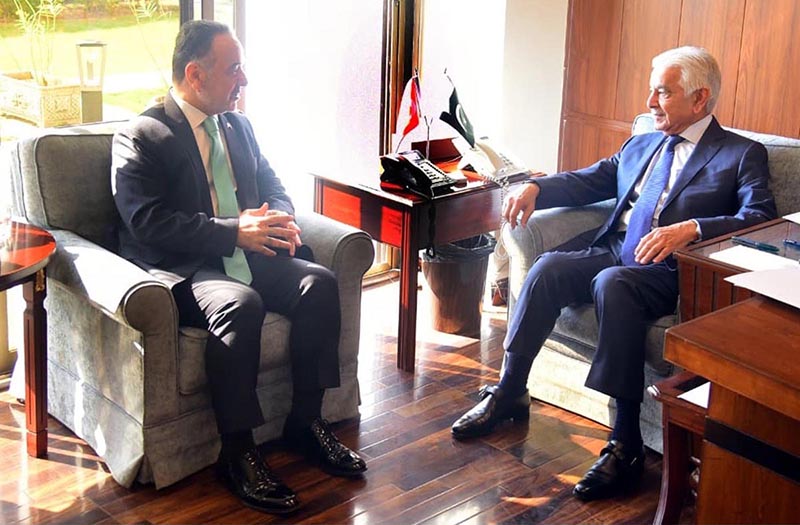
Defence Minister Khawaja Asif said on Monday that talks between the Makkah Defence Alliance and Iran appeared to have made "some progress", and repeated that Pakistan is bound to defend Saudi Arabia, which Houthi attacks have targeted in recent weeks.
Speaking on a private news channel, Asif said Iran had issued a joint statement after a meeting in Tehran at "the highest level of the country's hierarchy", and that he believed those involved had reached "some sort of a conclusion that will help close out this war", The Express Tribune reported.
Members of the Makkah Defence Alliance and Iran agreed at the Tehran meeting to continue dialogue to increase cooperation for regional peace and security. Asked whether the meeting concerned the US-Iran confrontation or the Saudi-Houthi conflict, Asif said the talks were directed "more of an effort for what is happening in Saudi Arabia", adding that the US-Iran aspect would also have been discussed and that the presence of the Saudi defence minister and the Turkish intelligence chief was significant.
"We will defend Saudi Arabia with all of our might and capability," Asif said. "Just as Pakistan's defence is indispensable for us, in the same manner, the defence of Saudi Arabia is also compulsory for us. Under the agreement, the three countries are committed through an arrangement to collectively deal with threats."
He said the three countries were bound to defend each other's territory against any foreign aggression, and that Pakistan's commitment to the kingdom dated from the start of Saudi Arabia's war in Yemen, which he placed in 2014. He said Pakistan's peace initiatives, led by Chief of Defence Forces and Chief of the Army Staff Field Marshal Asim Munir, had had positive effects.
Asked whether Iran would bring the Houthis to the negotiating table or stop their attacks, Asif said such groups operated as independent actors that did not necessarily require patronage. "Once you have a setup in a country where there is no state structure, then it is possible for groups like this to operate in this manner."
On elections in Israel and the United States, he said it was unfair to create or continue conflicts for political reasons. "In my view, for limited political objectives, wars should not be started."
Saudi Arabia intercepted another wave of missiles and drones on Sunday. Ministers from the Makkah pact countries held an emergency meeting in Riyadh earlier this month and agreed to ensure the "rapid deployment" of military forces and capabilities in the kingdom. The first article of the Makkah agreement says the parties shall use "all necessary means" to eliminate threats to one another's territorial integrity, sovereignty or internationally recognised borders, according to a text seen by Reuters. Turkiye's parliament began work last week to ratify the agreement.
President Donald Trump said on Friday that the United States might carry out another military operation against Iran, and Iranian leaders have said a renewed campaign would draw a stronger response than before. The war is now nearly eight months old.
Separately, the Associated Press of Pakistan reported that Turkiye's ambassador to Pakistan, Irfan Neziroglu, called on the defence minister. The state agency gave no details of what was discussed.
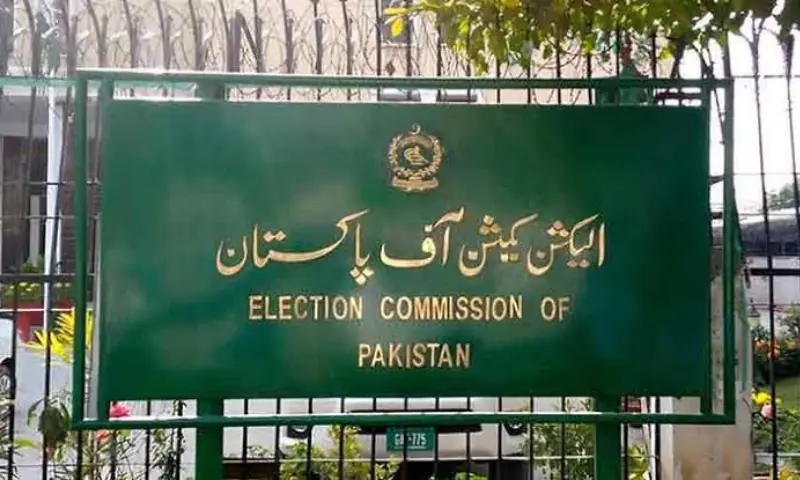
ECP sets ward delimitation for Quetta and Kharian cantonment boards
Quetta moves from Class-II to Class-I and Kharian from Class-III to Class-II, with 10 wards fixed in Quetta and five in Kharian under notifications issued on 29 October.

Information ministry blames Kabul inaction for strained Pakistan-Afghanistan ties
The ministry rejected a Taliban spokesperson's account of the dispute, saying cross-border militancy remains the biggest obstacle to normal relations between the neighbours.

Tarar proposes national council on cyber security and digital literacy
The information minister used the PTA's Cyber Security Awareness Week to float a coordinating body and to call for digital literacy in school curricula.

Health minister says barcode scan will flag fake medicines from November
Mustafa Kamal told the National Assembly that hospitals will also have to buy all vaccines from Pakistan's own funds by 2030, at a cost of about $1.2 billion.