Aurangzeb calls for climate funds, regulated virtual assets
Finance Minister Muhammad Aurangzeb outlined Pakistan's climate financing needs and digital asset plans during UN General Assembly meetings in New York.

Finance Minister Muhammad Aurangzeb told international audiences in New York that Pakistan is shifting towards a regulated virtual-assets framework and needs faster, simpler access to climate finance.
The remarks came on the first day of his visit for the 81st session of the United Nations General Assembly High-Level Week, according to a government statement issued Tuesday.
At the World Economic Forum's "Financing Planet and Prosperity" meeting, Aurangzeb said Pakistan remains vulnerable to climate-related disasters, particularly floods that have damaged infrastructure and communities. He outlined government work on disaster response frameworks, early warning systems and costed climate investment plans, and argued that international assistance must be supported by domestic resources and fiscal buffers.
The finance minister said Pakistan has mobilised financing through the World Bank, Asian Development Bank and international capital markets for relief, adaptation and reconstruction. He called on international climate funds, including the Green Climate Fund and the Loss and Damage Fund, to simplify their procedures and speed up access to financing.
At United Nations Digital Cooperation Day 2026, Aurangzeb highlighted Pakistan's move towards regulated virtual assets. Tokenisation, he said, should address practical economic needs such as lower remittance costs, financing for small and medium enterprises, sovereign debt and broader access to financial services. He added that private-sector innovation should be supported by government safeguards, inclusive digital infrastructure and international cooperation, and that emerging economies should have a role in setting global standards for digital assets.
Aurangzeb also participated in the launch of the COP31 Action Agenda and expressed Pakistan's support for its priorities, which he said align with the country's national climate goals and NDC 3.0. He listed clean energy and electrification, renewable energy, energy-efficient buildings, climate-resilient cities, climate education, food security and climate-resilient agriculture as key areas.
He welcomed the proposed Climate Implementation Bridge as a mechanism to turn climate commitments into investable and bankable projects, saying the main challenge now is implementation rather than the formulation of plans, and praised the agenda's focus on defined actions, key performance indicators and measurable results.
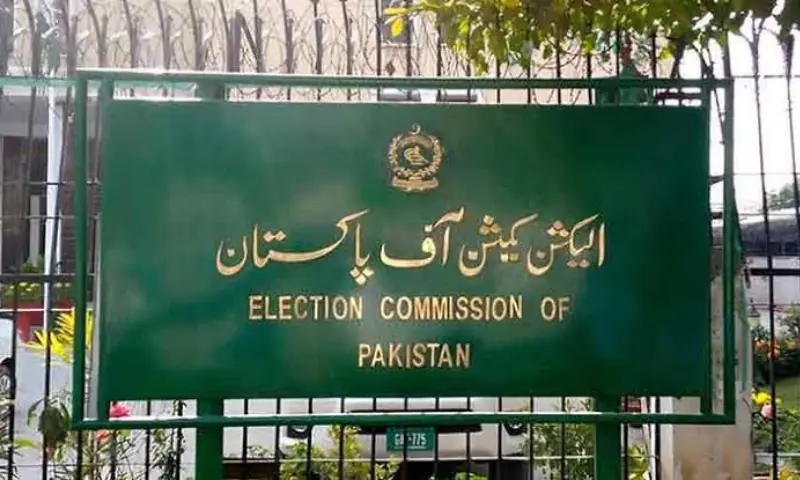
ECP sets ward delimitation for Quetta and Kharian cantonment boards
Quetta moves from Class-II to Class-I and Kharian from Class-III to Class-II, with 10 wards fixed in Quetta and five in Kharian under notifications issued on 29 October.

Information ministry blames Kabul inaction for strained Pakistan-Afghanistan ties
The ministry rejected a Taliban spokesperson's account of the dispute, saying cross-border militancy remains the biggest obstacle to normal relations between the neighbours.

Tarar proposes national council on cyber security and digital literacy
The information minister used the PTA's Cyber Security Awareness Week to float a coordinating body and to call for digital literacy in school curricula.

Health minister says barcode scan will flag fake medicines from November
Mustafa Kamal told the National Assembly that hospitals will also have to buy all vaccines from Pakistan's own funds by 2030, at a cost of about $1.2 billion.