Aurangzeb presses banks to speed SME and farm loan disbursements
A finance ministry review shows Rs8.674bn approved under the Zarkhez-e farm loan scheme but only about Rs2.34bn actually disbursed to small farmers.

Pakistan's small-business and farm lending schemes are still converting approvals into cash far more slowly than housing finance, Finance Minister Muhammad Aurangzeb said at a review meeting on Wednesday, calling on banks and implementing agencies to speed up disbursements.
Aurangzeb chaired the sixth meeting of the Access to Finance (A2F) Steering Committee in Islamabad, which reviewed progress across SME, agriculture, export and housing lending as well as the prime minister's flagship Apna Ghar, Zarkhez-e and Pakistan Accelerated Vehicle Electrification (PAVE) schemes.
Figures placed before the committee showed outstanding SME financing at Rs1.148 trillion as of October 23, 2026, including Rs538 billion for small enterprises. Outstanding agriculture credit reached Rs1.329 trillion, spread across roughly 3.5 million borrowers. ProPakistani also reported the agriculture figure, citing the Finance Division.
Under the Prime Minister's Zarkhez-e: Asaan Zarai Qarza Scheme, 20,176 applications worth Rs8.674 billion had been approved, but only 6,132 collateral-free loans worth about Rs2.34 billion had been disbursed to small farmers.
Housing finance showed a narrower gap. Outstanding housing finance reached Rs455 billion serving 241,500 borrowers, and under Apna Ghar 86,896 applications involving Rs511 billion had been approved against 15,584 loans worth roughly Rs91 billion disbursed. Aurangzeb expressed appreciation for the progress in housing finance generally and under Apna Ghar in particular, but asked financial institutions and implementing agencies to significantly step up efforts on SME and agriculture lending, stressing urgency, stronger execution and faster disbursement.
The committee also reviewed the PAVE scheme for electric two- and three-wheelers: 21,918 applications worth about Rs3.06 billion had been approved, 5,506 loans worth Rs1.093 billion disbursed, and 3,263 electric vehicles delivered to customers.
On SME readiness, the committee examined the Small and Medium Enterprises Development Authority's capacity-building roadmap, which focuses on financial literacy, better documentation, accounting support and digital tools. SMEDA was asked to work closely with lenders and regulators.
Digital initiatives came up as well, including pilot projects for SME credit scoring and exporter financing. The finance minister stressed secure, consent-based data sharing, confidentiality safeguards and timely resolution of data-linkage problems so that cash-flow-based lending can spread.
Legal and regulatory measures to improve recovery mechanisms and reduce lending risk to underserved segments were also discussed.
The meeting was attended by the federal secretaries of finance, housing and works, and national food security and research, the governor of the State Bank of Pakistan, the chairman of the Securities and Exchange Commission of Pakistan, the chief executives of Karandaaz Pakistan and SMEDA, and senior representatives of the Finance Division, SBP and SECP.
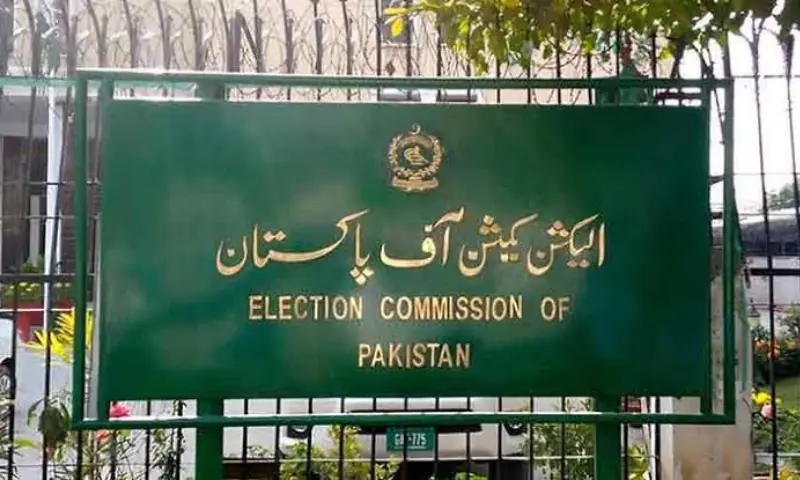
ECP sets ward delimitation for Quetta and Kharian cantonment boards
Quetta moves from Class-II to Class-I and Kharian from Class-III to Class-II, with 10 wards fixed in Quetta and five in Kharian under notifications issued on 29 October.

Information ministry blames Kabul inaction for strained Pakistan-Afghanistan ties
The ministry rejected a Taliban spokesperson's account of the dispute, saying cross-border militancy remains the biggest obstacle to normal relations between the neighbours.

Tarar proposes national council on cyber security and digital literacy
The information minister used the PTA's Cyber Security Awareness Week to float a coordinating body and to call for digital literacy in school curricula.

Health minister says barcode scan will flag fake medicines from November
Mustafa Kamal told the National Assembly that hospitals will also have to buy all vaccines from Pakistan's own funds by 2030, at a cost of about $1.2 billion.