Corporate debt issuance reaches Rs291bn in first nine months
Finance Division says Aurangzeb chaired the fourth Capital Market Development Council meeting, which reviewed a Rs100bn National Grid sukuk plan and listing reforms.
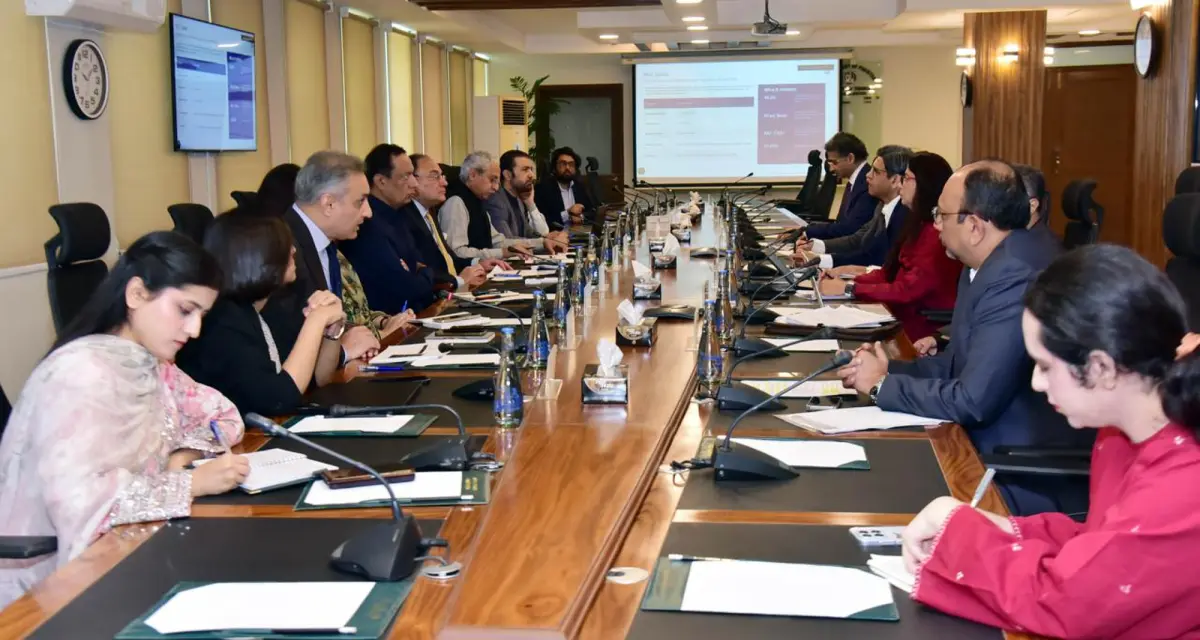
Pakistan's corporate debt issuance came to Rs291 billion in the first nine months of 2026, the Finance Division said on Friday, in a statement on a Capital Market Development Council (CMDC) meeting chaired by Finance Minister Muhammad Aurangzeb.
Issuance for the whole of 2025 was Rs326 billion, 30 per cent higher than in 2024, according to the Finance Division. Twelve new listed corporate debt issuances worth Rs45.4 billion were recorded between February 2025 and September 2026, with sukuk among the instruments sold.
The council reviewed a proposed Shariah-compliant sukuk programme by National Grid Company of Pakistan Limited of up to Rs100 billion. A first issuance of up to Rs20 billion, with a tenor of up to 10 years, is planned subject to approvals and market conditions. The programme would be sold in tranches through public offerings listed on the Pakistan Stock Exchange.
Aurangzeb said the National Grid issue could show what listed corporate debt instruments can do and encourage similar issuances by other entities.
The council reviewed measures to make issuance easier, including Corporate Debt Market Desks being set up at the Securities and Exchange Commission of Pakistan (SECP) and the PSX. A one-window listing mechanism is already running through the two institutions, and work is under way to bring in the Central Depository Company (CDC).
Secondary-market activity has picked up. Average daily traded value rose from Rs3.93 billion in fiscal 2026 to more than Rs10 billion in fiscal 2027 up to October 15, the Finance Division said. Thirteen banks have been onboarded into secondary-market trading arrangements, with the PSX, the Pakistan Banks' Association, the CDC and the National Clearing Company of Pakistan Limited involved.
The council discussed allowing banks and other eligible institutions to trade government sukuk through the PSX without holding broker accounts.
To widen the investor base, the SECP briefed the council on consultations with 17 pension fund managers and 44 insurance companies. The talks covered the supply of suitable debt instruments, secondary-market liquidity, issuer disclosures and the investment framework.
Aurangzeb asked the SECP to work with the PSX and relevant platforms on practical ways for small and medium-sized enterprises to raise money through the capital market, and called for closer engagement between investment banks, financial advisers, consultants and prospective issuers.
He also asked the SECP and the PSX to renew engagement with MSCI on a possible future reclassification of Pakistan to Emerging Markets status, referring to his meeting with the MSCI team on the sidelines of the IMF-World Bank Annual Meetings in Bangkok earlier this month.
The SECP chairman and representatives of the State Bank of Pakistan, the PSX, the Pakistan Banks' Association and the Tax Policy Office attended, along with senior Finance Division officials.

Information ministry blames Kabul inaction for strained Pakistan-Afghanistan ties
The ministry rejected a Taliban spokesperson's account of the dispute, saying cross-border militancy remains the biggest obstacle to normal relations between the neighbours.

Tarar proposes national council on cyber security and digital literacy
The information minister used the PTA's Cyber Security Awareness Week to float a coordinating body and to call for digital literacy in school curricula.

Health minister says barcode scan will flag fake medicines from November
Mustafa Kamal told the National Assembly that hospitals will also have to buy all vaccines from Pakistan's own funds by 2030, at a cost of about $1.2 billion.

Fakhar Zaman hits century and passes 4,000 ODI runs
The Pakistan batter reached 4,000 one-day international runs in his 97th ODI and became the 16th from his country to pass the mark.