Federal austerity drive bans vehicles, new posts, foreign trips
The instructions cover all federal ministries and state-owned bodies, with a Finance Secretary-led committee reviewing any exemptions.

The federal government has directed all federal ministries, divisions and attached departments, along with public sector corporations, to enforce a new round of austerity measures for the financial year 2025-26. The instructions, reported by Minute Mirror, were issued by the administration of Prime Minister Muhammad Shehbaz Sharif after the federal budget and aim to control recurrent spending and eliminate non-essential expenditure.
Under the measures, the purchase of all types of vehicles is banned except operational vehicles needed for essential services such as ambulances, firefighting vehicles, buses and vans for educational institutions, solid waste vehicles and motorbikes. Procurement of machinery and equipment is similarly restricted to health, agriculture and education.
The government has also banned the creation of new posts, including contingent-paid and temporary posts, and has ordered that contingent-paid and temporary posts continuing beyond one year be discontinued. Funding for medical treatment abroad at public expense and non-obligatory official foreign visits involving government funding are banned as well.
Ministries and divisions have been told to circulate the instructions to all departments under their administrative control, and all posts lying vacant for the last three years are to be abolished. Where a relaxation is unavoidable, an Austerity Committee headed by the Federal Finance Secretary will examine cases one by one after scrutiny and justification, according to Minute Mirror.
Separately, Aaj News reported that Pakistan Railways is enforcing austerity measures that include a ban on foreign tours and reductions in fuel spending.
The federal government has also linked the austerity drive to longer-term reforms: rightsizing the federal government, containing pension liabilities through parametric changes, reducing inefficiencies in the energy sector, rationalising cross-subsidies, timely gas and electricity tariff adjustments, and improving the performance of state-owned enterprises through restructuring, privatisation and governance reforms. These steps are intended to improve the quality of public spending and reduce reliance on additional borrowing.
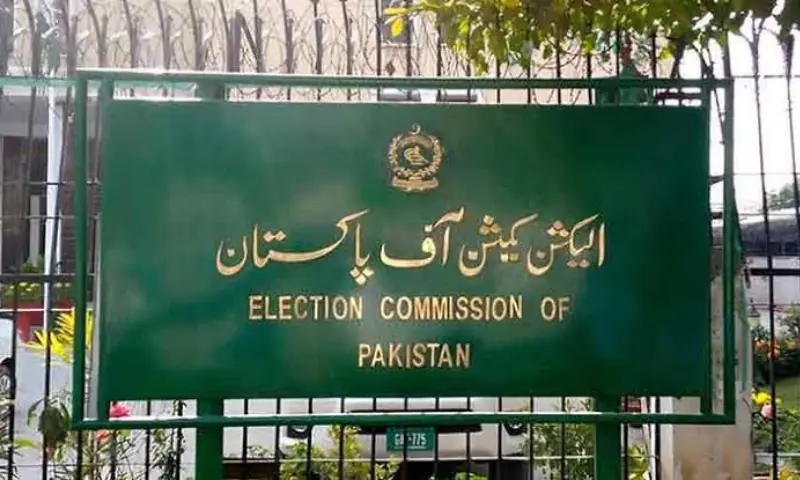
ECP sets ward delimitation for Quetta and Kharian cantonment boards
Quetta moves from Class-II to Class-I and Kharian from Class-III to Class-II, with 10 wards fixed in Quetta and five in Kharian under notifications issued on 29 October.

Information ministry blames Kabul inaction for strained Pakistan-Afghanistan ties
The ministry rejected a Taliban spokesperson's account of the dispute, saying cross-border militancy remains the biggest obstacle to normal relations between the neighbours.

Tarar proposes national council on cyber security and digital literacy
The information minister used the PTA's Cyber Security Awareness Week to float a coordinating body and to call for digital literacy in school curricula.

Health minister says barcode scan will flag fake medicines from November
Mustafa Kamal told the National Assembly that hospitals will also have to buy all vaccines from Pakistan's own funds by 2030, at a cost of about $1.2 billion.