Finance Division dismisses petroleum levy centrepiece reports as misleading
The ministry said Pakistan's IMF programme is a whole-of-government effort and the levy is only one revenue instrument, not a central condition.

The Finance Division on Tuesday rejected as "misleading" reporting that the petroleum development levy (PDL) was the central point of Pakistan's International Monetary Fund programme, saying the engagement is a whole-of-government initiative rather than a finance ministry-led exercise.
The ministry was responding to a report published by The Express Tribune on September 22 titled "Iqbal seeks role in IMF talks", Dawn and Business Recorder reported. Pakistan's programme with the IMF includes a $7 billion Extended Fund Facility and a $1.1bn Resilience and Sustainability Facility, Dawn reported.
The Finance Division said the Extended Fund and Resilience and Sustainability facilities cover reforms and commitments within the mandates of multiple federal and provincial institutions, including the Finance Division, Planning Commission, Ministry of Energy, provincial governments, Federal Board of Revenue and the State Bank of Pakistan. "Concerned ministries and institutions participate and lead technical discussions, including benchmark setting relating to their respective mandate," it said.
The ministry rejected the characterisation that the programme is focused primarily on fiscal targets. It said the programme includes growth-enhancing structural reforms, social protection, governance, energy-sector efficiency, climate resilience and measures to reduce economic distortions.
On the petroleum levy, the Finance Division said the fiscal strategy is broader and includes FBR revenue mobilisation, expansion of the tax base, provincial taxation and expenditure rationalisation. "PDL is one of the revenue instruments and describing it as centrepiece of programme materially overstates its role," it said.
The ministry clarified that while the IMF programme does not prescribe a single permanent headline PDL rate, published programme documents contain provisions concerning petroleum pricing and levies. These include alignment of domestic fuel prices with international prices through regular adjustments, while the Resilience and Sustainability Facility also includes a reform measure introducing a supplementary carbon levy through the PDL framework.
It also rejected what it called an analytical error in directly linking the PDL to inflation, unemployment, poverty and low economic growth, saying inflation and growth outcomes are influenced by many factors including geopolitics, commodity prices, exchange-rate movements, monetary conditions and global shocks.
The ministry said fiscal consolidation under the programme included social safeguards, such as targeted cash transfers under the Benazir Income Support Programme and inflation adjustments to unconditional cash-transfer benefits. It added that agricultural income taxation is constitutionally and administratively a provincial responsibility.
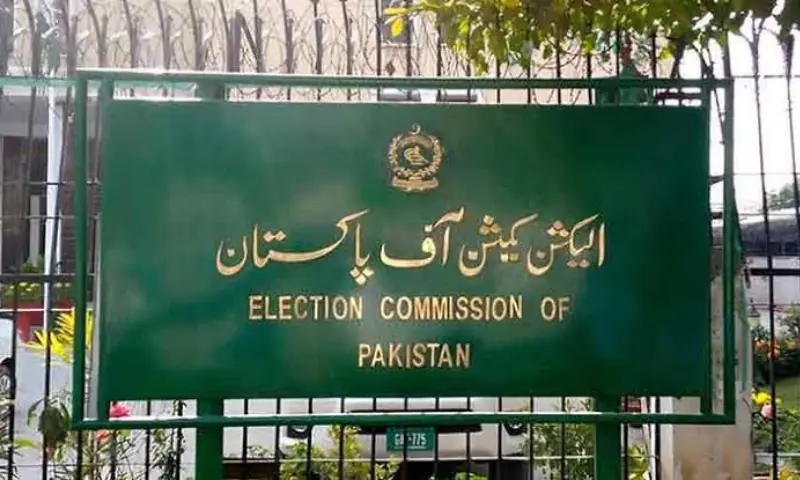
ECP sets ward delimitation for Quetta and Kharian cantonment boards
Quetta moves from Class-II to Class-I and Kharian from Class-III to Class-II, with 10 wards fixed in Quetta and five in Kharian under notifications issued on 29 October.

Information ministry blames Kabul inaction for strained Pakistan-Afghanistan ties
The ministry rejected a Taliban spokesperson's account of the dispute, saying cross-border militancy remains the biggest obstacle to normal relations between the neighbours.

Tarar proposes national council on cyber security and digital literacy
The information minister used the PTA's Cyber Security Awareness Week to float a coordinating body and to call for digital literacy in school curricula.

Health minister says barcode scan will flag fake medicines from November
Mustafa Kamal told the National Assembly that hospitals will also have to buy all vaccines from Pakistan's own funds by 2030, at a cost of about $1.2 billion.