Finance Division projects October inflation at 9.5 to 10.5 percent
Monthly outlook flags Gulf conflict, oil prices and trade disruption as downside risks after September inflation eased to 10.3 percent from 11.1 percent in August.

Inflation is projected to stay between 9.5 and 10.5 percent in October 2026, the Finance Division said in its Monthly Economic Update and Outlook, naming conflict in the Gulf, volatile oil prices, trade disruption and elevated global inflation as downside risks for the economy.
Headline inflation eased to 10.3 percent in September from 11.1 percent in August, but averaged 10.2 percent over July-September of fiscal 2027, against 4.3 percent in the same quarter a year earlier, according to the report issued in Islamabad. Business Recorder reported separately that the September reading compared with 5.8 percent in September 2025.
The ministry said the path ahead would remain sensitive to international energy prices, food supplies and base effects. Brent crude averaged $116.8 a barrel in September, up 28.4 percent from August, while the Food and Agriculture Organisation's Food Price Index rose 1.5 percent to 136 points; higher palm oil and fertiliser prices added to import and farm input costs.
Within the consumer price index, transport costs were up 27.4 percent year on year in September, housing, water, electricity, gas and fuel 12.4 percent, perishable food 11.8 percent and non-perishable food 7.6 percent, pointing to continued pressure on household purchasing power.
On growth, revised national accounts put fiscal 2026 expansion at 3.65 percent, slightly below the earlier 3.70 percent estimate, with agriculture at 3.50 percent, industry 3.34 percent and services 3.81 percent. Provisional maize output is estimated at 9.98 million tonnes, up 12.1 percent, sugarcane at 97.3 million tonnes, up 8.8 percent, and rice at 10.2 million tonnes, up 1.8 percent; cotton fell 4.8 percent to 6.71 million bales. Large-scale manufacturing grew 1.9 percent in July-August, against 4.8 percent a year earlier.
The current account deficit widened to $874 million in July-September from $755 million a year ago, as goods imports rose 14.3 percent to $17.8 billion and exports 7.7 percent to $8.5 billion; remittances climbed 14 percent to $10.9 billion.
The $3.0 billion Eurobond issued in September was followed by $2.9 billion in net portfolio inflows, compared with outflows of $633.3 million a year earlier, and foreign direct investment rose about 20 percent to $720 million. The overall balance of payments posted a surplus of $3.1 billion against a $274 million deficit, and State Bank liquid reserves stood at $21.5 billion by October 16, with total liquid reserves at $26.8 billion.
The fiscal surplus narrowed to 0.8 percent of GDP, or Rs 1,197.9 billion, from 1.7 percent, and the primary surplus to 1.6 percent from 2.3 percent. Federal Board of Revenue collection grew 7.0 percent to Rs 3,086.2 billion in the quarter, beating the target by Rs 33.2 billion.
The Monetary Policy Committee raised the policy rate by 50 basis points to 12.0 percent effective October 27, citing inflationary risks from the Middle East conflict and high energy prices. The KSE-100 fell 7,006 points in September to close at 169,969, with market capitalisation down Rs 903 billion to Rs 18,928 billion.
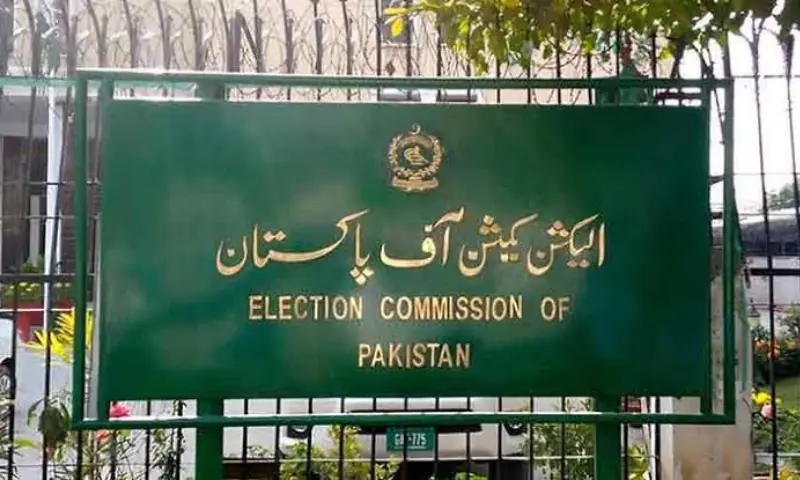
ECP sets ward delimitation for Quetta and Kharian cantonment boards
Quetta moves from Class-II to Class-I and Kharian from Class-III to Class-II, with 10 wards fixed in Quetta and five in Kharian under notifications issued on 29 October.

Information ministry blames Kabul inaction for strained Pakistan-Afghanistan ties
The ministry rejected a Taliban spokesperson's account of the dispute, saying cross-border militancy remains the biggest obstacle to normal relations between the neighbours.

Tarar proposes national council on cyber security and digital literacy
The information minister used the PTA's Cyber Security Awareness Week to float a coordinating body and to call for digital literacy in school curricula.

Health minister says barcode scan will flag fake medicines from November
Mustafa Kamal told the National Assembly that hospitals will also have to buy all vaccines from Pakistan's own funds by 2030, at a cost of about $1.2 billion.