Gilgit-Baltistan presents Rs218.8 billion budget with Rs52 billion deficit
The fiscal 2026-27 plan sets Rs43.97 billion for development and asks Islamabad for a Rs153.3 billion stabilisation package.
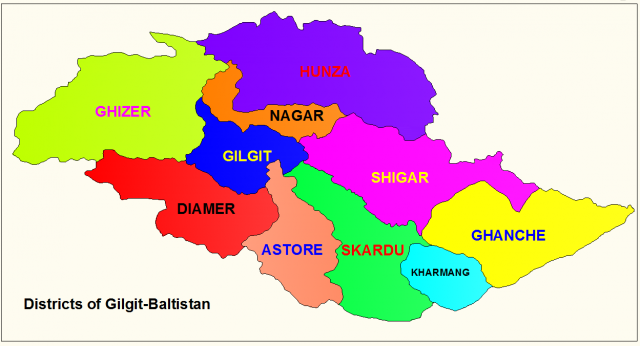
Gilgit-Baltistan's government on Tuesday presented its delayed full-year budget of Rs218.845 billion for fiscal year 2026-27, showing a deficit of Rs52.65 billion that it plans to cover with federal support. Senior Minister Mohammad Ali Akhtar, who holds the finance portfolio, placed the budget before the Gilgit-Baltistan Assembly.
The full-year document came after an interim budget of Rs20.478 billion presented in July for the first quarter. Akhtar said the elected government took office at the end of June 2026 and had little time before the new financial year, so it ensured continuity first and then prepared a full-year budget reflecting people's needs and priorities.
The budget sets Rs43.97 billion for development and Rs149.87 billion for non-development expenditure. The tax revenue target is Rs16.98 billion. The Annual Development Plan was increased from Rs22 billion to Rs23 billion, and the federal Public Sector Development Programme allocation for Gilgit-Baltistan was increased from Rs15 billion to Rs20.973 billion. The wheat subsidy fund was raised from Rs15 billion to Rs22 billion, with estimated revenue from wheat sales at Rs3 billion.
Gilgit-Baltistan has requested a special stabilisation package of about Rs153.30 billion from the federal government for economic and administrative stability. Akhtar said the package covers local government stability, law and order, education, health, tourism, flood compensation, municipal services, food supply, e-governance, agriculture, climate change, institutional capacity building and various liabilities. He also said one percent of development funds would be diverted to a consolidated climate account and non-development budgets of all departments would be cut by 30 percent.
The budget includes an additional Rs170 million for medicines and a health endowment fund, Rs50 million for water management, Rs50 million for agriculture-sector reforms, Rs50 million each for youth loans, local bodies' elections and renovation of local bodies' offices, Rs78 million for the water and power department, and Rs18 million for tourism. Development projects in ten districts received Rs5.034 billion.
According to The Express Tribune, development expenditure is substantially smaller than non-development spending, leaving limited fiscal space for infrastructure and productive capacity that could expand Gilgit-Baltistan's revenue base. The region's tax target of Rs16.98 billion against expenditure above Rs200 billion leaves a gap that must be covered largely through federal assistance.
Amir Muqam greets Gilgit-Baltistan on 79th Independence Day, pledges tourism focus
The federal minister for Kashmir Affairs and Gilgit-Baltistan marked the region's 79th Independence Day with a message that also promised continued attention to development and tourism.

Gilgit-Baltistan marks 80th Independence Day with Gilgit ceremony
Radio Pakistan says the main event will be held at the Army Helipad in Gilgit, with tributes to those it calls heroes of the 1947 liberation struggle.

Skardu family of four killed; police suspect honour killing
Police say Muhammad Aslam, his wife Hania and their children Mahdi, 4, and Zahra, 2, were killed with a sharp-edged weapon; the FIR names Hania's father, brothers and uncle.
Diamer-Bhasha, Dasu costs rise by Rs1.9 trillion, NA told
The Ministry of Water Resources blames exchange-rate changes and says a revised PC-I has been submitted, while cement, diesel and steel prices have jumped.