Government fixes wheat price at Rs4,500 after IMF consultation
Food security minister Rana Tanveer Hussain says provinces agreed to the support price and 1.3 million tonnes of PASSCO stocks have already gone to them.
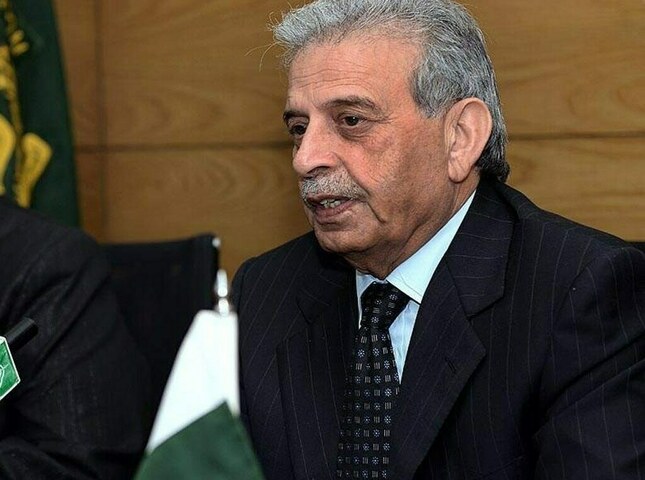
ISLAMABAD: The federal government fixed the wheat price at Rs4,500 per maund after consulting the International Monetary Fund, National Food Security and Research Minister Rana Tanveer Hussain said at a press conference in Islamabad on Monday, Business Recorder reported.
Hussain said the national wheat policy had been framed after nearly four decades and that a consensus had been reached with the provinces to protect farmers, stabilise the market and strengthen food security. He was accompanied by Pakistan Kissan Ittehad president Khalid Mahmood Khokhar.
The minister said the government would maintain strategic wheat reserves of up to six million tonnes this year and ruled out any shortage, saying stocks were sufficient for the country's requirements. Answering a question, he said wheat, being a staple food, needed some form of regulated market.
Imported wheat would cost around Rs4,900 per maund, he said, which made procurement from domestic farmers the more suitable option; the government would prioritise local growers over unnecessary imports.
More than 1.3 million tonnes of wheat had already been supplied to the provinces from Pakistan Agricultural Storage and Services Corporation stocks, he said, and arrangements could be made to import up to 550,000 tonnes depending on provincial requirements and demand.
Hussain attributed the recent increase in wheat prices to artificial manipulation by certain elements, maintained that adequate stocks were available, and said he expected prices to return to normal within the next few days. He warned that the government would act against speculative practices, artificial shortages and unjustified price increases.
He said the policy was formulated after extensive consultation with provincial governments and that cooperation with provincial administrations and farmers' organisations would continue during implementation. The federal government under Prime Minister Shehbaz Sharif was pursuing broader agricultural reforms to raise productivity, cut production costs and strengthen food security, he said.
Policies on seeds, olives and biotechnology had also been framed, the minister said, adding that quality seed and modern agricultural technology were essential to lift crop yields and farmers' economic prospects. He described agriculture as the backbone of Pakistan's economy.
On input costs, Hussain said Pakistan had been affected more severely than other countries by the Middle East crisis because 80 percent of its energy import bill was exposed to external shocks. He acknowledged that DAP prices had increased while urea prices remained stable, and said sugar was stable at around Rs140 per kg in retail.
Khokhar welcomed the decision to fix the price at Rs4,500 per maund and the consultation with provincial governments, saying farmers needed a predictable and reasonable price for their produce.

ECP sets ward delimitation for Quetta and Kharian cantonment boards
Quetta moves from Class-II to Class-I and Kharian from Class-III to Class-II, with 10 wards fixed in Quetta and five in Kharian under notifications issued on 29 October.

Information ministry blames Kabul inaction for strained Pakistan-Afghanistan ties
The ministry rejected a Taliban spokesperson's account of the dispute, saying cross-border militancy remains the biggest obstacle to normal relations between the neighbours.

Tarar proposes national council on cyber security and digital literacy
The information minister used the PTA's Cyber Security Awareness Week to float a coordinating body and to call for digital literacy in school curricula.

Health minister says barcode scan will flag fake medicines from November
Mustafa Kamal told the National Assembly that hospitals will also have to buy all vaccines from Pakistan's own funds by 2030, at a cost of about $1.2 billion.