Journalists, civil society form committee to protect free expression
A Lahore roundtable chaired by Nasir Zaidi agreed to document violations and draft a charter of demands after wider consultations.

Senior journalists, press union representatives, political figures and civil society members agreed at a roundtable in Lahore on October 26 to form a committee to protect freedom of expression, citing censorship, legal harassment, financial insecurity and restrictions on digital communication.
The session was titled "How to Strengthen the Custodians of Free Speech to Expand the Space for Freedom of Expression?" It was moderated by senior journalist Munizae Jahangir and chaired by veteran journalist Nasir Zaidi. Minute Mirror reported the roundtable was held in Lahore, while Geo News datelined its report from Islamabad.
Participants agreed the proposed committee would consult relevant stakeholders, document violations of press freedom and prepare a charter of demands after consultations with journalists and other concerned groups.
Anchorperson Hamid Mir called for a white paper documenting restrictions on expression and examining the role of political parties in introducing restrictive legislation. He cited figures of around 500 cases registered under the Prevention of Electronic Crimes Act (PECA), including 35 involving journalists, figures he said required independent verification. According to Geo News, he also referred to a proposed bill regulating social media use by children under 16, which he said would penalise parents for violations committed by their children.
Veteran journalist Mujeebur Rehman Shami argued that Pakistan's problem was not the absence of laws but weak implementation of existing ones, and proposed a comprehensive review of relevant legislation and its effect on free speech. Sohail Warraich, in comments reported by Geo News, said responsibility for protecting the right to free expression rested with society as a whole and asked political and social forums to state their positions openly.
Najam Sethi pointed to self-censorship inside media organisations, saying financial pressure and restrictions had weakened independent journalism, and that media owners imposed curbs where journalists did not censor themselves. He argued sustained protest was one of the few available options, but only if journalists and their organisations set aside their differences.
Asma Shirazi said laws such as PECA should not be used to suppress journalists, and raised concern over online trolling of women, saying the abuse was often treated as a minor matter even though it drove many women off social media. Arifa Noor called for systematic documentation of censorship and violations against journalists.
Representatives from Balochistan, Sindh, Khyber Pakhtunkhwa, Punjab, Azad Jammu and Kashmir and Gilgit-Baltistan described threats, restricted reporting, job losses and unpaid salaries. Senior journalist Saleem Shahid said Balochistan's journalists faced threats from non-state actors, political parties and religious groups, and that television channels had cut provincial reporting teams to a single reporter and cameraman. Karachi Union of Journalists president Tahir Hasan said self-censorship had become the norm in Sindh, though Sindhi-language media still reported relatively freely. Representatives from AJK highlighted prolonged internet disruption.
Pakistan Federal Union of Journalists secretary general Arshad Ansari said journalists' unions must lead efforts to defend professional rights, and expressed concern over unresolved cases involving murdered journalists. Former senator Farhatullah Babar urged the proposed alliance to engage political parties directly and demand stronger data protection, safeguards against unlawful surveillance and an effective protection mechanism for journalists.
Concluding the meeting, Nasir Zaidi said participants supported a united alliance to strengthen journalists' organisations and protect free expression.
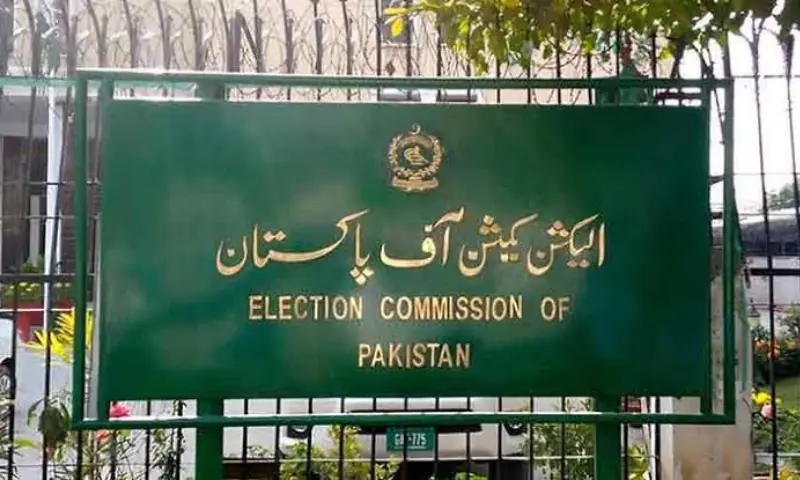
ECP sets ward delimitation for Quetta and Kharian cantonment boards
Quetta moves from Class-II to Class-I and Kharian from Class-III to Class-II, with 10 wards fixed in Quetta and five in Kharian under notifications issued on 29 October.

Information ministry blames Kabul inaction for strained Pakistan-Afghanistan ties
The ministry rejected a Taliban spokesperson's account of the dispute, saying cross-border militancy remains the biggest obstacle to normal relations between the neighbours.

Tarar proposes national council on cyber security and digital literacy
The information minister used the PTA's Cyber Security Awareness Week to float a coordinating body and to call for digital literacy in school curricula.

Health minister says barcode scan will flag fake medicines from November
Mustafa Kamal told the National Assembly that hospitals will also have to buy all vaccines from Pakistan's own funds by 2030, at a cost of about $1.2 billion.