Journalists face threats and violence across Gilgit-Baltistan
A Pamir Times investigation details attacks in Gilgit and Rondu, including a Skardu reporter beaten outside a police station, and demands for legal protections.

Pamir Times has documented a pattern of threats, physical attacks and police violence against journalists in Gilgit-Baltistan, including an assault on a Skardu-based reporter outside a police station in Rondu while he was covering a campaign visit. Journalists, union leaders and rights advocates interviewed for the investigation say the region lacks the legal protections that other parts of Pakistan have adopted.
Mubarak Hussain Azad, a Gilgit journalist, described being surrounded at Yadgar Chowk on 1 Muharram 2023. He said a group pointed a pistol at him and demanded his camera; the men made him delete his footage before kicking the camera back. Moving toward the chowk, he said, gunfire erupted and two young men were shot in front of him. He crawled to safety and filed a live update saying the situation was normal while firing continued. On 1 May 2026 he was covering a violent protest outside the UNMOGIP office in Gilgit when the crowd turned on him; two bystanders pulled him free and pushed him toward police, who were then attacked. "In Gilgit-Baltistan, journalism, especially field reporting and protest coverage, is extremely difficult and life threatening," Azad said.
Khalid Hussain, head of the GB Union of Journalists, said he was attacked in 2007 and injured by police in 2011. More than 200 journalists work across Gilgit-Baltistan, he said, many facing security threats, professional pressure and harassment from police and political or influential groups. He said the region still has no effectively implemented Right to Information law, weakening accountability reporting, and called on the GB Assembly to pass legislation modelled on federal laws guaranteeing press freedom, access to public information and protection for journalists.
Israr Uddin Israr, GB representative of the Human Rights Commission of Pakistan, estimated five to ten cases are reported annually but said the real number is likely much higher. The GB Journalists Union puts the figure at up to 20 cases a year, mostly unpublished in mainstream newspapers. Cases he listed included a cameraman pushed during a ruling federal party campaign event and a digital media journalist booked on fabricated charges who spent nearly three months in custody.
Iqbal Salik, a Skardu-based journalist, told the investigation he was attacked twice in one morning in Rondu while covering a campaign visit by federal leader Amir Muqam. A PML-N rally blocked a single-lane road; after the rally leader agreed to make way, about ten men attacked him before others intervened. The same men followed him to the police station and beat him again in front of police, leaving him bleeding from the nose and ears and with an eye injury. An FIR was registered, but Salik called it deliberately weak; the local station house officer released his attackers on personal surety within 24 hours. "Right now, my life is in danger; I cannot go to my ancestral village," he said.
Pamir Times placed the incidents within a national decline: Reporters Without Borders ranked Pakistan 153rd of 180 countries in its 2026 index, and a Freedom Network assessment found many GB journalists unpaid or minimally compensated, with national outlets focused on tourism. The report named businesses, politicians, bureaucrats and state-owned enterprises among potential threat actors, and noted that ethnic and sectarian pressure adds further risk.
Amir Muqam greets Gilgit-Baltistan on 79th Independence Day, pledges tourism focus
The federal minister for Kashmir Affairs and Gilgit-Baltistan marked the region's 79th Independence Day with a message that also promised continued attention to development and tourism.

Gilgit-Baltistan marks 80th Independence Day with Gilgit ceremony
Radio Pakistan says the main event will be held at the Army Helipad in Gilgit, with tributes to those it calls heroes of the 1947 liberation struggle.

Skardu family of four killed; police suspect honour killing
Police say Muhammad Aslam, his wife Hania and their children Mahdi, 4, and Zahra, 2, were killed with a sharp-edged weapon; the FIR names Hania's father, brothers and uncle.
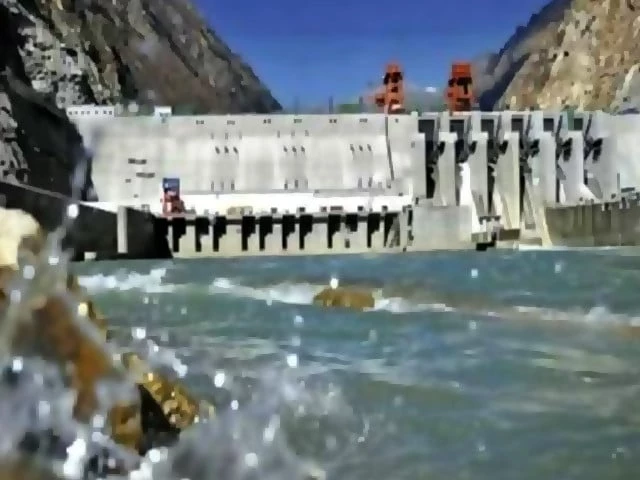
Diamer-Bhasha, Dasu costs rise by Rs1.9 trillion, NA told
The Ministry of Water Resources blames exchange-rate changes and says a revised PC-I has been submitted, while cement, diesel and steel prices have jumped.