



Karachi opens Pakistan's first sponge park to hold monsoon rain
The Jamali Park project, built with WWF-Pakistan over six months, filters rainwater and mosque ablution water for reuse on the park's plants.
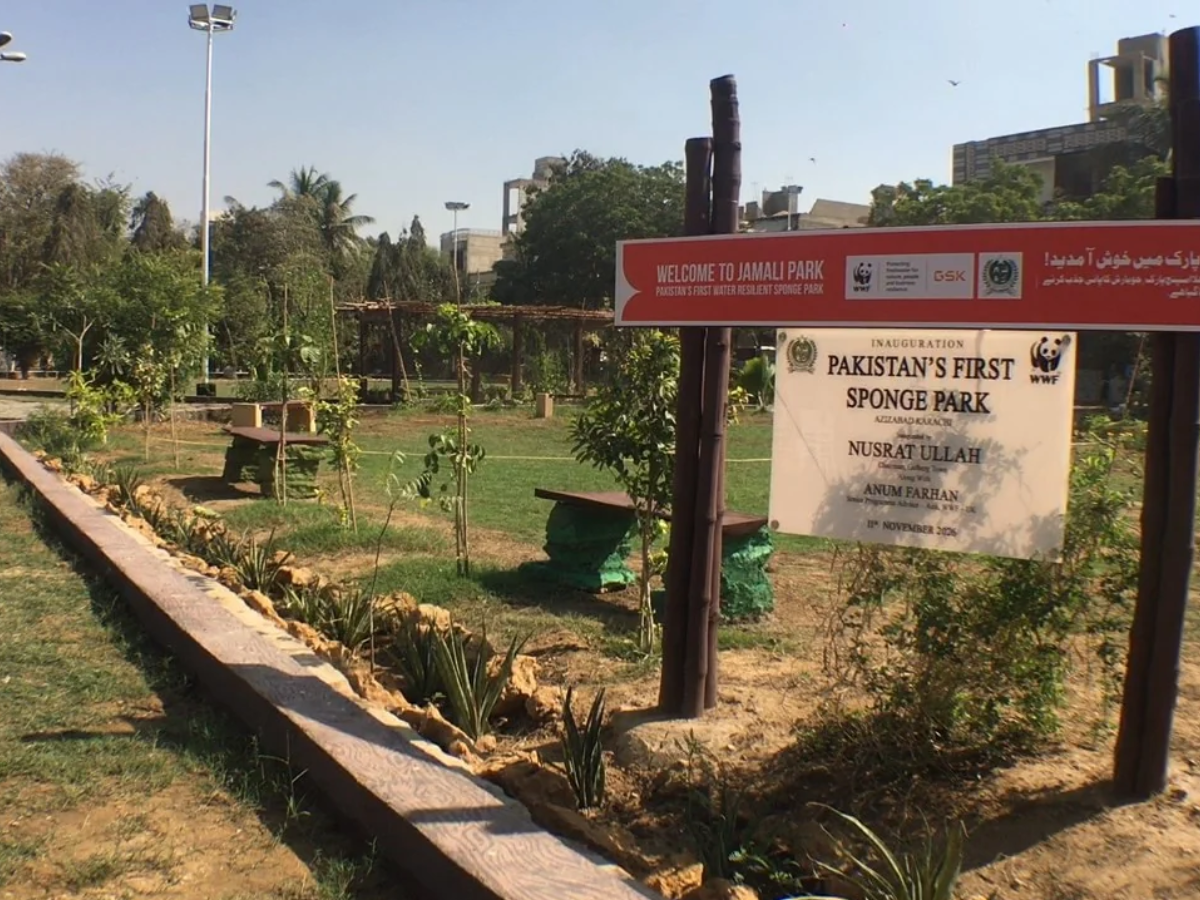
A water-sensitive sponge park at Jamali Park in Karachi's Gulberg Town, built to hold monsoon rainwater back from the city's drains and reuse it, was inaugurated this week in a partnership between WWF-Pakistan, the Gulberg Town Municipal Corporation and a private partner.
Dawn reported that the park can hold up to 100,000 gallons of water during monsoon events. The Express Tribune reported that construction took six months and that the inauguration was held on Thursday.
The system collects rainwater and water from the ablution facilities of a nearby mosque. Both pass through filtration stages, after which the water is stored underground or in tanks and reused to irrigate the park's plants and trees.
Filters installed beneath the park's water channels were developed locally, according to The Express Tribune. They use layers of gravel, sand, silica, activated carbon, biochar and zeolite. Gravel and larger material remove soil and debris, sand and silica trap finer particles, activated carbon and biochar absorb chemical and organic pollutants, and zeolite reduces certain heavy metals before the water reaches storage.
Naim Ashraf Raja, director of biodiversity at the Ministry of Climate Change and Environmental Coordination, told The Express Tribune that underground freshwater reserves had been heavily extracted through boreholes and other methods, and that replenishing them through natural processes was necessary. He said such projects were needed so that future generations did not face worsening water shortages.
Gulberg Town Chairman Nusratullah called the inauguration a milestone, saying the effects of climate change were visible even in European countries and that urgent measures were needed to conserve water.
Sohail Ali Naqvi, director of WWF-Pakistan's Freshwater Programme, said the organisation revised its strategy about 15 years ago and began water projects with the private sector in Lahore in 2012. He said locally sourced materials, including soil and small stones, were used to make the filters in Karachi.
Dawn reported that WWF-Pakistan worked on the project with GSK, the pharmaceutical company. The Express Tribune described the third partner only as the private sector.
The park includes an area where residents can scan barcodes to obtain plants, among them tamarind, almond, peepal and gulmohar. Those who take a plant commit to caring for it and to staying in contact with the park administration so its growth can be monitored. Separate areas are set aside for biodiversity and for butterflies.
Karachi, a densely populated coastal city, faces intense rainfall, urban flooding and water shortages, and much of it is covered by concrete, tiled surfaces and paved roads that keep rainwater from soaking into the ground.
China launched a national sponge city programme in 2014, building water-absorbing parks, artificial reservoirs, wetlands, green roofs and permeable pavement in cities including Wuhan and Shanghai. Copenhagen adopted a cloudburst management plan after severe flooding in 2011, Rotterdam developed water squares, and Singapore turned concrete drains into natural waterways under a national programme.
How the reports differ
Dawn gave the park's capacity, saying it can hold up to 100,000 gallons during monsoon events, and named GSK as the private partner, while The Express Tribune gave the six-month construction period and a detailed account of the filter materials and the officials who spoke at the site, describing the third partner only as the private sector. Dawn placed the park in Federal B Area Block 8 and called it recently inaugurated; The Express Tribune put it in Gulberg Block 2 and said the ceremony was held on Thursday.

WWF reports first sperm whale sighting off Karachi coast
The 45-foot animal was recorded on video 40 nautical miles southwest of the city, the first documented record of the species in Pakistani waters.
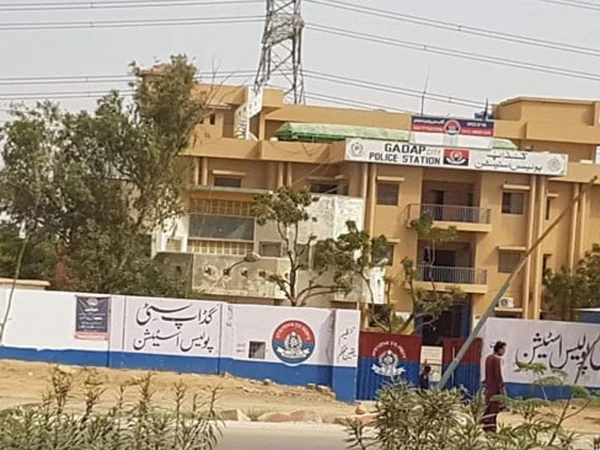
Suspect escapes Gadap City police custody, three officers quarter-guarded
SSP Malir orders an inquiry and IG Sindh seeks an immediate report from DIG East and the SSP after a detainee fled the Karachi station.

Sindh plans Tharparkar drought relief after calamity declaration
Officials have three days to survey food, water, health and livestock needs in Diplo, Dahli, Chachro and Nagar Parkar.

FBR test shows most Karachi tax officers miss benchmark
None of 150 sales tax officers reached 60% and only four of 143 income tax officers did, with average scores of 26.4% and 33.3%.

Justice Kalhoro sworn in as acting Sindh High Court chief justice
Sindh Governor Syed Muhammad Nehal Hashmi administered the oath at Governor House in Karachi, with judges and lawyers attending the ceremony.

Mir Raza JIT widens probe into business partner's dealings
A judicial magistrate gave the team ten days to finish and told it to keep the court informed through the minutes of its meetings.

Karachi court jails man 48 years for attack on Chinese engineers
Judge Ameenuddin Khaskheli ordered the seven sentences to run concurrently, leaving a 14-year term, and fined the convict Rs1.35 million.

Minister asks banks to do more for Cashless Pakistan
Bilal Azhar Kayani told bank chief executives in Karachi that the Raast QR subsidy will continue and the State Bank must return with concrete proposals.