Muhammad Mehdi discusses Pakistan's security at Johns Hopkins
The analyst argued that national security depends on economic stability, institutions, rule of law and public trust, not defence alone.

Foreign affairs analyst Muhammad Mehdi delivered a lecture at Johns Hopkins University in Washington on the current security situation in Asia and possible future scenarios. The talk, reported by Minute Mirror and The Nation, was followed by a question-and-answer session with university faculty and students.
Mehdi said Pakistan's national security could not be assessed only through the lens of military power, defence capabilities and border security. In the modern international system, he argued, state security includes economic stability, the performance of political institutions, internal peace, cybersecurity, technological capacity and public trust.
He described political confrontation, institutional tensions, economic pressures, provincial grievances and terrorism in Pakistan as connected problems that influence one another and together reduce the overall capacity of the state. Sustainable national security, he said, requires strong institutions, the rule of law, economic stability and public confidence in the state system.
On the China-Pakistan Economic Corridor, Mehdi said the success of major economic projects should be judged by measurable economic outcomes rather than infrastructure development alone. He listed industrial production, trade, exports, employment and technology transfer as important indicators.
He also discussed the Mecca Defence Agreement, saying Pakistan should assess security arrangements on the basis of treaty obligations and national interests. It was important, he said, to understand the scope of collective defence, decision-making mechanisms and Pakistan's responsibilities in potential regional conflicts.
On relations with the United States, he identified trade, investment, technology and diplomacy as areas of possible cooperation, but cautioned that no external relationship could substitute for addressing Pakistan's domestic economic weaknesses. Overall, he said, national security extends beyond defence capabilities to the overall capacity of the state: a stable economy, effective institutions, academic and technological ability, and public trust.
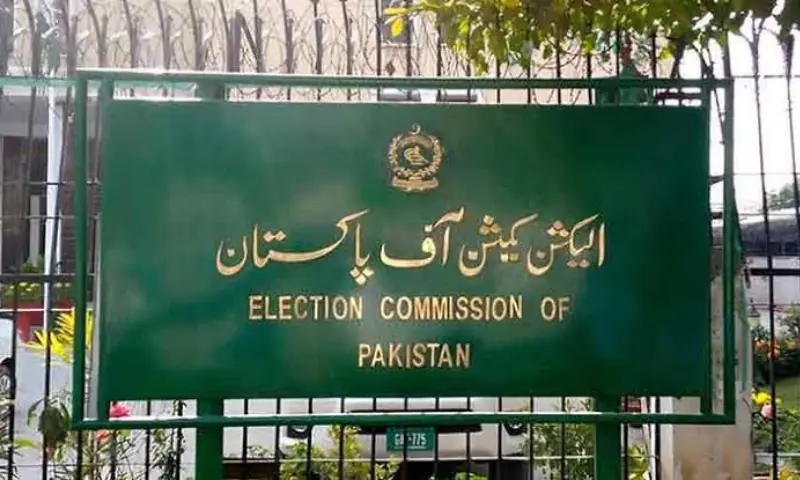
ECP sets ward delimitation for Quetta and Kharian cantonment boards
Quetta moves from Class-II to Class-I and Kharian from Class-III to Class-II, with 10 wards fixed in Quetta and five in Kharian under notifications issued on 29 October.

Information ministry blames Kabul inaction for strained Pakistan-Afghanistan ties
The ministry rejected a Taliban spokesperson's account of the dispute, saying cross-border militancy remains the biggest obstacle to normal relations between the neighbours.

Tarar proposes national council on cyber security and digital literacy
The information minister used the PTA's Cyber Security Awareness Week to float a coordinating body and to call for digital literacy in school curricula.

Health minister says barcode scan will flag fake medicines from November
Mustafa Kamal told the National Assembly that hospitals will also have to buy all vaccines from Pakistan's own funds by 2030, at a cost of about $1.2 billion.