Pakistan opposes extending UN Security Council veto power
Counsellor Gul Qaiser Sarwani tells the General Assembly that new permanent seats and new vetoes would deepen inequality and risk institutional deadlock.
Pakistan told the United Nations General Assembly that reform of the Security Council must settle the question of the veto held by its five permanent members, arguing that extending that power to new members would deepen inequality rather than end the 15-member body's institutional paralysis.
The position was set out by Gul Qaiser Sarwani, counsellor and political coordinator at Pakistan's mission to the UN, during a debate in the 193-member General Assembly on the use of the veto, Express News reported.
According to that report, Sarwani said misuse of the veto damages the Security Council's effectiveness and the credibility of the United Nations, and that the five permanent members (the United States, Russia, China, France and Britain) retain extraordinary influence across the entire UN system.
The debate was convened under resolution 76/262, adopted in April 2022, which requires the General Assembly to meet within 10 working days after a veto is cast in the Security Council. Delegates at the session repeated calls for the council's restructuring so that it can be more effective and accountable in its core task of maintaining international peace and security.
Referring to the campaign by India, Brazil, Germany and Japan for permanent seats, Sarwani said that adding both permanent members and veto rights would deepen existing inequality, preserve historic privileges, create new centres of power and raise the risk of institutional deadlock. "The solution to problems cannot be to create more problems," he said, according to Express News.
Pakistan chairs, together with Italy, the Uniting for Consensus group, which opposes the creation of any new individual permanent member as part of an expansion of the council.
Pakistan's stated position, Sarwani said, is that the veto should be abolished or at the very least subjected to strict limits, and that it should not be expanded further. He said Pakistan supports resolution 76/262, but that any measures to restrict the use of the veto or impose conditions on it must be consistent with the relevant provisions of the UN Charter.
He said Pakistan believes the imbalance is better corrected by placing limits on the veto or by increasing the number and role of elected members. Raising the representation of elected members and changing the threshold of support required for decisions would make the council more democratic and allow effective oversight of veto use, he said.
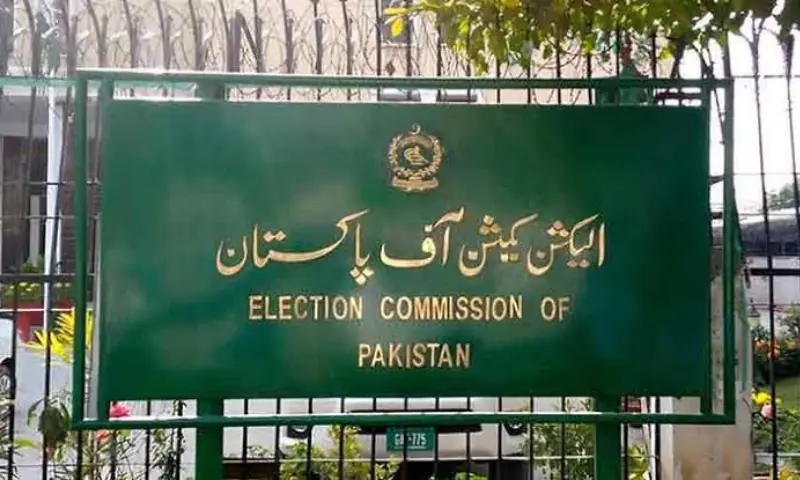
ECP sets ward delimitation for Quetta and Kharian cantonment boards
Quetta moves from Class-II to Class-I and Kharian from Class-III to Class-II, with 10 wards fixed in Quetta and five in Kharian under notifications issued on 29 October.

Information ministry blames Kabul inaction for strained Pakistan-Afghanistan ties
The ministry rejected a Taliban spokesperson's account of the dispute, saying cross-border militancy remains the biggest obstacle to normal relations between the neighbours.

Tarar proposes national council on cyber security and digital literacy
The information minister used the PTA's Cyber Security Awareness Week to float a coordinating body and to call for digital literacy in school curricula.

Health minister says barcode scan will flag fake medicines from November
Mustafa Kamal told the National Assembly that hospitals will also have to buy all vaccines from Pakistan's own funds by 2030, at a cost of about $1.2 billion.