Pakistan warns conflicts must not paralyse global shipping at UN
Ambassador Usman Jadoon tells a Security Council debate on emerging technologies that attacks on merchant vessels threaten energy and food security.
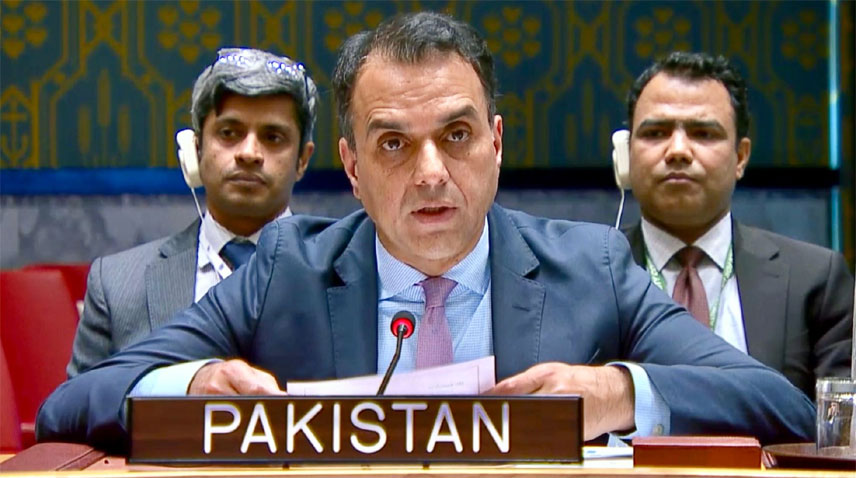
Pakistan has told the United Nations Security Council that rising global conflicts must not be allowed to shut down international shipping, warning that attacks on merchant vessels in key waterways put energy supplies and food security at risk.
Speaking at a high-level council debate titled "Emerging Technologies and Maritime Security: Implications for Peace and Security", Pakistan's acting permanent representative to the UN, Ambassador Usman Jadoon, said international waterways must remain "resilient drivers of the global economy" and that global shipping cannot become a "casualty of conflict and strife", according to the Associated Press of Pakistan.
Jadoon called for responsible use of artificial intelligence to strengthen maritime security and protect global trade, and urged equal access to emerging technologies while warning against their misuse, the Daily Times reported. He said new technologies should also serve humanitarian needs, including assistance to seafarers facing threats from piracy.
He described the UN Convention on the Law of the Sea as central to the international maritime legal framework, saying its principles must be protected and promoted universally.
According to the Daily Times, Jadoon raised disruption to shipping in the Strait of Hormuz and the Bab el-Mandeb, saying attacks on merchant vessels threaten energy supplies, food security and economic stability, with effects that reach beyond the immediate region. He condemned Houthi militia attacks on commercial shipping in the Bab el-Mandeb, saying they endanger seafarers, and said the attacks had exposed Saudi Arabia to aggression. He reaffirmed Pakistan's support for the sovereignty and territorial integrity of countries affected by instability around the vital waterways.
The statement placed the balance between technological progress and international security responsibilities at the centre of Pakistan's position at the council. According to both reports, Pakistan argued that emerging technologies should support maritime protection and humanitarian assistance, and that countries should uphold established maritime law.
Neither report detailed which other delegations spoke in the debate or whether the council adopted any outcome document. APP filed its report from the United Nations; the Daily Times account focused on the technology and shipping elements of the same statement.

Information ministry blames Kabul inaction for strained Pakistan-Afghanistan ties
The ministry rejected a Taliban spokesperson's account of the dispute, saying cross-border militancy remains the biggest obstacle to normal relations between the neighbours.

Tarar proposes national council on cyber security and digital literacy
The information minister used the PTA's Cyber Security Awareness Week to float a coordinating body and to call for digital literacy in school curricula.

Health minister says barcode scan will flag fake medicines from November
Mustafa Kamal told the National Assembly that hospitals will also have to buy all vaccines from Pakistan's own funds by 2030, at a cost of about $1.2 billion.

Fakhar Zaman hits century and passes 4,000 ODI runs
The Pakistan batter reached 4,000 one-day international runs in his 97th ODI and became the 16th from his country to pass the mark.