Pakistan will not be coerced by Taliban provocations: Solangi
President's spokesperson Murtaza Solangi says Kabul is gravely mistaken if it believes cross-border provocations can intimidate or distract Pakistan.

President Asif Ali Zardari's spokesperson Murtaza Solangi warned the Taliban government in Kabul on Thursday that Pakistan would not be coerced or distracted by what he called reckless cross-border provocations. The remarks were issued from Islamabad in a post on the social media platform X and carried by the state-run Associated Press of Pakistan.
Solangi said the Taliban leadership was gravely mistaken if it thought that "a handful of flying toys sent across the international border" could intimidate Pakistan. He said Pakistan would not be coerced, distracted or deterred, and that Kabul should have no illusion that reckless provocations would pass without consequences.
The spokesperson argued that no manufactured confrontation would divert Pakistan from its diplomatic efforts for regional and global peace. Nor, he said, would external adventurism conceal the Taliban regime's record of broken commitments, domestic repression and failure to govern responsibly.
Solangi said the regime in Kabul had confined half of Afghanistan's population to their homes, denying women and girls education, employment and fundamental freedoms. He added that it continued to repress religious and ethnic minorities while attempting to whip up pseudo-religious and pseudo-nationalist hysteria against Pakistan.
He described this as a transparent attempt to divert attention from the regime's failures at home and from the commitments it undertook in the Doha Agreement. Solangi warned that confrontation with Pakistan would not rescue the Taliban regime from its failures but would compound them.
"Every reckless misadventure further isolates the regime, exposes its irresponsibility and accelerates the consequences of its own policies," he said.
Solangi said the current Taliban leadership, which he called "Taliban 2.0", was increasingly demonstrating that it was not merely a danger to the Afghan people but also a growing source of instability for its neighbours and for international peace and security.
He recalled that the first Taliban regime had collapsed under the weight of its own extremism and isolation. "If the present regime persists on the same path, while adding cross-border adventurism to its record, it risks an even more disastrous political fate," Solangi concluded.
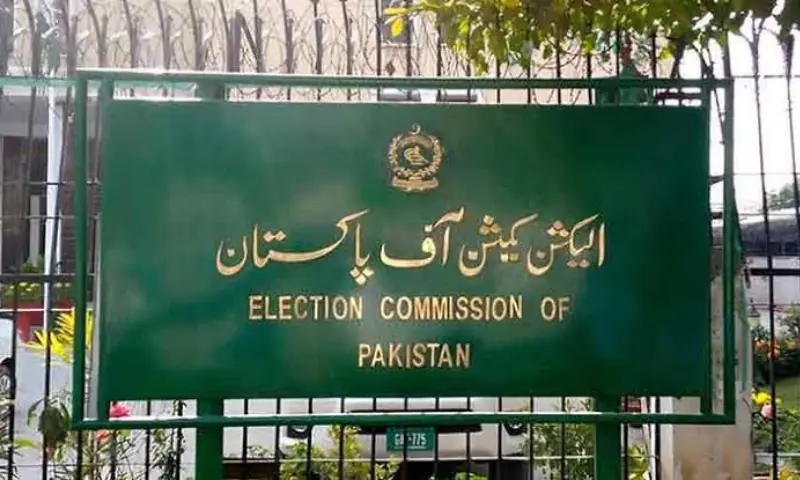
ECP sets ward delimitation for Quetta and Kharian cantonment boards
Quetta moves from Class-II to Class-I and Kharian from Class-III to Class-II, with 10 wards fixed in Quetta and five in Kharian under notifications issued on 29 October.

Information ministry blames Kabul inaction for strained Pakistan-Afghanistan ties
The ministry rejected a Taliban spokesperson's account of the dispute, saying cross-border militancy remains the biggest obstacle to normal relations between the neighbours.

Tarar proposes national council on cyber security and digital literacy
The information minister used the PTA's Cyber Security Awareness Week to float a coordinating body and to call for digital literacy in school curricula.

Health minister says barcode scan will flag fake medicines from November
Mustafa Kamal told the National Assembly that hospitals will also have to buy all vaccines from Pakistan's own funds by 2030, at a cost of about $1.2 billion.