PSX loses over 1,700 points as caution returns
KSE-100 closed at 170,499 on Thursday after an early high of 172,491, with banks, cement and energy stocks leading the decline.
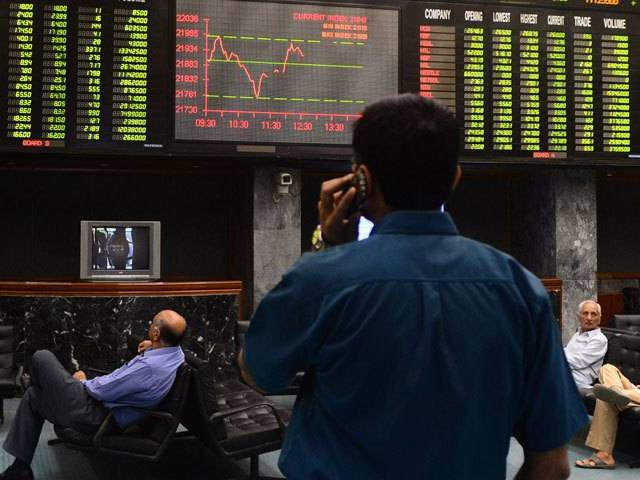
Pakistan equities closed lower on Thursday after a session that turned sharply in the second half. According to the Express Tribune, the benchmark KSE-100 index lost 1,733.6 points, or 1.01 percent, to finish at 170,499. Volume on the index stood at 315 million shares, while the All-Share Index dropped 1.08 percent to 103,103.
TechJuice reported a smaller decline, saying the index fell more than 1,100 points as investors stayed cautious over Pakistan's ongoing IMF review and unrest in the Middle East. The Express Tribune attributed the reversal to profit-taking after a rally, with Brent crude moving toward $107 a barrel keeping geopolitical and macroeconomic concerns elevated.
The market opened stronger and touched an intraday high of 172,491 before selling accelerated, according to brokerage KTrade. The index bottomed at 170,418, close to its eventual settlement. The day's range was 2,073 points. Thursday's fall reversed much of Wednesday's 830-point gain, which had been supported by hopes around US-Iran talks and the arrival of an IMF mission.
Commercial banks, cement, oil and gas exploration, power and refinery stocks led the decline. UBL was the largest point drag, subtracting about 200 points from the index, followed by LUCK, MARI, HUBC and NBP, the Express Tribune reported.
A set of refinery upgrade agreements was not enough to keep energy stocks higher. National Refinery, Attock Refinery and Cnergyico signed upgrade agreements with Inter State Gas Systems under the amended brownfield refinery policy, part of a roughly $6 billion modernisation push aimed at Euro-V fuels and lower import dependence, according to the Express Tribune. Refinery stocks still closed lower with the broader market.
The session highlighted how global oil prices and the IMF review continue to shape trading even when company-level agreements are announced, both outlets noted.

ECP sets ward delimitation for Quetta and Kharian cantonment boards
Quetta moves from Class-II to Class-I and Kharian from Class-III to Class-II, with 10 wards fixed in Quetta and five in Kharian under notifications issued on 29 October.

Information ministry blames Kabul inaction for strained Pakistan-Afghanistan ties
The ministry rejected a Taliban spokesperson's account of the dispute, saying cross-border militancy remains the biggest obstacle to normal relations between the neighbours.

Tarar proposes national council on cyber security and digital literacy
The information minister used the PTA's Cyber Security Awareness Week to float a coordinating body and to call for digital literacy in school curricula.

Health minister says barcode scan will flag fake medicines from November
Mustafa Kamal told the National Assembly that hospitals will also have to buy all vaccines from Pakistan's own funds by 2030, at a cost of about $1.2 billion.