PTI sets Sept 27 Islamabad march for Imran Khan release
Jamaat-e-Islami has paused its petroleum-levy march and farmers have announced a sit-in as opposition groups head to the capital.

Opposition groups are bringing protest convoys back to Islamabad in the last week of September. Pakistan Tehreek-e-Insaf (PTI) has announced a long march on 27 September to demand the release of former prime minister Imran Khan, Aaj News reported. Jamaat-e-Islami has temporarily held back a march from Karachi that was aimed at ending the petroleum levy, and the Pakistan Kissan Ittehad has said it will set up a sit-in over electricity bills and crop prices.
The fresh mobilisation is the latest chapter in a tactic that has shaped Pakistani politics for nearly five decades. According to Aaj News, the term 'long march' entered political vocabulary from China's civil war. It referred to the 1934-35 retreat of Mao Zedong's Communist forces, a survival journey of 9,000 to 10,000 kilometres across 24 rivers, 18 snow-covered mountain ranges and dangerous marshland. Only about ten percent of the marchers survived. The American journalist Edgar Snow translated the Chinese 'Chang Zheng' as 'Long March' in his 1937 book Red Star Over China, and the phrase later became a symbol of resistance.
Aaj News credits former prime minister Benazir Bhutto with introducing the named 'long march' to Pakistan in November 1992, when as opposition leader she called supporters to Rawalpindi and Islamabad against alleged election rigging by the first government of Nawaz Sharif. The government placed her under house arrest and sealed the capital; the army was called in under Article 245. The confrontation contributed to the 1993 dissolution of the National Assembly and eventually to the resignations of President Ghulam Ishaq Khan and Mr Sharif.
Before that, the first major march on Islamabad had come in July 1980 after General Zia-ul-Haq's government introduced compulsory zakat deductions. Shia leaders, led by Mufti Jafar Hussain, turned a convention into a sit-in at the federal secretariat until the government exempted Shias from the mandatory deduction.
Jamaat-e-Islami's October 1996 march against Benazir Bhutto's second government ended in clashes in which Qazi Hussain Ahmed was injured; days later President Farooq Leghari dismissed her government. The lawyers' movement launched long marches in 2008 and 2009 that helped force Pervez Musharraf's resignation and secured the restoration of Chief Justice Iftikhar Muhammad Chaudhry. In December 2012, Tahir-ul-Qadri's Pakistan Awami Tehreek marched after an ultimatum on electoral reforms, and in 2014 PTI's Azadi march and PAT's Inqilab march occupied D-Chowk for months.
In a separate development reported by UrduPoint, Pakistan Peoples Party chairman Bilawal Bhutto Zardari has returned to the country, and the party is expected to decide its strategy on new provinces and national affairs.
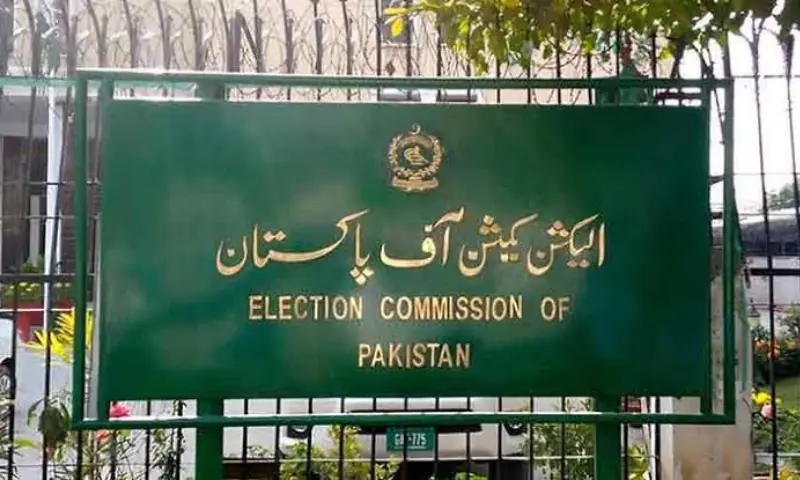
ECP sets ward delimitation for Quetta and Kharian cantonment boards
Quetta moves from Class-II to Class-I and Kharian from Class-III to Class-II, with 10 wards fixed in Quetta and five in Kharian under notifications issued on 29 October.

Information ministry blames Kabul inaction for strained Pakistan-Afghanistan ties
The ministry rejected a Taliban spokesperson's account of the dispute, saying cross-border militancy remains the biggest obstacle to normal relations between the neighbours.

Tarar proposes national council on cyber security and digital literacy
The information minister used the PTA's Cyber Security Awareness Week to float a coordinating body and to call for digital literacy in school curricula.

Health minister says barcode scan will flag fake medicines from November
Mustafa Kamal told the National Assembly that hospitals will also have to buy all vaccines from Pakistan's own funds by 2030, at a cost of about $1.2 billion.