SBP raises policy rate to 12% and projects $25bn reserves
Governor Jameel Ahmed says the $3.5 billion build-up to June 2027 will come mainly from dollar purchases in the market rather than fresh borrowing.
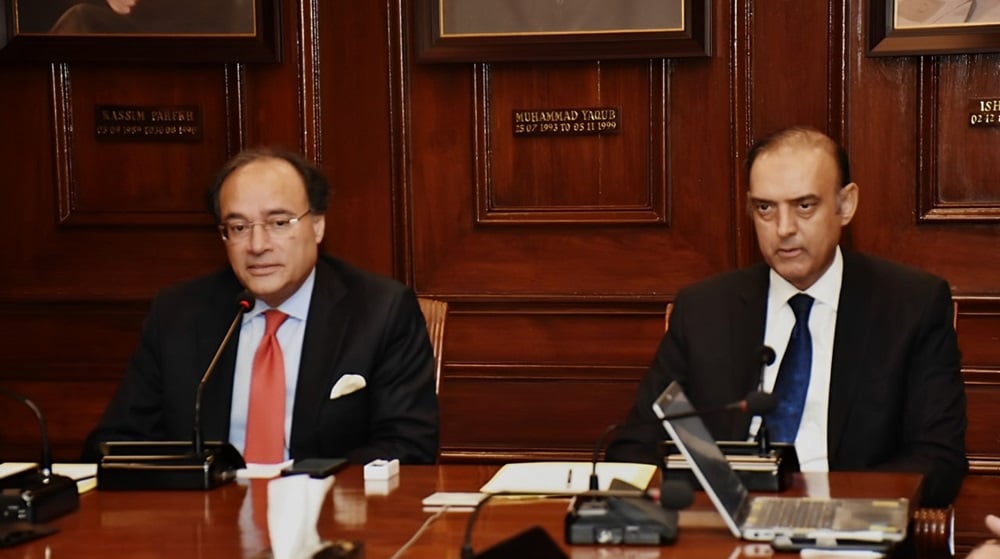
The State Bank of Pakistan raised its policy rate by 50 basis points to 12 percent on Monday and projected that official foreign exchange reserves will climb to $25 billion by June 2027, an increase of about $3.5 billion from the present level of roughly $21.5 billion.
Governor Jameel Ahmed, speaking at a press conference after the monetary policy announcement, set out the central bank's expected path for reserves: about $23 billion by December 2026, and $25 billion by June 2027, according to ProPakistani.
Ahmed said the recovery in reserves had come mainly from dollar purchases in the open market rather than from fresh external borrowing. He recalled that Pakistan's reserves had fallen below $3 billion in February 2023 before the rebuilding began. The central bank said reserves stood just under $22 billion last week, a figure slightly above the roughly $21.5 billion cited as the current level.
Explaining the rate decision, which takes the policy rate from 11.5 percent to 12 percent, the SBP pointed to a deteriorating inflation outlook and the need to keep inflation expectations anchored. The move comes amid persistent price pressures, rising energy costs and concern that geopolitical tensions could drive up global commodity prices.
The central bank said it expects the economy to grow between 3.5 and 4.5 percent in the current fiscal year.
The reserve target is not without risk. The SBP listed high global commodity prices, tighter international financial conditions and supply constraints as factors that could affect the projection.
Separately, Investify reported in a headline summary that Pakistan's foreign exchange reserves rose 52 percent, foreign investment increased 20 percent and exports grew 11 percent in the first quarter of the current fiscal year, FY27. The outlet did not publish supporting figures in the material available.
The Financial Times also carried a piece asking whether the government can make the economy grow, but it was an analysis piece rather than a report of the monetary policy decision.
ECP sets ward delimitation for Quetta and Kharian cantonment boards
Quetta moves from Class-II to Class-I and Kharian from Class-III to Class-II, with 10 wards fixed in Quetta and five in Kharian under notifications issued on 29 October.

Information ministry blames Kabul inaction for strained Pakistan-Afghanistan ties
The ministry rejected a Taliban spokesperson's account of the dispute, saying cross-border militancy remains the biggest obstacle to normal relations between the neighbours.

Tarar proposes national council on cyber security and digital literacy
The information minister used the PTA's Cyber Security Awareness Week to float a coordinating body and to call for digital literacy in school curricula.

Health minister says barcode scan will flag fake medicines from November
Mustafa Kamal told the National Assembly that hospitals will also have to buy all vaccines from Pakistan's own funds by 2030, at a cost of about $1.2 billion.