Senate panel warns 33 glacial lakes pose flood risk
Senator Sherry Rehman says 7.1 million people in Gilgit-Baltistan and Khyber Pakhtunkhwa could be affected by glacial lake outburst floods.

The Senate Standing Committee on Climate Change, chaired by Senator Sherry Rehman, discussed the growing risks from melting glaciers, glacial lakes, deforestation and plastic pollution across Pakistan.
Rehman said Pakistan is home to 13,032 glaciers and over 3,000 glacial lakes, 33 of which are classified as dangerous and at risk of sudden outburst. A glacial lake outburst flood could threaten around 7.1 million people in Gilgit-Baltistan and Khyber Pakhtunkhwa, she said.
Rehman cited reports indicating a 16 percent increase in glacier melting and called for a complete and accurate inventory of Pakistan's glaciers. She urged regular monitoring of glacial lakes and assessment of changes in their condition. She also called for greater use of satellites, drones and artificial intelligence to identify potential hazards, and said a system should provide advance warnings to local communities about glacial lake risks. Better coordination among relevant institutions was essential, she added.
On climate-related funding, Rehman called for increased budgetary allocations and said funding requests for environmental projects should be submitted before June.
Rehman also raised concerns about deforestation in Chitral, saying areas once known for greenery had turned brown in several places. She alleged timber mafias were damaging forests and smuggling timber through river routes, and called for immediate action. The forests of Khyber Pakhtunkhwa were a national asset requiring protection, she said.
Minister for Climate Change Musadik Malik told the committee that once a glacial lake bursts, its impact can begin within 15 to 20 minutes. GLOF events differ from conventional floods because they can carry large boulders and debris downstream, he said.
Malik said work was under way to provide alternative land to people living in high-risk areas so they could be relocated to safer locations. Real-time data was being obtained from a Chinese company to improve early detection of GLOF events, he added. A prime minister's committee was working to improve coordination, and the government was considering establishing a new authority equipped with modern technology to respond to hazardous environmental events.
Between 2017 and 2026, 34 early warning systems were installed, and another 284 are expected within six months, Malik said. Efforts were also under way to secure funding for an integrated climate-change response system and modern laboratories.
On tree planting, Malik said the overall target under the U.G.P.P. had reached 54 percent, and additional land would be required to increase forest cover by one percent. He also highlighted the Green University Programme.
Rehman also discussed plastic pollution. She said Islamabad had banned plastic covers on books under legislation enacted in 2026. Only nine percent of plastic worldwide is recycled, and plastic in the food chain has potential health implications, she said. Plastic use continued in Islamabad despite legislation, contributing to blocked drains. She stressed that laws passed by Parliament must be implemented and obeyed.
Separately, Dawn reported that renowned mountaineer Reinhold Messner has also warned about glacier melting in Pakistan.
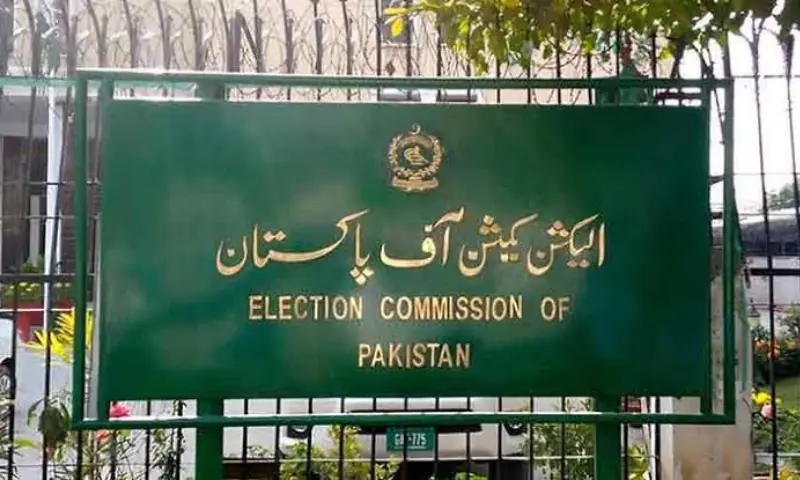
ECP sets ward delimitation for Quetta and Kharian cantonment boards
Quetta moves from Class-II to Class-I and Kharian from Class-III to Class-II, with 10 wards fixed in Quetta and five in Kharian under notifications issued on 29 October.

Information ministry blames Kabul inaction for strained Pakistan-Afghanistan ties
The ministry rejected a Taliban spokesperson's account of the dispute, saying cross-border militancy remains the biggest obstacle to normal relations between the neighbours.

Tarar proposes national council on cyber security and digital literacy
The information minister used the PTA's Cyber Security Awareness Week to float a coordinating body and to call for digital literacy in school curricula.

Health minister says barcode scan will flag fake medicines from November
Mustafa Kamal told the National Assembly that hospitals will also have to buy all vaccines from Pakistan's own funds by 2030, at a cost of about $1.2 billion.