Senate rejects bill to curb diplomatic passports for advisers
The private member's move by PTI Senator Faisal Saleem Rehman and two colleagues sought to end diplomatic passports for ministers of state, advisers and senior officials.
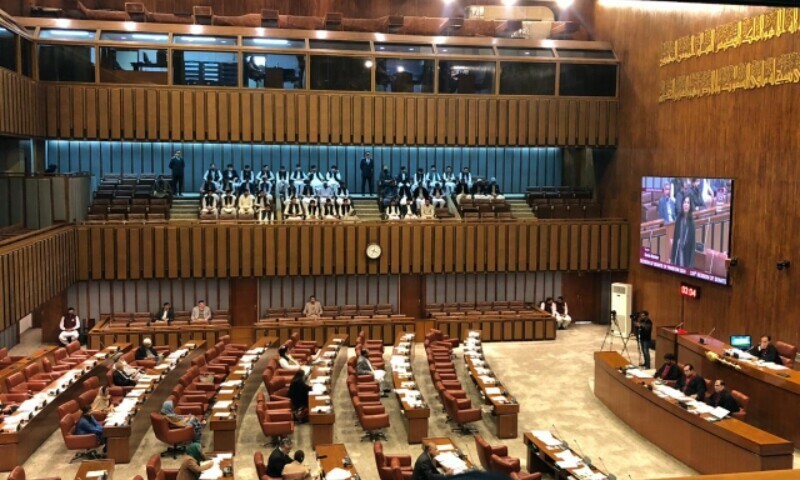
The Senate on Monday rejected a motion to introduce the Passports (Amendment) Bill, 2026, blocking a private member's attempt to withdraw diplomatic passport privileges from ministers of state, advisers, special assistants and senior bureaucrats.
The bill was moved by PTI Senator Faisal Saleem Rehman, who chairs the Senate Standing Committee on Interior, together with senators Samina Mumtaz Zehri and Saifullah Abro. Dawn reported that the proposed legislation was aimed at ending what the report described as the free-for-all issuance of diplomatic passports to these categories of office-holders.
State Minister for Interior Tallal Chaudhry spoke against the bill in the house. Dawn quoted him as saying: "You are bringing an amendment to the authority…" The report published only that portion of his remarks.
Because the motion for introduction was rejected, the bill does not advance to the committee stage, and the rules governing who may hold a diplomatic passport stay as they are. The Senate's decision leaves the existing practice untouched for ministers of state, advisers, special assistants and senior bureaucrats.
The mover, Senator Rehman, heads the upper house's standing committee on interior, the body that takes up the ministry's legislative and administrative business in the Senate. The other two movers, senators Zehri and Abro, signed on to the same private member's bill.
The rejection was also carried by Ua.News, which reported the outcome and credited Dawn for the account.
Private member's bills are introduced by senators or MNAs in their individual capacity rather than on the government's behalf, and a motion for introduction must clear the house before the proposed law can be taken up clause by clause. Once a motion is rejected, the bill lapses at that stage.
No vote count was given in the reports, and no statement from the Senate secretariat or the interior ministry on the outcome was available. It was not immediately clear from the published accounts whether the movers intend to bring the amendment back in another form.
ECP sets ward delimitation for Quetta and Kharian cantonment boards
Quetta moves from Class-II to Class-I and Kharian from Class-III to Class-II, with 10 wards fixed in Quetta and five in Kharian under notifications issued on 29 October.

Information ministry blames Kabul inaction for strained Pakistan-Afghanistan ties
The ministry rejected a Taliban spokesperson's account of the dispute, saying cross-border militancy remains the biggest obstacle to normal relations between the neighbours.

Tarar proposes national council on cyber security and digital literacy
The information minister used the PTA's Cyber Security Awareness Week to float a coordinating body and to call for digital literacy in school curricula.

Health minister says barcode scan will flag fake medicines from November
Mustafa Kamal told the National Assembly that hospitals will also have to buy all vaccines from Pakistan's own funds by 2030, at a cost of about $1.2 billion.