



Supreme Court rules inheritance share vests at owner's death
A five-member bench says the limitation clock starts only when an heir is told, by an unmistakable act, that the share is denied.
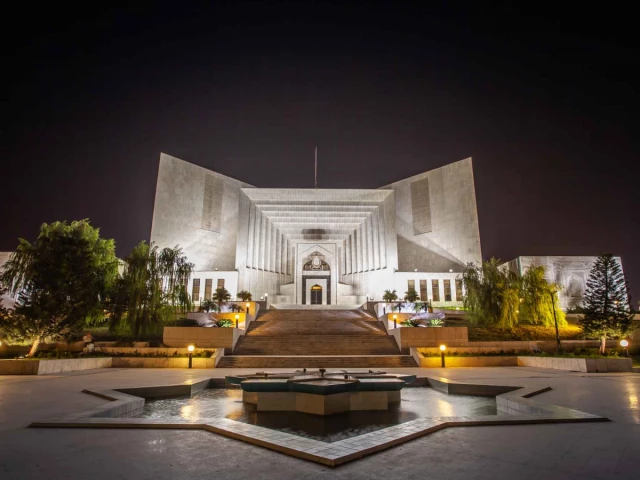
ISLAMABAD: An heir's share in an estate vests at the moment the owner dies and cannot be extinguished by silence, delay or the passage of years, the Supreme Court has ruled in a judgment on how the Limitation Act, 1908 applies to inheritance disputes.
The five-member bench was headed by Justice Shahid Waheed, who authored the 106-page judgment, The News reported. Justices Naeem Akhtar Afghan, Aqeel Ahmed Abbasi, Shakeel Ahmed and Miangul Hassan Aurangzeb sat with him, according to the Express Tribune. The bench decided a batch of appeals against a Peshawar High Court order of 3 June 2013, The News said.
Dawn reported that a suit over an inheritance share becomes time-barred only where the defendant proves the claimant knew, or should reasonably have known, of the denial more than six years before filing. Where an heir instead seeks to cancel a document he himself was party to, the suit is late only if the defendant proves he knew the grounds for cancellation more than three years before filing, Dawn reported.
Under Article 120 of the Limitation Act, the period among co-heirs begins only when a clear and unequivocal act denying an heir's ownership is brought to his or her knowledge, the Express Tribune quoted the bench as holding. "Time does not run against the heir, it runs against the heir's knowledge of a wrong," Justice Waheed wrote, according to the paper.
"The remedy is subject to the Limitation Act, 1908, which a court of ordinary civil jurisdiction cannot set aside," the judgment said, the Express Tribune reported. Both a denial and the heir's knowledge of it were necessary before the clock started, and the successors of an heir inherit an unspent claim, the court held. Where a stranger had bought in good faith for full value and openly taken possession, the heir would also be charged with what ordinary diligence would have shown, the paper reported.
The court said all four Sunni schools of jurisprudence held that an estate devolves on heirs immediately on death, after funeral and burial costs, debts and valid bequests are settled, and that the principles were not designed to favour men over women but to keep the special safeguards available to women, the Express Tribune reported.
The News reported a set of directions. No inheritance mutation is to be attested without a NADRA family registration record or equivalent proof of all heirs, written notice to every heir shown in it including women at their own address, and a recorded statement from any heir said to have received less than his or her share. Revenue officers must record the personal appearance, identity and statement of an heir before attesting a gift, sale, relinquishment or settlement of inherited land, in the presence of a woman revenue officer where one is available.
Registering authorities, development authorities, cantonment boards and cooperative housing societies may not transfer inherited property without a succession certificate, letters of administration or a decree, and must give written notice to all heirs, the paper reported. Settlement officers in areas under first settlement, including the merged districts, must record all heirs according to the Shariah.
The court commended to the legislature and the Law and Justice Commission of Pakistan a requirement that any relinquishment or takharuj of a share be made by registered instrument, and a specific article in the Limitation Act for heirs' suits, with an outer long-stop for purchasers in good faith, The News reported.
"We end where we began," the judgment said. "Can we stop the clock on an inheritance claim? We can, and the law does, but only when the heir has been told, by an act that cannot be mistaken, that her share is denied, and has then let six years pass."
How the reports differ
Dawn led on the two limitation periods, reporting that the defendant must prove the claimant's knowledge and setting out a separate three-year period where an heir seeks to cancel a document he signed; neither of the other reports carried the three-year point. The News gave the judgment's length at 106 pages, identified the appeals as arising from a Peshawar High Court order of 3 June 2013, and was alone in detailing the bench's directions to revenue officers, registering authorities and settlement officers in the merged districts. The Express Tribune built its report around the ruling that inheritance rights do not expire and carried the fullest quotations from Justice Waheed's judgment, while Dawn framed the same ruling as a resolution of conflicting jurisprudence.
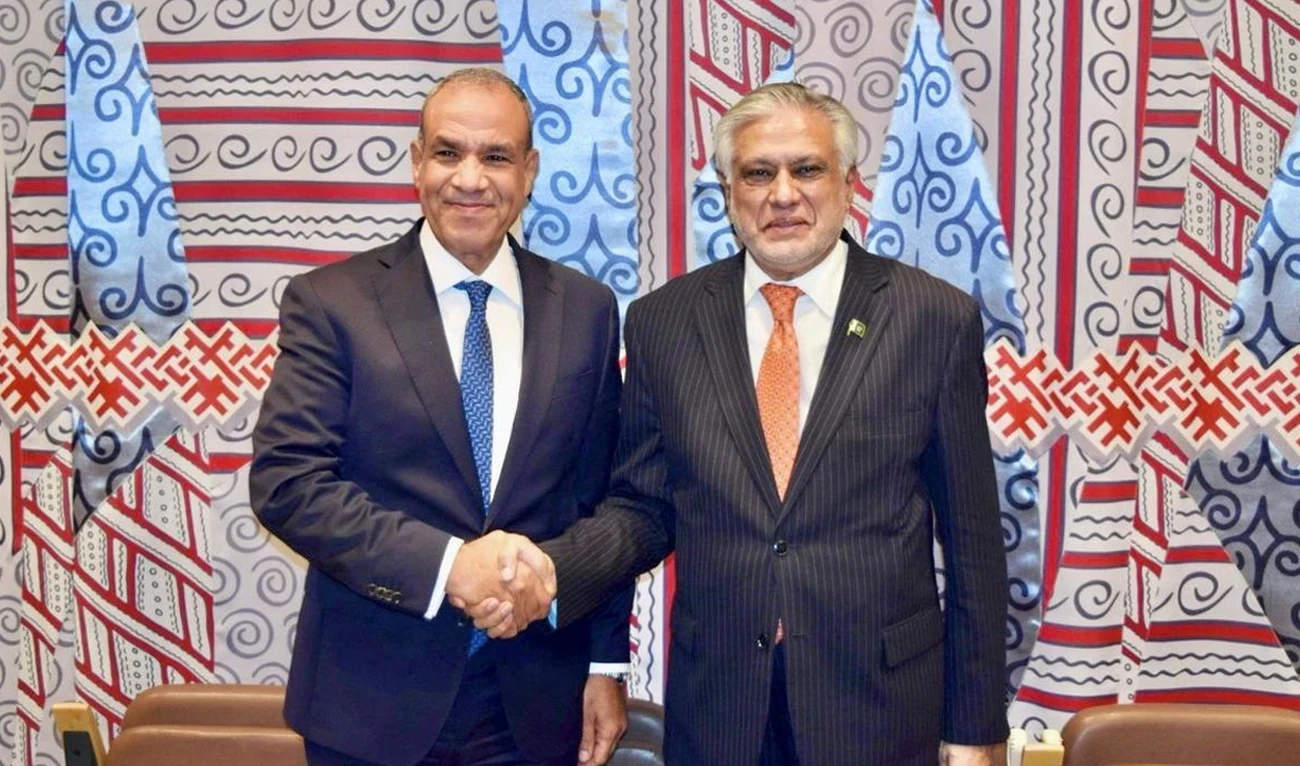
Dar, Egypt's Abdelatty agree closer coordination on regional conflicts
Foreign Office says the two foreign ministers discussed upcoming R4 and R4+E4 meetings in Europe, and Cairo renewed an invitation for Shehbaz Sharif to visit.
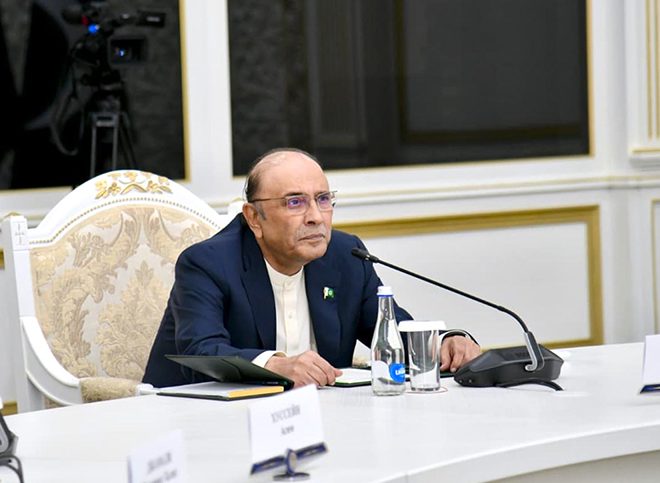
President Zardari calls for equal citizenship on Tolerance Day
His message for the International Day for Tolerance cited Article 25(1), the 2025 minorities commission law and a 2026 human rights plan.

Ayaz Sadiq says Mohsin Naqvi works on assigned tasks
The National Assembly Speaker says he will not judge the proposed 28th Amendment, and the President House denies new-province talks at the Zardari-Naqvi meeting.

Moonis Elahi attacks government over smog and Imran Khan's health
PTI's Salman Akram Raja separately says the party founder will not give a blank cheque on the proposed 28th Constitutional Amendment.

NCCIA arrests 154 in twin-city raids on illegal call centres
The agency says 37 of the suspects blackmailed victims for up to three years and warns young people against taking jobs at such outfits.

Goods exports hit record $11.4 billion in July to October, government says
Islamabad credits FY27 budget measures, including faster tax refunds and concessional export financing, for 8.8 percent growth from $10.4 billion a year earlier.

Asif says consensus on new provinces could come by New Year
The defence minister told Geo News that all four provinces' leadership should be consulted, and said the establishment never asked him to hold talks on the issue.

Khawaja Asif predicts new provinces deal and new system by new year
The defence minister says parties are weeks from agreement on new administrative units and that PTI founder Imran Khan could return to mainstream politics if he accepts.