UN Security Council demands justice for Kohat mosque attack
The council called the September 18 suicide bombing that killed at least 24 people 'heinous and cowardly' and urged states to help Pakistan prosecute those behind it.
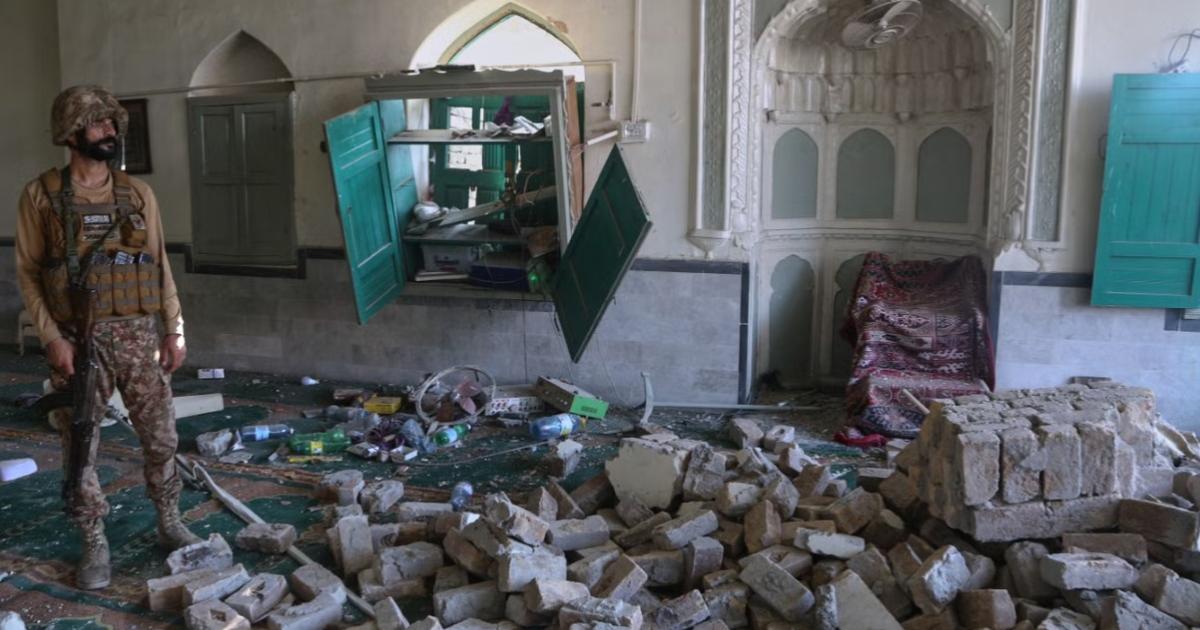
The United Nations Security Council has condemned the September 18 suicide bombing at a mosque in Kohat, Khyber Pakhtunkhwa, and called on all states to help Pakistan bring those responsible to justice.
In a statement issued on September 22, Security Council President Jerome Bonnafont described the attack as "heinous and cowardly," according to Independent Urdu. At least 24 Pakistani citizens were killed and 88 wounded, including seven civilians and 17 law enforcement personnel.
The council expressed its deepest sympathy and condolences to the families of the victims, to the Government of Pakistan and to the Pakistani people, and wished the injured a speedy and full recovery.
Members demanded that the perpetrators, organisers, financiers and sponsors of the attack be brought to justice, and urged all states to cooperate actively with the Government of Pakistan in accordance with their obligations under international law and relevant Security Council resolutions.
The statement reiterated that terrorism in all its forms and manifestations constitutes one of the most serious threats to international peace and security, and that any act of terrorism is criminal and unjustifiable, regardless of its motivation, wherever, whenever and by whomsoever committed.
According to Independent Urdu, responsibility for the attack was claimed by a faction linked to Hafiz Gul Bahadur and by the local militant group Ittihad al-Mujahideen Pakistan.
The council also stressed that all countries must combat threats to international peace and security caused by terrorist acts in accordance with the UN Charter and other obligations under international law, including human rights, refugee and international humanitarian law.
ECP sets ward delimitation for Quetta and Kharian cantonment boards
Quetta moves from Class-II to Class-I and Kharian from Class-III to Class-II, with 10 wards fixed in Quetta and five in Kharian under notifications issued on 29 October.

Information ministry blames Kabul inaction for strained Pakistan-Afghanistan ties
The ministry rejected a Taliban spokesperson's account of the dispute, saying cross-border militancy remains the biggest obstacle to normal relations between the neighbours.

Tarar proposes national council on cyber security and digital literacy
The information minister used the PTA's Cyber Security Awareness Week to float a coordinating body and to call for digital literacy in school curricula.

Health minister says barcode scan will flag fake medicines from November
Mustafa Kamal told the National Assembly that hospitals will also have to buy all vaccines from Pakistan's own funds by 2030, at a cost of about $1.2 billion.