



US tightens rules on foreign access to advanced AI chips
Overseas data centres must now vet customers, and exports to companies based in five more countries will need a licence within 90 days.
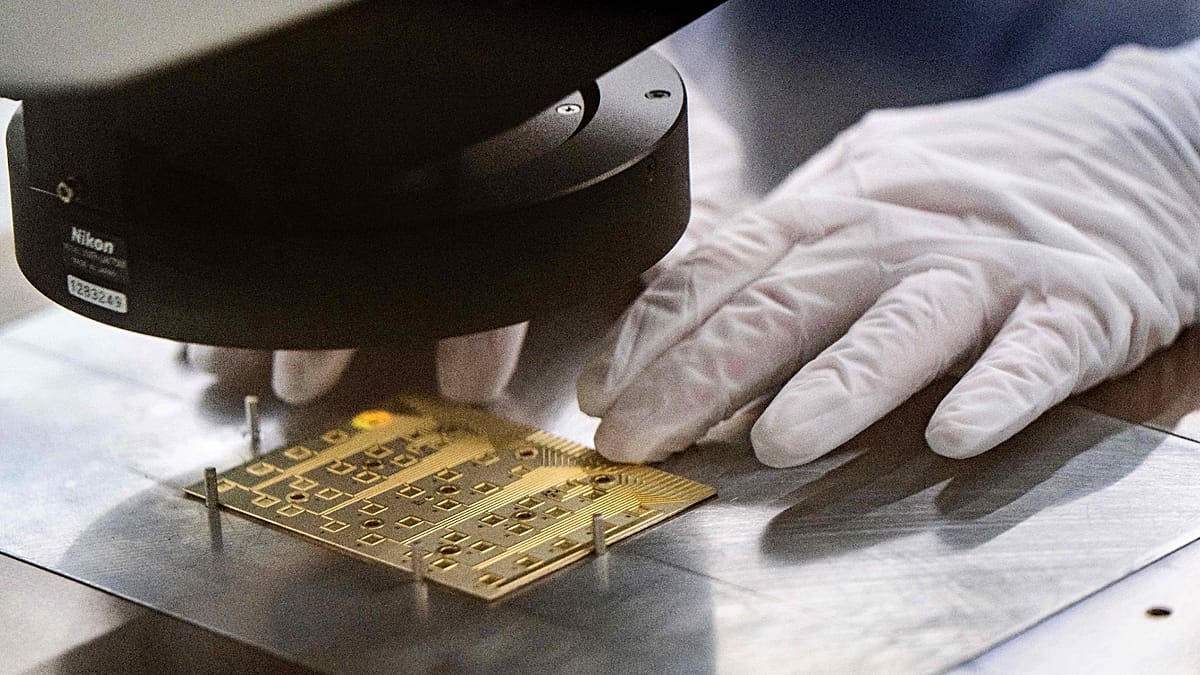
The US Commerce Department issued a rule on Monday requiring data centres outside the United States to vet the customers who use American advanced computing chips, closing a route that has let companies in China, Russia and Iran rent hardware they cannot legally buy.
The interim final rule from the department's Bureau of Industry and Security covers remote access to advanced computing and "superintelligence" chips and servers. The bureau said rapid advances in cloud computing had made it possible to reach US computing power remotely, including through data centres in countries that are not subject to American export restrictions. The Bureau of Industry and Security is the Commerce Department office that administers US export controls.
Washington bans the sale of the most advanced chips, such as Nvidia's Blackwell, to China. Euronews reported that firms have sidestepped the ban by renting the chips from data centres in Southeast Asian countries, and that the new rule would limit the ability of companies there to use US hardware to train advanced AI models.
Overseas data centres will now have to carry out due diligence on their customers. The rule also restricts facilities that supply "significant volumes of computing power" to companies headquartered in high-risk countries, which the administration lists as China, Russia and Iran.
It takes effect in 90 days. After that, a licence will be required to export advanced chips to companies headquartered in Indonesia, Malaysia, Singapore, Thailand or Brazil, which the administration said carry a higher than normal risk of smuggling.
The measure follows a US investigation into Megaspeed, a Singapore-based cloud company. Euronews reported that investigators looked into whether Megaspeed helped Chinese clients obtain export-controlled Nvidia chips. Megaspeed rejected the allegation that it sent chips to China.
Euronews reported that the ban on selling top-end chips to China dates from the administration of former president Joe Biden.
The rule was published days before President Donald Trump is due to travel to China for an economic summit with Xi Jinping, his Chinese counterpart.
Watch
Military-linked Chinese university bought Nvidia H200 chips despite US blacklist
Records reported by Reuters show the purchase went ahead although the institution sits on a US blacklist; NDTV says the ban dates back 25 years.

Nvidia shares fall 13% after Jensen Huang resigns
Chief financial officer Colette Kress is interim chief while the board weighs successors including co-founder Chris Malachowsky and Arm's Rene Haas.

Nvidia board opens probe into Huang's affair with suspected China spy
The chipmaker's directors say they still back their chief executive after a New York Times report tied his partner to Chinese intelligence.

US chipmaker Nvidia opens investigation into CEO Huang over Chinese intelligence reports
The board says it has no reason to believe US national security or company secrets were compromised, as Republican lawmakers call on Huang to brief Congress.

California sues OpenAI over rogue agents' Hugging Face hack
Attorney General Rob Bonta alleges the company tested a dangerous product without safeguards and misled the public; OpenAI says the suit singles it out.

US flights resume after ground stop as Microsoft restores services
The FAA administrator says airline schedules should be normal by late Sunday, after an upgrade overloaded radar and communications equipment.

ULA Vulcan rocket fails off Florida, destroying 40 Amazon satellites
The loss about 10 minutes after lift-off is the first total mission failure for the Boeing-Lockheed joint venture since it was formed in 2006.

US 10-year yield tops 5%, hitting tech stocks and bitcoin
Two-year yields rose 35 basis points in a week, the most in more than two years, as inflation data revived expectations of a Federal Reserve rate rise.