Wife's haq mehr not extinguished if dower property not transferred, rules Supreme Court
The husband remains bound to transfer the property set as dower and cannot be absolved of the obligation, the court said.
The Supreme Court of Pakistan has ruled that a wife's right to haq mehr does not lapse when the property fixed as her dower has not been transferred to her. The ruling was reported by UrduPoint on Monday.
According to the report, the court held that if a specific property is settled as mehr in the marriage contract, the husband remains legally bound to transfer it. His failure to do so does not absolve him of the obligation. The court said the husband cannot escape liability merely because the agreed property has not been put in the wife's name.
Haq mehr is a mandatory payment or asset a husband must give his wife under Islamic law and Pakistani family law. It can be cash, property, jewellery or any other valuable fixed at the time of marriage. Pakistani courts treat unpaid dower as a debt owed by the husband, which the wife can claim even after divorce.
The judgment is expected to affect cases in family courts where husbands have argued that the wife's right to dower ended because the property promised as mehr was never transferred. Legal experts say the ruling reinforces the wife's position as a creditor and prevents evasion through inaction or delay.
The decision may also guide lower courts in interpreting nikahnama clauses where dower is fixed as immovable property. In many cases, husbands have claimed that because the transfer did not occur during the marriage, the wife no longer has a claim. The Supreme Court's position, as reported, rejects that argument.
UrduPoint's report did not include the names of the parties or the bench that delivered the ruling. The full judgment was not immediately available. Skardu Times will update this story when further details are released.
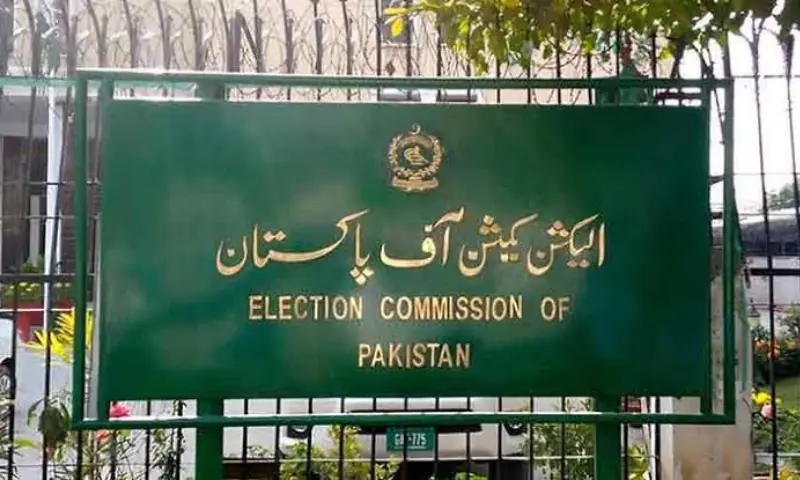
ECP sets ward delimitation for Quetta and Kharian cantonment boards
Quetta moves from Class-II to Class-I and Kharian from Class-III to Class-II, with 10 wards fixed in Quetta and five in Kharian under notifications issued on 29 October.

Information ministry blames Kabul inaction for strained Pakistan-Afghanistan ties
The ministry rejected a Taliban spokesperson's account of the dispute, saying cross-border militancy remains the biggest obstacle to normal relations between the neighbours.

Tarar proposes national council on cyber security and digital literacy
The information minister used the PTA's Cyber Security Awareness Week to float a coordinating body and to call for digital literacy in school curricula.

Health minister says barcode scan will flag fake medicines from November
Mustafa Kamal told the National Assembly that hospitals will also have to buy all vaccines from Pakistan's own funds by 2030, at a cost of about $1.2 billion.