Auto parts makers seek review of five-year auto policy
The demand centres on whether duty and tax treatment can be forecast for the life of an investment, not on the size of concessions, according to two reports.
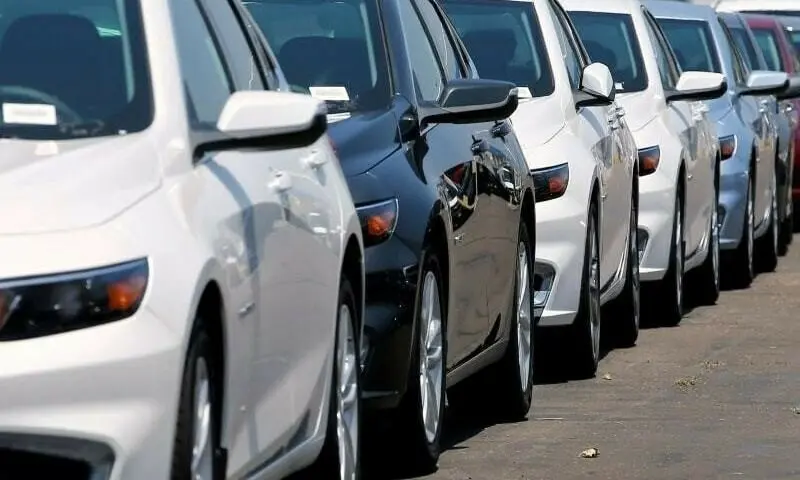
Auto parts manufacturers have asked the government to review the Auto Policy 2026-31, placing the predictability of the tax regime at the centre of their case rather than the size of the concessions on offer, according to the two outlets that reported the demand.
Profit reported that auto parts makers are seeking a review of the five-year policy, the framework that sets tariff and tax treatment for vehicle assembly and for the component industry that supplies it.
Dawn, reporting on the same policy, argued the question from the investment side, under the headline that Pakistan's auto policy needs predictable taxes, not just low ones. The point it makes is that a parts manufacturer deciding whether to tool up for a new model has to know how duties and taxes will be treated not only this year but across the life of that investment.
Both reports identify the policy's term, 2026 to 2031, as the period over which that certainty is being sought.
Neither report, as available to this newspaper, set out the specific changes the parts makers want, the forum in which the review was requested, or any response from the Ministry of Industries and Production, the Federal Board of Revenue or the Engineering Development Board, the bodies that shape automotive tariff and tax decisions. This newspaper could not independently confirm the details of the request.
Component manufacturing runs on long investment cycles. Presses, dies and mould lines are ordered against a model's expected production run, and the duty structure in force at the start of that run can be revised more than once before it ends. That is the ground on which both reports place the industry's argument: the value of a concession that may not survive the next budget is limited.
For readers outside the industry, the practical question is what a five-year policy does to car prices and to the share of a vehicle made locally. Neither report put a figure on either.
It is not yet established whether the review request has been formally taken up. No comment from the government on the demand appeared in the material available to this newspaper.
ECP sets ward delimitation for Quetta and Kharian cantonment boards
Quetta moves from Class-II to Class-I and Kharian from Class-III to Class-II, with 10 wards fixed in Quetta and five in Kharian under notifications issued on 29 October.

Information ministry blames Kabul inaction for strained Pakistan-Afghanistan ties
The ministry rejected a Taliban spokesperson's account of the dispute, saying cross-border militancy remains the biggest obstacle to normal relations between the neighbours.

Tarar proposes national council on cyber security and digital literacy
The information minister used the PTA's Cyber Security Awareness Week to float a coordinating body and to call for digital literacy in school curricula.

Health minister says barcode scan will flag fake medicines from November
Mustafa Kamal told the National Assembly that hospitals will also have to buy all vaccines from Pakistan's own funds by 2030, at a cost of about $1.2 billion.