China's robot makers shift spending from hardware to AI brains
Embodied AI startups in China raised 93.5 billion yuan in the first half of 2026, five times the year-earlier total, as the contest with US developers moves to software.
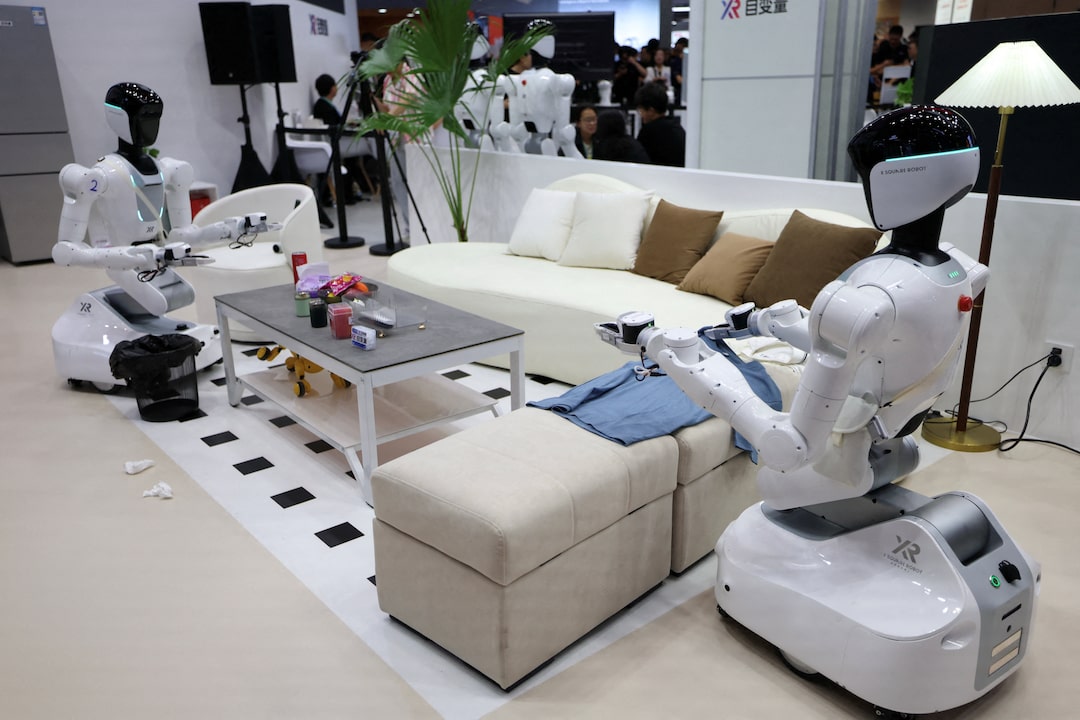
Chinese robotics companies are moving money and engineers from hardware into software, a shift that is opening a new front in the technology competition between China and the United States.
Embodied AI companies in China raised 93.5 billion yuan ($13 billion) across 322 deals in the first half of 2026, five times the amount in the same period a year earlier, according to data from the research firm ITjuzi cited by Reuters. The field covers software that lets a machine understand its surroundings and pick up unfamiliar tasks without being programmed separately for each one.
Reuters based its report on interviews with founders and senior executives at five Chinese robotics firms and with industry analysts. After years in which Chinese humanoid robots learned to run, dance and perform backflips, the constraint has moved to the machine's judgement. "The brain is indeed the weakest link in the complete robotics stack," said Gao Yang, co-founder of Spirit AI.
Hardware prices are falling as competition grows. Robot makers have "concluded that the margin won't come from the hardware but from the brain," said Dermot McGrath, founder of ZenGen Labs, a technology consultancy in Shanghai.
American developers hold an edge in some advanced robot AI systems, while Chinese firms are counting on manufacturing depth and access to real-world training data, according to the Reuters interviews. US startups including Physical Intelligence, Skild AI and Generalist are building software to teach robots new skills without lengthy retraining. Generalist says its GEN-1.5 model completed about 60% of simple tasks after watching a demonstration lasting three to 12 seconds. China's X Square has published research showing robots picking up handling skills from a single human video.
"The leading American labs are setting a demanding benchmark, particularly in how quickly robots can acquire and reuse skills," said consultant Georg Stieler, who described China's strongest startups as credible competitors.
Specialist Chinese firms X Square, Galaxea and Spirit AI have each reached valuations of roughly $3 billion, according to company disclosures.
Established manufacturers are joining. Hong Kong-listed UBTech advertised a chief scientist post overseeing AI model development, with pay and equity worth up to 124 million yuan ($18 million). Unitree, based in Hangzhou and among the world's largest humanoid robot makers by shipments, has about 30 researchers working on AI that predicts how objects behave, according to a person briefed by the company. Unitree did not respond to a request for comment.
Collecting physical data is the bottleneck. Spirit AI has hired about 1,000 people to record everyday and industrial activity, Gao said. ACE Robotics uses wearable sensors to capture workers' movements and grip strength in shops and hotels. Robbyant, the robotics arm of Ant Group, said it trained a model on 160,000 hours of material, including 50,000 hours of human-guided robot motion, and on 20 robot configurations from 17 brands.
DexForce builds computer-generated environments instead. Its chief operating officer, Nicole Yang, said some industrial tasks can be prepared for deployment in six to eight hours, with success rates above 99.9% in specified precision operations. Jerry Wang of Manycore Tech, which designs simulated settings for training, said simulation cannot fully reproduce physical contact.
"Data quality is more important than data diversity," said X Square co-founder and COO Yang Qian.
Dawn reported that dozens of robots climbed more than 3,000 steps up Mount Tai in Shandong province on Monday, carrying eggs and watermelons in a race that state media described as a test of endurance. One humanoid wearing a bandana collapsed on the cobbled route and was repaired by engineers.

Taiwan and Japan work on trade pact akin to UK deal
Talks reported by Nikkei Asia aim at a broad framework drawn up to limit political sensitivity as Beijing presses Taipei over its trade diplomacy.

Sydney starts armed police patrols after Bondi Beach attack
New South Wales says the 250-officer Armed Response Command will guard events, tourist areas and places of worship with rifles, an Australian first.

China's Communist Party to monitor members' online activity for graft
A document adopted at a Central Committee plenum pledges digital discipline inspection and a crackdown on corruption linked to virtual currency and blockchain.
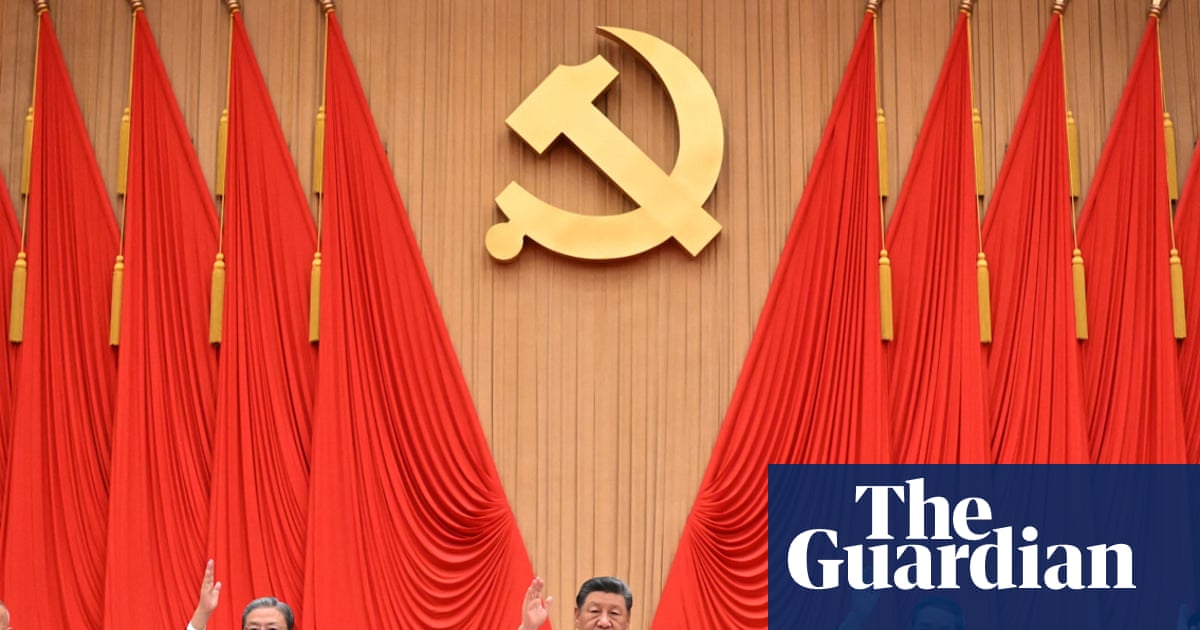
China's Communist Party expels record 33 members at plenum
The fifth plenum of the 20th Central Committee left more than a quarter of its seats empty as Xi Jinping defended the discipline campaign.

Binance resumes withdrawals as FBI blames North Korea for $6.3bn hack
The exchange says it has replaced 90 percent of the stolen tokens and that customers will not carry the loss from the largest crypto theft on record.