Clean air conference adopts compact for federal, provincial action
Gilgit-Baltistan's environmental agency was among the bodies at the two-day Islamabad meeting, which set annual reviews but published no targets.
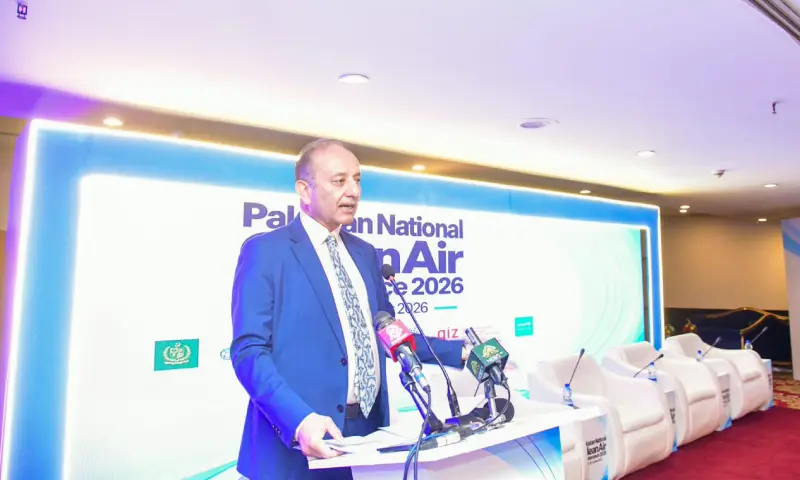
Pakistan's national clean air conference ended in Islamabad on Thursday with the adoption of the Islamabad Clean Air Compact, a framework that commits federal and provincial stakeholders to coordinated, time-bound action on air pollution.
The two-day Pakistan National Clean Air Conference brought together government officials, environmental protection agencies from the provinces, Azad Jammu and Kashmir and Gilgit-Baltistan, and international development partners, Dawn reported.
According to Dawn, the compact calls for coordinated federal and provincial action, stricter enforcement, regular emissions inventories and annual reviews. The Associated Press of Pakistan, reporting on the same closing session, said the compact commits federal and provincial stakeholders to a collaborative framework centred on time-bound implementation, with annual review meetings.
Dawn reported that the conference discussed pollution from transport, industry, agricultural burning, household cooking and waste.
The reports available did not carry the text of the compact, the deadlines it sets, any emission-reduction targets, or the name of the official who announced its adoption. Neither report quoted a minister or a federal environment official on the closing day.
Gilgit-Baltistan's environmental protection agency was among the provincial bodies represented at the meeting, which places the territory's air quality management inside the framework the compact describes.
The reports did not say which department will monitor progress against the compact, how compliance will be measured, or when the first annual review is due.
Air pollution is a shared federal and provincial subject in Pakistan, and the compact's emphasis on coordination reflects that division of responsibility rather than setting new statutory limits. Whether the commitments translate into enforceable rules will depend on the departments that signed up to them.
Officials from the participating agencies did not issue separate statements carried by either outlet. The conference was the first national-level gathering of its kind to conclude with a written compact, according to the reports, though neither gave details of what previous coordination existed.
The Islamabad Clean Air Compact is expected to be placed before the participating provincial and territorial agencies for implementation, but the reports did not specify a timeline for that process.

Information ministry blames Kabul inaction for strained Pakistan-Afghanistan ties
The ministry rejected a Taliban spokesperson's account of the dispute, saying cross-border militancy remains the biggest obstacle to normal relations between the neighbours.

Tarar proposes national council on cyber security and digital literacy
The information minister used the PTA's Cyber Security Awareness Week to float a coordinating body and to call for digital literacy in school curricula.

Health minister says barcode scan will flag fake medicines from November
Mustafa Kamal told the National Assembly that hospitals will also have to buy all vaccines from Pakistan's own funds by 2030, at a cost of about $1.2 billion.

Fakhar Zaman hits century and passes 4,000 ODI runs
The Pakistan batter reached 4,000 one-day international runs in his 97th ODI and became the 16th from his country to pass the mark.