Dhaka University investigates tearing of Jinnah portraits
A former student removed and tore images of Pakistan's founder in the student union gallery, reopening a Bangladeshi debate over the 1948 language controversy.

Dhaka University said it is investigating after portraits of Muhammad Ali Jinnah were hung in the student union's historical archive and then torn down by a former student, BBC Urdu reported on Tuesday. Videos of the incident, which took place on 14 September, were widely shared on social media and turned a university archive dispute into a national debate in Bangladesh about Jinnah, Pakistan and the history of 1971.
The gallery was reopened on 13 September, according to The Daily Star, and contained photographs related to Bangladesh's history, the partition of India and student movements. The student union said the gallery had been used under Sheikh Hasina's government to promote the Awami League narrative and that it had tried to correct history by changing it.
The man in the videos was identified as Abu Tayeb, a former Dhaka University student. He told AFP he removed and tore the Jinnah portraits because Jinnah was not ours but Pakistan's father of the nation. He was a villain for us, he said, because when he went against Bengalis and the Bengali language, he became a villain for us.
Three portraits of Jinnah were displayed, The Daily Star reported: one from March 1948 in which he declared Urdu as Pakistan's state language at Dhaka University; one from the 1940 All India Muslim League session in Lahore; and one on a 1970 election clipping from Dawn. Notably, no prominent image of Bangladesh's founder Sheikh Mujibur Rahman was present; The Daily Star said the gallery had only a photograph of his sons' 1974 weddings and three newspaper clippings.
Bangladesh Islami Chhatra, the student wing of Jamaat-e-Islami Bangladesh, defended the gallery. Its leader S M Farhad condemned the tearing as a bullying attack and said the portrait belonged to Dhaka University's history. He argued that erasing the image would mean supporting Jinnah's language stance.
Political analyst Altaf Parvez told AFP that Jinnah has never been accepted in Bangladesh and that the uproar reflects a search for a suitable leader by Islamists in the current environment. BBC Bangla editor Mir Saber said Jinnah's 1948 Dhaka speech remains the most remembered event, and that it intensified the language dispute that led to the 1952 killings.
Punjab University history professor Mahboob Hussain told BBC Urdu that Bengali Muslim League leaders had supported Jinnah's Urdu declaration at the time, but a section in East Pakistan opposed it, and misunderstandings deepened after 1971.
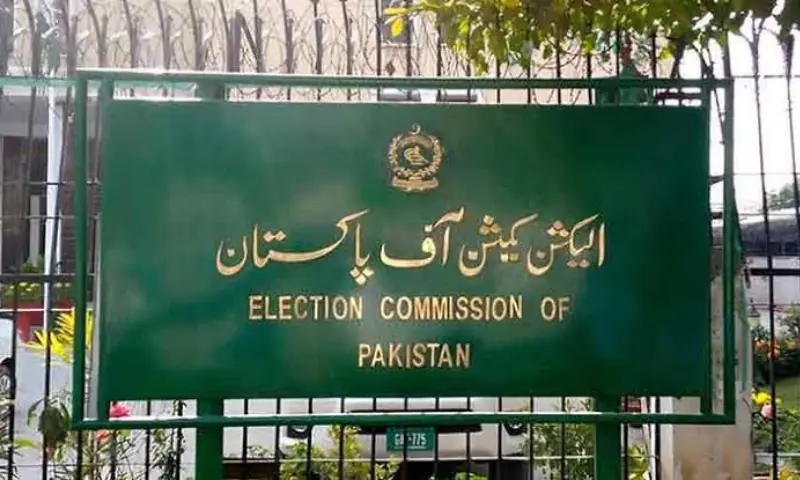
ECP sets ward delimitation for Quetta and Kharian cantonment boards
Quetta moves from Class-II to Class-I and Kharian from Class-III to Class-II, with 10 wards fixed in Quetta and five in Kharian under notifications issued on 29 October.

Information ministry blames Kabul inaction for strained Pakistan-Afghanistan ties
The ministry rejected a Taliban spokesperson's account of the dispute, saying cross-border militancy remains the biggest obstacle to normal relations between the neighbours.

Tarar proposes national council on cyber security and digital literacy
The information minister used the PTA's Cyber Security Awareness Week to float a coordinating body and to call for digital literacy in school curricula.

Health minister says barcode scan will flag fake medicines from November
Mustafa Kamal told the National Assembly that hospitals will also have to buy all vaccines from Pakistan's own funds by 2030, at a cost of about $1.2 billion.