FCC installs 10-minute timer for lawyers, stirring debate
Lawyers are split over the Federal Constitutional Court's new digital timer for oral arguments, which starts at 10 minutes and can extend to 30 in major cases.
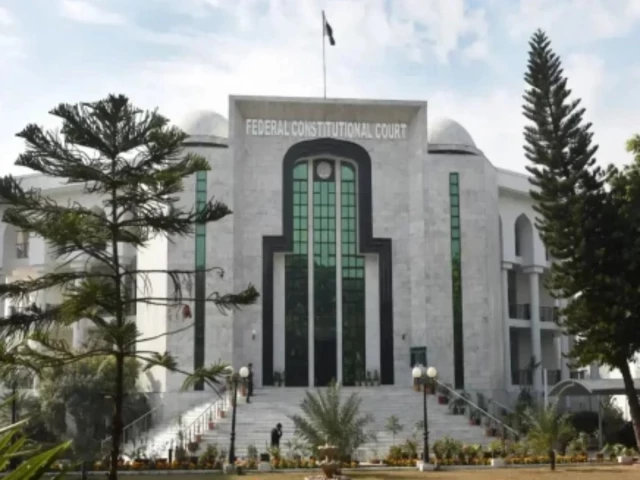
Federal Constitutional Court (FCC) Chief Justice Aminuddin Khan has placed a digital stopwatch in Courtroom No 1 that allows lawyers 10 minutes each to present arguments, a move The Express Tribune reported has split the legal community over speedy disposal and effective representation.
Under the rules, lawyers for each party will first receive 10 minutes. In important or complex cases the court may extend the time, and in major cases it can grant up to 30 minutes through a judicial order. Once the allotted time expires, the timer sounds an alarm and the lawyer must leave the rostrum, though the court retains authority to allow more time. Hearings under the system have already begun before the chief justice.
The report said 230,409 cases are pending in the apex court, and lawyers have asked why six vacant FCC seats have not been filled after 10 months to reduce the backlog. It quoted one lawyer as saying more than 22,000 cases have been transferred to the FCC.
Former law officer Waqar Rana told the outlet that the pressure of huge pendency and lack of credibility in the administration of justice are forcing the policy. He said the right of audience is part of the right to a fair trial under Article 10-A and that Bar Councils must agitate the matter. He also claimed judges now rely on inexperienced law clerks and their briefs in judgements.
Lawyer Waqas Ahmad said speedy disposal is important but constitutional justice cannot be reduced to a stopwatch. The right to a fair hearing requires a meaningful opportunity to present a case, especially where fundamental rights and constitutional interpretation are involved.
Supreme Court lawyer Hafiz Ehsaan Ahmad Khokhar called the countdown mechanism a constructive and modern initiative for time-bound hearings and efficient disposal. He said it should facilitate case management rather than restrict the court's ability to examine substantial questions, and urged immediate and substantial increase in FCC judges, including experienced constitutional lawyers and jurists. He also said important constitutional questions should be heard by benches of at least three judges, with larger benches of around five for exceptional matters. He noted that Article 189 makes FCC decisions binding on all other courts including the Supreme Court, so the court must develop coherent constitutional jurisprudence.

ECP sets ward delimitation for Quetta and Kharian cantonment boards
Quetta moves from Class-II to Class-I and Kharian from Class-III to Class-II, with 10 wards fixed in Quetta and five in Kharian under notifications issued on 29 October.

Information ministry blames Kabul inaction for strained Pakistan-Afghanistan ties
The ministry rejected a Taliban spokesperson's account of the dispute, saying cross-border militancy remains the biggest obstacle to normal relations between the neighbours.

Tarar proposes national council on cyber security and digital literacy
The information minister used the PTA's Cyber Security Awareness Week to float a coordinating body and to call for digital literacy in school curricula.

Health minister says barcode scan will flag fake medicines from November
Mustafa Kamal told the National Assembly that hospitals will also have to buy all vaccines from Pakistan's own funds by 2030, at a cost of about $1.2 billion.