Iran border trade remains limited a week after partial reopening
Traders say clearance is restricted to consignments booked before 16 October, when Pakistan withdrew an import-form exemption for Iranian goods.

Trade through Pakistan's two main crossings with Iran remains restricted more than a week after they were partially reopened, with traders saying only consignments booked before 16 October are being cleared and LPG prices across Balochistan still elevated.
The Gabd-Rimdan and Taftan-Mirjaveh crossings were closed on 17 October, stranding thousands of trucks on both sides, and reopened on 25 October. Both governments called the suspension temporary but gave different reasons: Balochistan government spokesman and adviser to the chief minister Shahid Rind said the aim was to address security concerns, curb smuggling and make the border system more effective, while Iranian foreign ministry spokesman Esmail Baqaei attributed it to unspecified technical issues that required immediate precautionary measures.
A senior official in Taftan told BBC Urdu that Pakistan's exports to Iran had fully resumed, but that only imports tied to orders placed on or before 16 October were being processed. He linked the cutoff to the commerce ministry's decision to withdraw the exemption from the Electronic Import Form for imports from Iran, an exemption issued on 3 October and revoked 13 days later, a day before the crossings closed.
Fida Hussain Dashti, a former president of the Quetta Chamber of Commerce and Industry, said 60 to 70 trucks were being released daily and that Iranian companies had stopped booking goods for Pakistan for fear of losses. Mir Naveed Kalmati, president of the Gwadar chamber, confirmed the limited clearance.
Balochistan's interior minister, Ziaullah Langau, told BBC Urdu the border was open, but when asked about the partial restoration of trade, said: "This is not a provincial matter. The federation looks at these matters."
Haji Shaukat Isa Zai, a trader leader in Taftan, said about 70 percent of what is arriving from Iran is LPG. Pakistan imports roughly 7,000 tonnes of the fuel from Iran daily; Shamsul Haq, a former president of the Gwadar chamber, said more than 4,000 tonnes come through Gabd-Rimdan alone.
Prices followed. A Quetta retailer, Tushar Kamhar, said LPG sold at about Rs 480 a kilogram before the closure and reached Rs 600 once imports stopped. Reuters reported the price of a 12kg cylinder rising from Rs 4,500 to nearly Rs 7,000 within days.
Independent Urdu reported that a distributor, Majeedullah, said an 11.8kg cylinder that cost Rs 4,000 to 4,200 a week earlier peaked at Rs 7,000 and is now about Rs 5,500, with 15kg cylinders at Rs 8,000 to 8,200 and commercial cylinders around Rs 25,000. Irfan Khokhar, chairman of the LPG Industries Association of Pakistan, said marketing companies buy local gas at Rs 235 to 240 a kilogram while the market charges about Rs 700.
Iran's ambassador to Pakistan, Reza Amiri Moghaddam, said on X on Sunday that Iran has not restricted exports to Pakistan, including LPG, and that its borders with all neighbours are open, attributing the disruption to changes in Pakistan's e-form procedure.
Bilateral trade has ranged between roughly $1 billion and $3.1 billion in recent official figures, far below the $10 billion target the two governments have set.
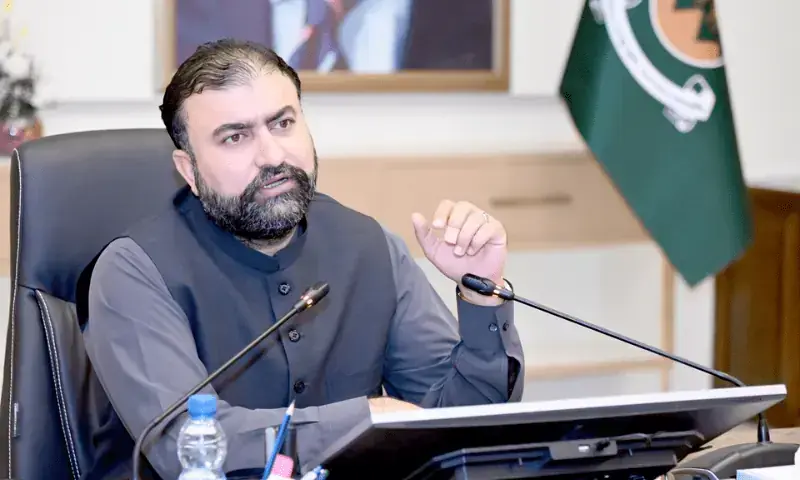
Balochistan CM says state open to dialogue within Constitution
Sarfraz Bugti voices satisfaction over operations against militants in Buleda, Kech district, and says action under Radd-ul-Fitna 3 is needed to protect peace.
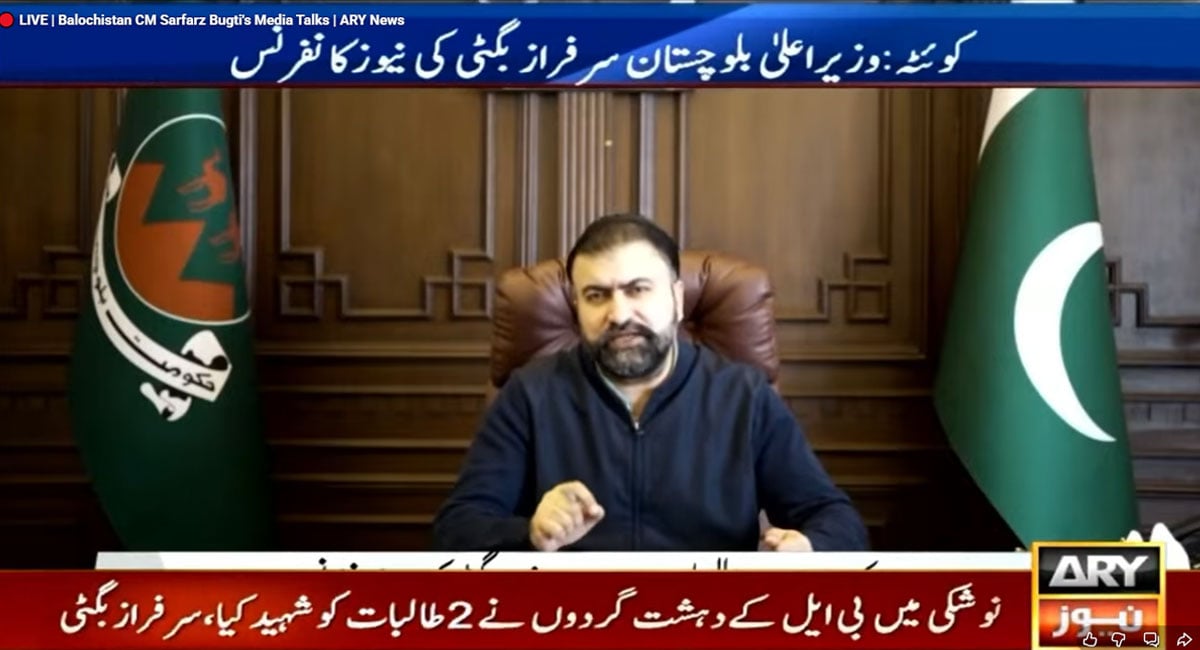
Balochistan dismisses 72 more doctors, total reaches 200
Chief Minister Sarfraz Bugti says Rs410m has been deducted from salaries and 11,000 staff issued show-cause notices, while the Express Tribune reports 102 dismissals.

ANP calls Quetta multi-party conference over Achakzai arrest
Jamaluddin Rishtya says the charges against the Balochistan ANP president are fabricated and invites parties, lawyers and traders to the November 6 meeting
Security forces shoot down five drones in Kharan, report says
Pakistan Connect described the downing as a foiled BLA attack, while a second outlet reported a foiled rocket strike on the Jaffar Express; neither account has official confirmation.