Pakistan opens first electricity wheeling auction for bulk consumers
Federal Minister Awais Laghari says producers and buyers will trade directly, starting with consumers using more than one megawatt, before expanding to households in coming years.

Pakistan's federal government on Sunday issued requests for proposals for the first auction of electricity wheeling, opening a direct trading route between power producers and large buyers, BBC Urdu reported. Federal Minister for Energy Awais Laghari said in a video message that the government would stop buying electricity and supplying it to consumers at a fixed rate; instead, producers and buyers would trade under a transparent mechanism.
The Power Division said the plan aims to auction a total of 800 megawatts over the next five years, with 400 megawatts offered in the first phase. The auction will be held under the Competitive Trading Bilateral Contract Market, allowing commercial and industrial consumers to buy electricity directly from generation companies on competitive terms. Laghari said the change would begin with industrial or bulk consumers using more than one megawatt, and would expand to ordinary consumers using 200 or 400 units in the coming years.
Energy sector expert Afia Malik told BBC Urdu that wheeling means a consumer signs a contract with any power producer, and the electricity is delivered through the government's existing transmission and distribution system at a cost. She said the first phase covers only large industrial units such as textiles, cement and fertilizer, while small industries and domestic consumers are not eligible yet.
Manzoor Ahmad, an energy expert at the Policy Research Institute for Equitable Development, told BBC Urdu that the move is part of the power sector liberalisation policy introduced by the World Bank in the early 1990s and is decades late. He said it remains to be seen whether electricity bought through the competitive market will actually be cheaper than government-supplied power, because buyers will still have to pay line rent for using government infrastructure.
Afia Malik said the wheeling cost will determine whether big consumers get cheaper electricity, and she does not expect an immediate large reduction in industrial tariffs because the government has to recover capacity payments and system losses. She said the government has to pay Rs1,900 billion in capacity payments to power companies in 2026, and the average grid tariff is around Rs34 per unit excluding taxes and surcharges. For households, she said there is nothing in the new system yet and no relief on bills is expected for several years.
Laghari said the system will give industry cheaper power, reduce production costs and help exporters compete internationally. He said every government over the past 25 to 30 years wanted to do this but none took practical steps, and the current government has now implemented it.
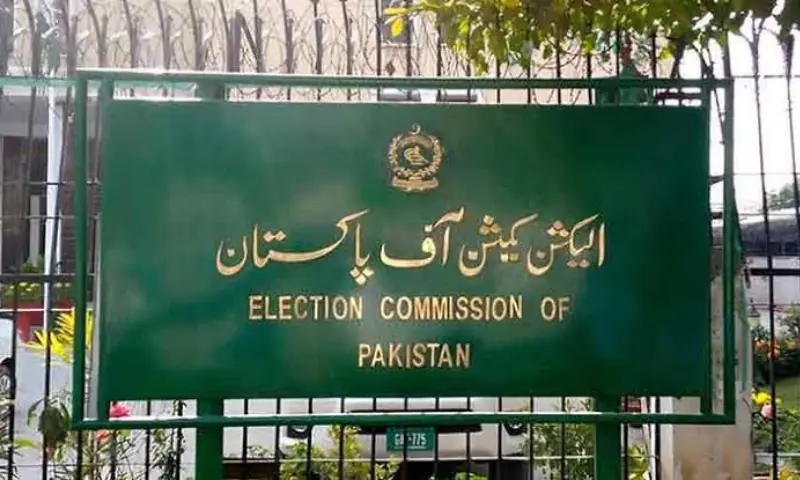
ECP sets ward delimitation for Quetta and Kharian cantonment boards
Quetta moves from Class-II to Class-I and Kharian from Class-III to Class-II, with 10 wards fixed in Quetta and five in Kharian under notifications issued on 29 October.

Information ministry blames Kabul inaction for strained Pakistan-Afghanistan ties
The ministry rejected a Taliban spokesperson's account of the dispute, saying cross-border militancy remains the biggest obstacle to normal relations between the neighbours.

Tarar proposes national council on cyber security and digital literacy
The information minister used the PTA's Cyber Security Awareness Week to float a coordinating body and to call for digital literacy in school curricula.

Health minister says barcode scan will flag fake medicines from November
Mustafa Kamal told the National Assembly that hospitals will also have to buy all vaccines from Pakistan's own funds by 2030, at a cost of about $1.2 billion.