Pakistan, seven Muslim states urge full Gaza ceasefire enforcement
Foreign ministers meeting in New York said Israel must complete phase-one obligations under the comprehensive plan, including unhindered aid delivery.
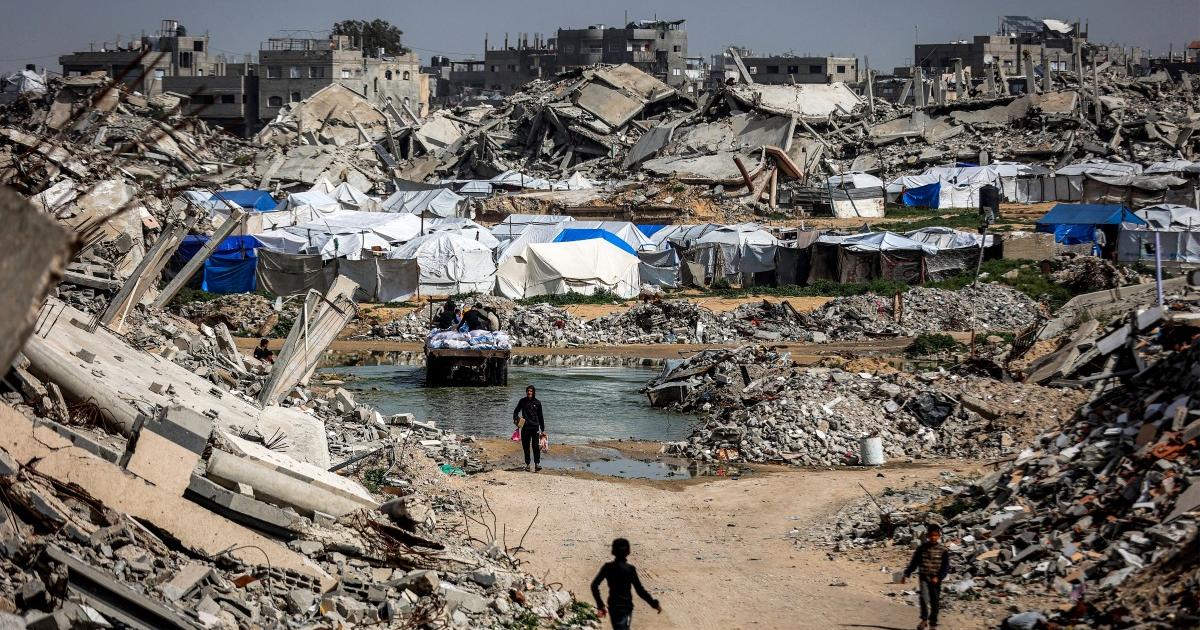
Foreign ministers from Pakistan, Egypt, Indonesia, Jordan, Qatar, Saudi Arabia, Turkey and the United Arab Emirates met in New York on 21 September on the sidelines of the 81st session of the United Nations General Assembly and issued a joint statement on Gaza, according to Independent Urdu, which cited a Foreign Office statement.
The ministers expressed deep concern at the humanitarian crisis in Gaza and called on Israel to fulfil the remaining obligations of the first phase of the comprehensive plan. Those obligations include the immediate, safe and unhindered delivery of humanitarian aid and early-recovery supplies, and facilitating the restoration of critical infrastructure.
They said the ceasefire must be maintained and all violations ended. The statement described the roadmap as an integral part of the comprehensive plan and a practical framework for the second phase. The roadmap includes Israel's full withdrawal alongside disarmament, deployment of an International Stabilisation Force (ISF), the National Committee for the Administration of Gaza (NCAG) taking up its responsibilities across the strip, and the start of early recovery and reconstruction across Gaza. The ministers urged all parties to carry out their duties in good faith and without delay.
The joint statement rejected any attempt to expel or forcibly displace the Palestinian people or to change the geographic or demographic character of the occupied Palestinian territory. The ministers condemned measures that consolidate Israeli control and annexation, including settlement expansion, land confiscation, demolition of Palestinian homes and settler violence, and demanded that they stop immediately. They also voiced serious concern over actions that harm the historical and legal status of Muslim and Christian holy sites in Jerusalem.
The eight ministers welcomed Britain's recent measures against illegal Israeli settlements, including a decision to stop trade with those settlements, as well as other national and European efforts. They called for stronger measures to halt settlement expansion and ensure accountability for settler violence.
They stressed that Gaza will remain an integral part of Palestinian territory and that the implementation of the comprehensive plan should help reunite the West Bank, including East Jerusalem, with the Gaza Strip. They said this should be a credible and irreversible path to a sovereign and viable Palestinian state through a two-state solution.
The statement appreciated the leadership of US President Donald Trump and called the American role indispensable in implementing the plan. The ministers urged the United States to continue its active engagement so that all parties, including Israel, meet their obligations and obstacles to the roadmap are removed. Concrete progress on the ground, they said, would strengthen the credibility of the Board of Peace and the authority of the plan.
The eight foreign ministers reaffirmed their commitment to work with the United States, the Board of Peace, the Palestinian Authority and other parties for the full implementation of the comprehensive plan and its roadmap, with the aim of reducing Palestinian suffering and establishing a just, durable and inclusive peace in the region.

ECP sets ward delimitation for Quetta and Kharian cantonment boards
Quetta moves from Class-II to Class-I and Kharian from Class-III to Class-II, with 10 wards fixed in Quetta and five in Kharian under notifications issued on 29 October.

Information ministry blames Kabul inaction for strained Pakistan-Afghanistan ties
The ministry rejected a Taliban spokesperson's account of the dispute, saying cross-border militancy remains the biggest obstacle to normal relations between the neighbours.

Tarar proposes national council on cyber security and digital literacy
The information minister used the PTA's Cyber Security Awareness Week to float a coordinating body and to call for digital literacy in school curricula.

Health minister says barcode scan will flag fake medicines from November
Mustafa Kamal told the National Assembly that hospitals will also have to buy all vaccines from Pakistan's own funds by 2030, at a cost of about $1.2 billion.