Supreme Court acquits life convict in 2016 Faisalabad murder case
Judges found the prosecution account did not match the post-mortem report and questioned why three eyewitnesses did not intervene.
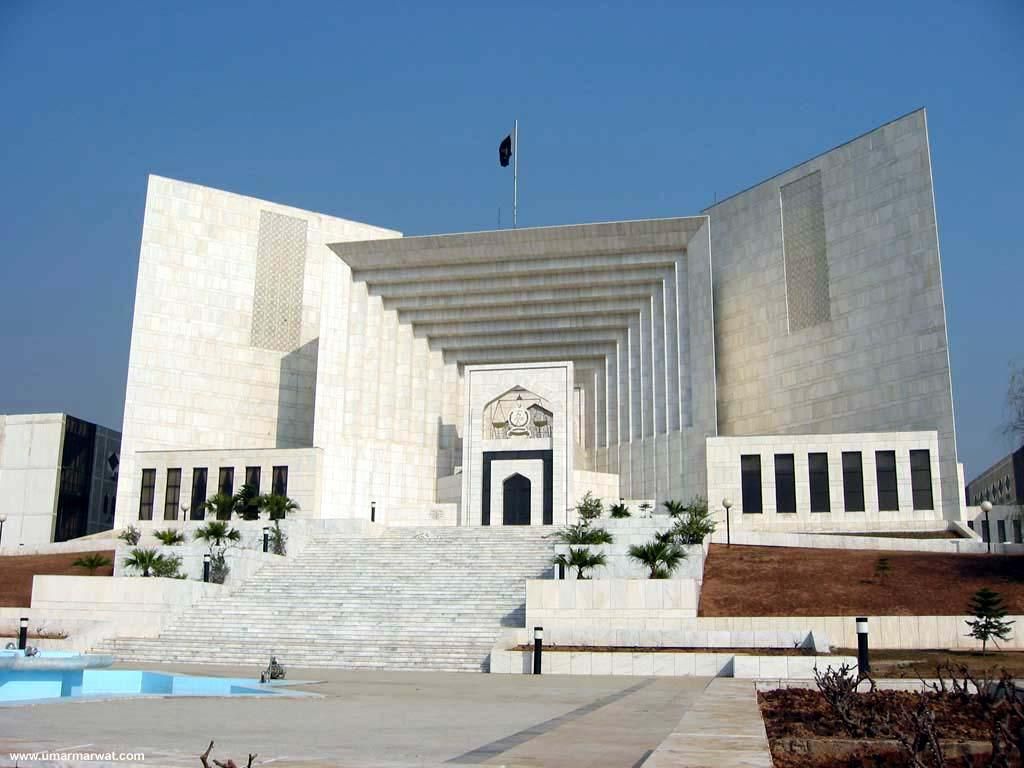
The Supreme Court has acquitted a man who was serving life imprisonment for the 2016 killing of a 25-year-old woman in a village near Faisalabad, setting aside both the trial court verdict and the high court judgment that upheld it.
The bench extended the benefit of the doubt to the convict after finding contradictions in the prosecution evidence and the post-mortem report, according to the Associated Press of Pakistan and Minute Mirror, which quoted from a draft of the judgment. The two outlets spell the man's name differently: Manwar Hussain in the APP report and Munawar Hussain in Minute Mirror's.
The woman, identified as Saima, was killed in 2016. A trial court sentenced Hussain to life imprisonment and the high court upheld that conviction. Neither report named the village where the killing took place, and neither said on which date the Supreme Court announced its verdict.
According to Minute Mirror, the court noted discrepancies in the prosecution's account of the killing. The first information report recorded one accused, while three eyewitnesses were said to have been present at the scene.
The court also questioned the claim that the woman had been tied to a bed with a rope, noting that the medical report did not confirm corresponding marks on her body. Justice Malik Shehzad Ahmad asked why the eyewitnesses had not intervened to prevent the killing, while Justice Shakeel Ahmad asked why the shawl allegedly involved in the case had not been sent for forensic examination.
The bench further observed that the post-mortem report did not correspond with the eyewitnesses' accounts, and the draft judgment said that report had not been challenged.
The acquittal means Hussain will not serve the life term imposed at trial. The APP report described the outcome as turning on the benefit of the doubt rather than a finding that no crime had been committed, and said the trial and high court judgments had been set aside.
Court orders in criminal appeals of this kind are watched for how the Supreme Court weighs eyewitness testimony against medical evidence. In this case the bench treated the gap between the two as sufficient to displace a conviction that had stood through two lower courts.
The reports did not say whether any appeal or review is open to the prosecution, nor whether the bench issued any direction on the investigation that led to the conviction.

ECP sets ward delimitation for Quetta and Kharian cantonment boards
Quetta moves from Class-II to Class-I and Kharian from Class-III to Class-II, with 10 wards fixed in Quetta and five in Kharian under notifications issued on 29 October.

Information ministry blames Kabul inaction for strained Pakistan-Afghanistan ties
The ministry rejected a Taliban spokesperson's account of the dispute, saying cross-border militancy remains the biggest obstacle to normal relations between the neighbours.

Tarar proposes national council on cyber security and digital literacy
The information minister used the PTA's Cyber Security Awareness Week to float a coordinating body and to call for digital literacy in school curricula.

Health minister says barcode scan will flag fake medicines from November
Mustafa Kamal told the National Assembly that hospitals will also have to buy all vaccines from Pakistan's own funds by 2030, at a cost of about $1.2 billion.