Brazil finance minister denies plan to cap interest rates
Dario Durigan says no freeze of the Selic is under study, a day before the central bank decides whether to keep cutting.
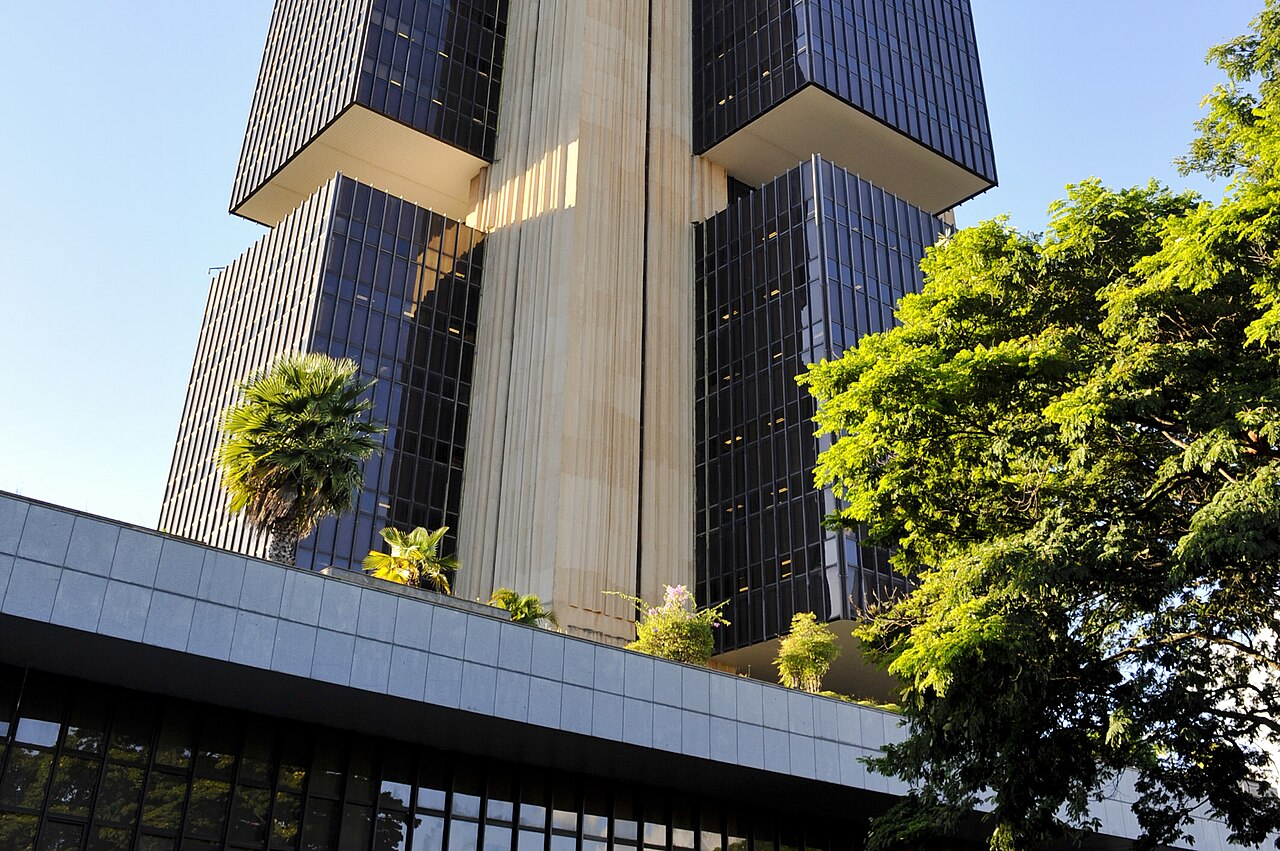
Brazil's finance minister, Dario Durigan, said on Monday that the government is not studying a cap or a freeze on the Selic benchmark interest rate, and ruled out using the country's foreign-exchange reserves to hold the real steady, The Rio Times reported. He spoke a day before the central bank's rate-setting committee, Copom, opened a two-day meeting. Its decision is due on Wednesday at about 4:30 p.m. ET.
The denial followed days of market chatter about ideas attributed to the economist André Lara Resende, a co-author of the 1994 Real Plan that ended Brazilian hyperinflation. Durigan said no meeting was scheduled between President Luiz Inácio Lula da Silva and Lara Resende.
Why the rumour moved markets: under a 2021 law the central bank sets monetary policy on its own, and its board members serve fixed terms. A cap or freeze would put elected officials, rather than the bank, in charge of where rates sit. The Rio Times reported that investors treat that independence as a pillar of Brazil's credibility.
The Selic began the year at 15.00%. The bank has cut it by a quarter of a percentage point five times, most recently at its 16 September meeting, to 13.75%. Brazil's inflation target is 3% with a tolerance band, so borrowing costs remain far above the level the official goal would imply. The Rio Times reported that Durigan has described the level of the Selic as a bottleneck for the economy, and that Lula has repeatedly criticised high rates.
Reuters reported that economists raised their inflation and interest-rate forecasts after Lula's reelection.
The Rio Times cited the prediction market Polymarket, which priced an 83.8% chance that the bank holds at 13.75% on Wednesday, a 13.0% chance of a quarter-point cut and a 1.6% chance of a cut of half a point or more, with about $133,000 traded, read on Monday evening.
Brazilian assets slipped. EWZ, the US-listed fund that tracks Brazilian stocks, fell 0.9% to $32.16 on Monday and has lost about 4% since closing at $33.62 on 28 October, according to the paper's market data. The dollar traded near 5.44 reais late on Monday, little changed on the day. The Rio Times noted that no single headline explains those moves and that nothing in the data ties them to the rate-cap story alone.
A hold at 13.75% keeps Brazilian government debt among the highest-yielding in the world, the paper reported, and leaves heavily indebted retailers and homebuilders under pressure for longer.
How the reports differ
The Rio Times led with Durigan's denial on the eve of the Copom meeting and was alone in naming André Lara Resende, reporting the fall in EWZ and the level of the real, and quoting prediction-market odds of a hold at about 84%. Reuters framed the same week around economists raising their inflation and interest-rate forecasts after Lula's reelection, and did not carry the denial. Two further items filed under this event were not about Brazil: Global Banking & Finance Review reported that the European Central Bank was likely to raise rates again, and Morningstar carried a UK markets brief on Haleon shares and the Bank of England.

Brazil publishes non-binding global roadmap to quit fossil fuels
Two documents set out steps any country can take now, but carry no deadlines or benchmarks, drawing criticism that they fall short of the pace needed.

Brazil defaulters hit record 84.2 million, Serasa says
The credit bureau's September map puts overdue debt at 597.4 billion reais, with the central bank's next rate decision due on Wednesday.

Argentina's oil boom lifts Neuquén as Buenos Aires sheds jobs
Inflation has fallen from near 300 percent to about 30, but 265,000 formal private-sector jobs have gone and approval for Javier Milei has slipped to 39 percent.
Argentina's Milei offers tax breaks to lure AI data centres to Patagonia
The president says he will not regulate artificial intelligence and wants corporate tax cut to 15% for projects of at least $1 billion, a bill still before the Senate.

Bolivia declares El Nino emergency as drought hits 78,000 families
President Rodrigo Paz says the decree releases resources and rescue teams, with drought in six of nine departments and more than 75,000 cattle lost.

Rubio denies US role in Flavio Bolsonaro's flight from Brazil
An Argentine judge has ordered Javier Milei's government to hand over details of its assistance to the Brazilian senator, the Buenos Aires Times reports.

SECP notifies rules banning Ponzi and pyramid schemes
The Companies (Prohibition of Unlawful Activities) Regulations, 2026 cover websites, mobile apps and social media, with penalties available under Section 512(2) of the Companies Act, 2017.

Government readies tax incentives to draw mining investors
The National Mineral Policy 2026 package, built on a Wood Mackenzie model, offers 30-year sales tax relief and a 1 per cent presumptive tax on export proceeds.