South Korea orders security checks on 2,100 agencies after data breaches
The spy agency's inspections follow a leak of presidential flight passenger data and breaches at 16 financial firms affecting about 100,000 customer records.

South Korea's National Intelligence Service said on Tuesday it will carry out emergency security inspections at about 2,100 government bodies, from central ministries to local governments, after a run of data breaches that reached the presidential aircraft and the country's banks. The checks are meant to close gaps in a heavily digitised economy where, according to Yonhap, hackers are increasingly using artificial intelligence tools to find weaknesses and strike several targets at once.
The inspections are due to be completed by mid-November. The agency said it will also conduct direct security checks on critical public information and communications infrastructure under its supervision.
Police have opened a preliminary investigation into the online leak of personal information on 168 people who travelled on the presidential aircraft during a June trip to Europe. The list includes President Lee Jae Myung, the first lady and cabinet ministers. The foreign ministry said it is taking steps to reissue the passports of the president and the first lady.
In the financial sector, the Financial Services Commission said on Oct 14 that cybersecurity incidents had been confirmed at 16 firms, including commercial banks, savings banks and credit finance companies, affecting about 100,000 customer records. On Oct 28, Daishin Securities, Mirae Asset Global Investments and the cryptocurrency exchange Bithumb each reported separate incidents involving customer information.
The breaches carry beyond the stolen records because South Korean banks, telecom operators and manufacturers depend on shared networks and connected production lines. Yonhap reported that an intrusion at a telecom operator can expose the information customers use for banking and other online services, and that an attack on a large cloud provider can disrupt several businesses at once. The country's semiconductor, automobile and shipbuilding industries rely increasingly on connected factories and automated production.
The Ministry of Science and ICT raised the national cyber crisis warning level by one notch to "caution", the second lowest on a four-tier scale, last month. It said the step came amid global efforts to address two critical security flaws in PHP, a widely used programming language. The ministry also plans to inspect about 170 major private-sector IT infrastructure facilities.
Financial regulators have said they will tighten identity checks and access controls, improve information sharing between firms, and increase corporate executives' responsibility for cybersecurity.
Kim Jin-soo, chairman of the Korea Information Security Industry Association, said the priority was to establish basic defences, including firewalls, encryption, multifactor authentication and systems to detect and respond to vulnerabilities. He said companies and the government both needed to raise cybersecurity spending well above current levels.

China's robot makers shift spending from hardware to AI brains
Embodied AI startups in China raised 93.5 billion yuan in the first half of 2026, five times the year-earlier total, as the contest with US developers moves to software.

Taiwan and Japan work on trade pact akin to UK deal
Talks reported by Nikkei Asia aim at a broad framework drawn up to limit political sensitivity as Beijing presses Taipei over its trade diplomacy.

Sydney starts armed police patrols after Bondi Beach attack
New South Wales says the 250-officer Armed Response Command will guard events, tourist areas and places of worship with rifles, an Australian first.

China's Communist Party to monitor members' online activity for graft
A document adopted at a Central Committee plenum pledges digital discipline inspection and a crackdown on corruption linked to virtual currency and blockchain.
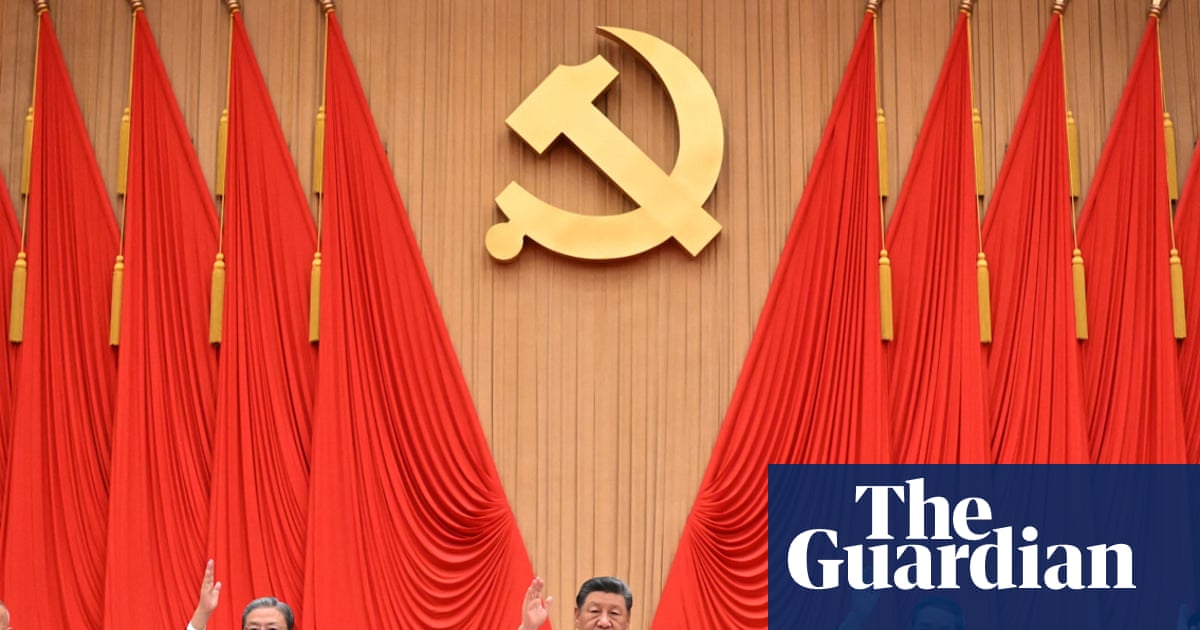
China's Communist Party expels record 33 members at plenum
The fifth plenum of the 20th Central Committee left more than a quarter of its seats empty as Xi Jinping defended the discipline campaign.
Binance resumes withdrawals as FBI blames North Korea for $6.3bn hack
The exchange says it has replaced 90 percent of the stolen tokens and that customers will not carry the loss from the largest crypto theft on record.