Supreme Court rejects ex-IB employee's appeal, upholds compulsory retirement
A two-judge bench headed by Justice Ayesha Malik ruled that a woman's dignity is a constitutional obligation and private conduct can bear on a civil servant's suitability.
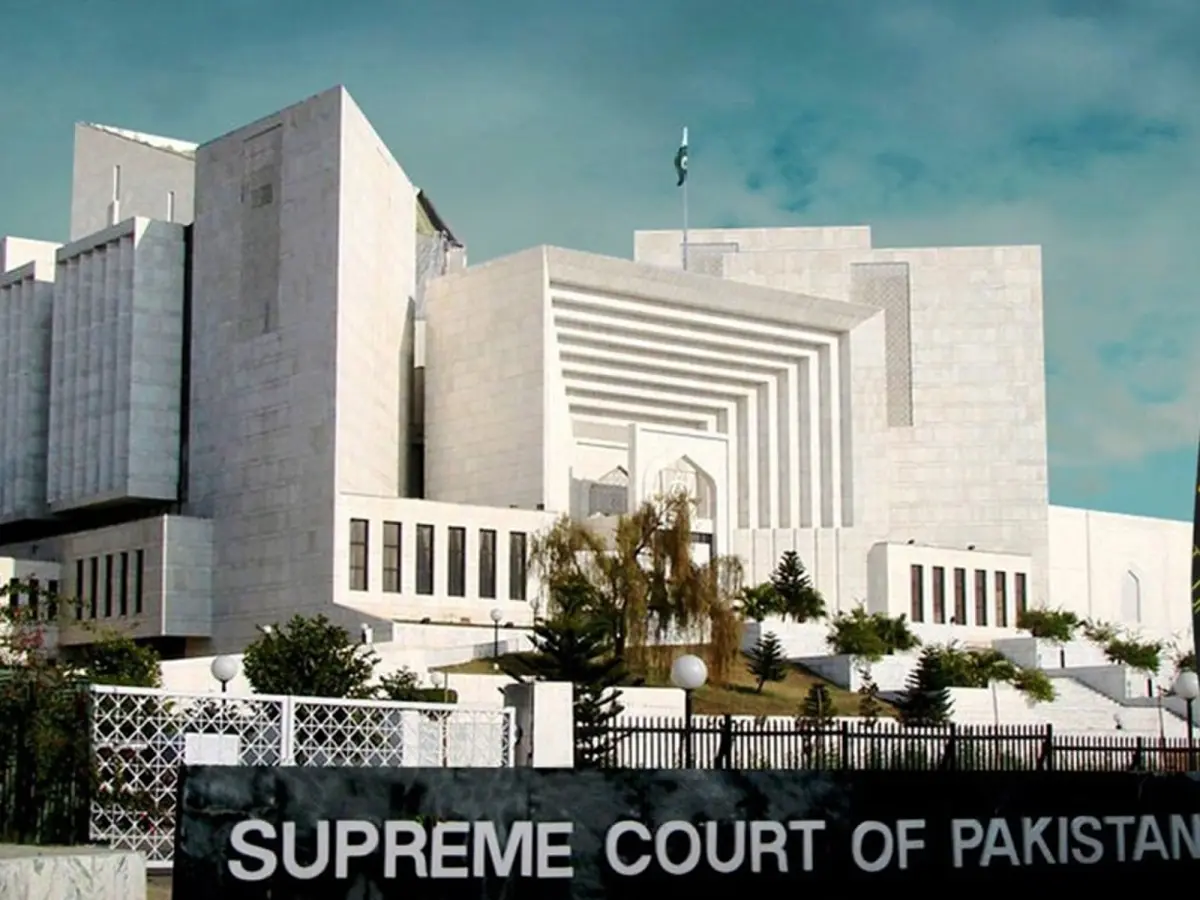
ISLAMABAD: The Supreme Court has dismissed the appeal of a former Intelligence Bureau cook against his compulsory retirement, ruling that respect for a woman's dignity is an obligation the state can demand of everyone in its service and not a matter of private morality alone.
A two-member bench headed by Justice Ayesha Malik and including Justice Shahid Waheed rejected the plea of Jawad Abbasi, who was compulsorily retired after departmental proceedings found established the charge that he had set his wife on fire. He also faced allegations of being ill-mannered and short-tempered. Business Recorder reported the appellant's name and the details of the proceedings.
The penalty order was passed on June 14, 2024 under the Civil Servants (Efficiency and Discipline) Rules, 2020. His departmental appeal was rejected, and the Federal Service Tribunal upheld the compulsory retirement in an order dated January 15, dismissing his service appeal. A lower court acquitted him in the criminal case.
Justice Waheed, who authored the judgment, held that a civil servant's conduct is not judged only by how he performs his official duties. His character, integrity and conduct in private life become relevant where they bear on his suitability to hold public office, the discipline of the service or public confidence in the institution he serves, the judgment said. Dawn reported the court held that off-duty conduct of sufficient gravity may constitute misconduct and that an acquittal in a criminal case does not undo the disciplinary consequences.
"The dignity of a woman, whether as a wife, sister, daughter, mother or a fellow citizen, was a fundamental value protected by the Constitution," the judgment stated. "Respect for that dignity is not merely a matter of personal morality; it is an obligation that the state is entitled to expect from every person in its service."
"The walls of a home are not a jurisdictional boundary, and violence does not become private because it is committed behind a closed door," Justice Waheed wrote, adding that "fire does not become a family affair because it was lit indoors".
The judgment said the allegation was not of a quarrel or a harsh word but that the petitioner set his wife on fire, an act it called among the gravest forms of violence one person can inflict on another and "no incident of married life", but "an assault on life and the dignity of a human being".
It cited Article 25(3) of the Constitution, which permits special provision for the protection of women, and the laws made under it, including the Punjab Protection of Women against Violence Act, 2016 and the Domestic Violence (Prevention and Protection) Act, 2020 for the Islamabad Capital Territory. Pakistan is also a party to the Convention on the Elimination of All Forms of Discrimination against Women, under which violence against women is a form of discrimination the state must act to eliminate, the judgment said.
"The burning of women in their homes, frequently passed off as a kitchen or stove accident or as attempted suicide, is a grave and recurring social evil in this country," the judgment stated.
How the reports differ
Dawn led on the court's declaration that respect for a woman's dignity is a constitutional obligation and headlined it that way, without naming the appellant in its standfirst. Dawn also reported the finding that off-duty conduct of sufficient gravity may constitute misconduct and that an acquittal in a criminal case does not undo the disciplinary consequences. Business Recorder named the appellant, Jawad Abbasi, identified him as an IB cook, and set out the procedural chain: the Federal Service Tribunal's order of January 15, the penalty of June 14, 2024, and the lower court acquittal, alongside the judgment's citations of Article 25(3), the Punjab Protection of Women against Violence Act, 2016, the ICT domestic violence law of 2020 and CEDAW.

Supreme Court ties civil servant's private violence to service misconduct
The court dismissed an Intelligence Bureau employee's petition and held that a criminal acquittal does not automatically void departmental proceedings against him.

Federal Constitutional Court rules it is not bound by Supreme Court judgments
The same court has fixed 48 miscellaneous petitions for Thursday, including challenges to the arrest of PTI workers under 3MPO.
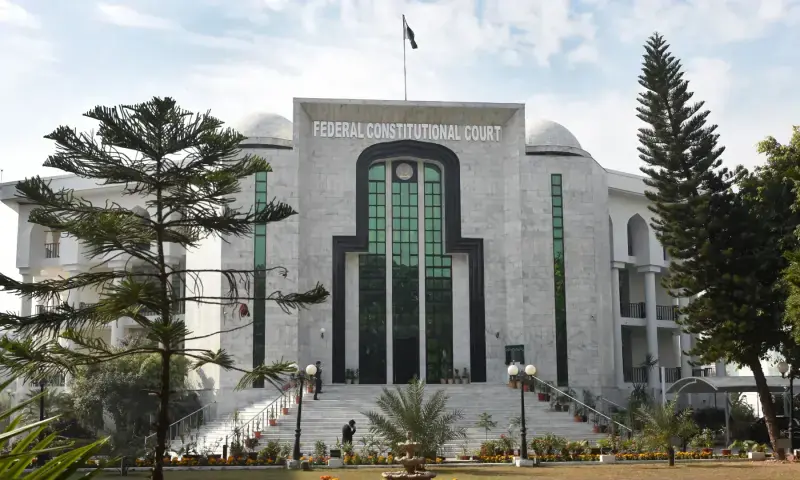
Federal Constitutional Court faults Supreme Court bench over decided case
Two-judge bench headed by Chief Justice Amin-ud-Khan dismissed the review petitions, holding that the Supreme Court's 28 December 2021 ruling on the Income Support Levy remains undisturbed.
Constitutional court dismisses 1,178 petitions against levy ruling
The Federal Constitutional Court upheld the Supreme Court's December 2021 judgment on the Income Support Levy Act 2013, but the reports carried no reasons or bench details.
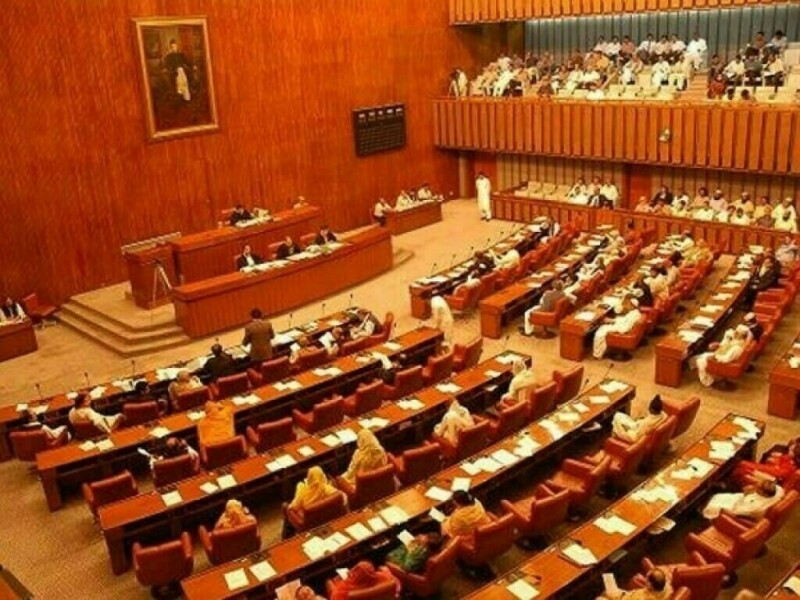
Senate panel seeks briefing on PM's UN trip and Iran-US conflict
The foreign affairs committee also directed HEC, NADRA and the Foreign Office to bring a plan for a single electronic attestation system to its next meeting.
Minister promises winter LPG supply as cylinders sell at double rate
Ali Pervaiz Malik says the government will push to meet winter demand after the closure of Iranian border crossings disrupted supplies, as Ishaq Dar meets Jamaat-e-Islami on fuel prices

Government refuses JI demand to abolish petroleum levy
Talks between Liaquat Baloch and Ishaq Dar produce fuel relief for farmers and public transport, but no commitment to end the levy.

Pakistan tests first home-built Faaz air-to-air missile
ISPR says the missile carries an advanced terminal guidance system able to strike aerial targets at long range and will raise Pakistan Air Force capability.